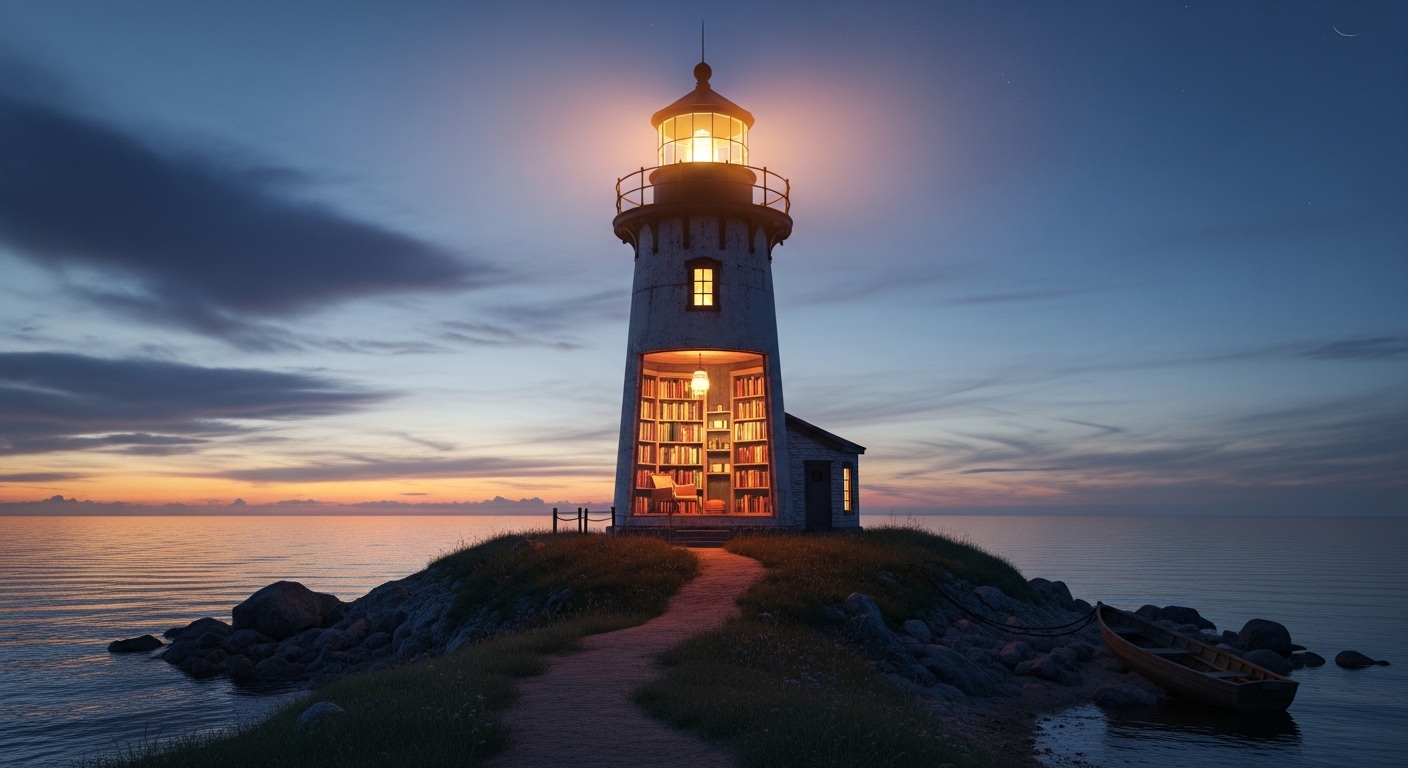
There are places in the world where silence feels alive, where the sound of waves replaces city noise, and where books are guarded not by walls but by the sea itself. Island libraries in lighthouses are among the rarest cultural spaces on Earth. They exist at the intersection of solitude, maritime history, and storytelling, offering travelers and locals a reading experience unlike anything found in urban libraries.
Imagine arriving on a small island after a boat ride across open water. The lighthouse stands tall, weathered by salt and storms. Inside, instead of just navigational equipment, you find shelves of books, handwritten notes from past visitors, maritime journals, poetry collections, and local histories. These are not libraries built for crowds. They are built for reflection. Have you ever read a book in a place where the horizon never ends?
The Unlikely Connection Between Lighthouses and Libraries
At first glance, lighthouses and libraries seem worlds apart. One exists to guide ships safely through darkness, while the other guides minds through knowledge and imagination. Yet both share a common purpose: preservation and guidance.
Historically, lighthouse keepers lived in isolation for months or even years. Books were essential companions. Reading offered education, comfort, and connection to the outside world. Over time, many lighthouse communities began storing books inside these structures, creating informal reading rooms that eventually evolved into organized collections.
Today, island libraries in lighthouses preserve this tradition. They stand as quiet reminders that learning does not require skyscrapers or digital screens—sometimes, all it needs is a lamp, a chair, and the sound of the sea.
Why Island Libraries Exist Only in Certain Places
Not every lighthouse becomes a library. The ones that do share specific conditions. They are usually located on islands with small populations or seasonal visitors. Many are no longer fully automated or have been repurposed after modern navigation systems replaced traditional lighthouse roles.
Island communities often convert these historic structures into cultural spaces to preserve their heritage. Libraries are a natural choice. They require minimal structural change, encourage respectful visitation, and align with the contemplative nature of lighthouse settings.
Would you prefer a library overlooking traffic-filled streets or one surrounded by endless ocean?
Famous Island Libraries in Lighthouses Around the World
Several destinations have embraced the concept of lighthouse libraries, each offering a distinct atmosphere shaped by geography and culture.
Stromness Lighthouse Library, Orkney Islands, Scotland
Located near rugged coastlines, this lighthouse library houses maritime history, local folklore, and classic literature. Visitors traveling through VisitScotland routes often describe the experience as stepping into a living novel.
Byron Bay Lighthouse Reading Room, Australia
Perched at the easternmost point of mainland Australia, this lighthouse includes a small reading space focused on coastal ecology, Indigenous history, and travel writing. Travelers arriving via Qantas often include it as a reflective stop along their coastal journey.
Pater Noster Lighthouse Library, Sweden
Once a working lighthouse in the North Sea, it now serves as a cultural retreat with a curated book collection. Swedish tourism authorities, including Visit Sweden, highlight it as a unique literary escape.
Fanad Head Lighthouse Library, Ireland
This lighthouse on Ireland’s Wild Atlantic Way hosts books on poetry, navigation, and Irish history. It is frequently mentioned in guides by Lonely Planet as one of Europe’s most atmospheric reading spots.
Which of these would you add to your travel bucket list?

What Makes Reading in a Lighthouse So Different
Reading inside a lighthouse changes how stories feel. The isolation removes distractions. The rhythmic pulse of waves sets a natural pace. Time slows down.
Many visitors report reading more deeply in these spaces. Without city noise, notifications, or crowds, the mind settles. Books feel heavier, words linger longer, and stories gain emotional depth.
Island libraries in lighthouses are not designed for productivity. They are designed for presence. When was the last time you read without checking the time?
Community-Run Libraries and Trust-Based Systems
Most lighthouse libraries operate on trust. There are no library cards, scanners, or surveillance systems. Visitors are invited to read, borrow, or leave a book behind. Many collections grow through donations from travelers who feel compelled to contribute.
Handwritten guestbooks often accompany the shelves. Reading these notes reveals deeply personal reflections—grief, joy, inspiration, and gratitude. These libraries become shared emotional spaces as much as intellectual ones.
Would you leave a book behind as a message to a future reader?
Challenges of Maintaining Libraries on Remote Islands
Operating a library in a lighthouse comes with challenges. Salt air damages paper. Storms limit access. Funding is often minimal. Volunteers usually manage operations, repairs, and book curation.
Despite these difficulties, communities continue maintaining these spaces because they represent more than books. They symbolize resilience, continuity, and respect for knowledge.
Some island councils partner with cultural preservation programs or tourism boards to ensure sustainability, balancing visitor access with conservation.

Why Travelers Are Drawn to Lighthouse Libraries
Modern travel is fast-paced. Island libraries in lighthouses offer the opposite. They attract travelers seeking depth rather than checklists.
These visitors are not chasing attractions. They are chasing moments—reading a poem while fog rolls in, finishing a novel as waves crash below, or writing thoughts in a guestbook that may never be read by anyone they know.
Isn’t that the kind of travel memory that lasts longer than photos?
The Future of Island Libraries in Lighthouses
As more travelers seek meaningful experiences, interest in island libraries in lighthouses continues to grow. Some regions are exploring digital-free retreats, writer residencies, and reading programs centered around these spaces.
However, preservation remains key. Over-commercialization risks stripping these places of their essence. The goal is not to make them popular—but to keep them peaceful.
The next time you plan a journey, consider destinations that nourish the mind as much as the senses.
Have you ever visited a library in an unexpected place, or would you travel specifically to read inside a lighthouse? Share your thoughts and experiences in the comments below.
Follow WentWorld.com on our social media platforms for more stories about hidden cultural spaces, unconventional travel ideas, and places where the world slows down.
Catch up on the top stories and travel deals by subscribing to our newsletter!