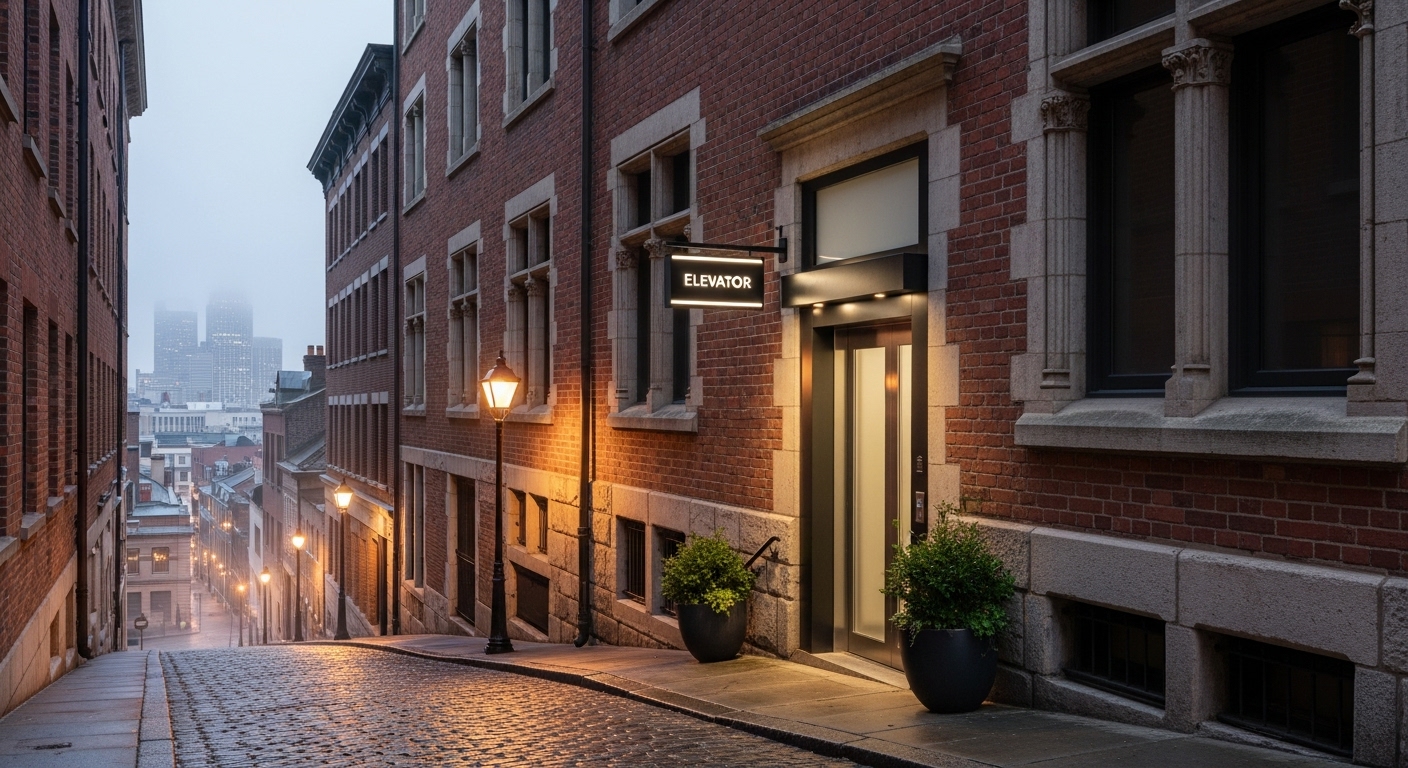
When we think about getting around a city, we usually imagine roads, bridges, subways, or buses. However, in some fascinating destinations, movement happens in a completely different direction. In several cities with hidden elevators that connect neighborhoods, vertical travel quietly replaces long climbs and winding streets.
These elevators are not flashy attractions. Instead, they blend into daily life, often tucked inside residential buildings, hillsides, tunnels, or modest public structures. Locals rely on them without a second thought, while travelers often pass by unaware. Yet once discovered, these hidden elevators completely change how a city feels and functions.
Have you ever arrived in a city where one neighborhood towers far above another? Or wondered how residents manage steep slopes every single day? Let’s explore how cities across the world solved this challenge in the most unexpected way.
Why Hidden Elevators Exist in Some Cities
Many historic cities were built long before modern transportation. Steep hills, cliffs, and uneven terrain made expansion difficult. Rather than flattening landscapes or rebuilding neighborhoods, city planners found smarter solutions.
Hidden elevators allowed people to move quickly and safely between elevations. Over time, they became essential infrastructure. As a result, these elevators now serve students, workers, elderly residents, and families every day, quietly supporting urban life.
Lisbon, Portugal: Elevators Beyond the Famous Ones
Lisbon is widely known for its hills, trams, and viewpoints. While tourists often visit the Santa Justa Lift, few realize that the city contains many lesser-known elevators hidden within residential blocks and public passageways.
These elevators connect lower streets to upper neighborhoods, reducing long stair climbs. Consequently, locals navigate the city efficiently while preserving Lisbon’s historic charm. More about the city can be found at Visit Lisboa.
Valparaíso, Chile: Hills Connected by Ascensores
Valparaíso’s neighborhoods climb sharply from the Pacific coast. To overcome this challenge, the city introduced funicular-style elevators known as ascensores.
Many of these elevators date back over a century. Even today, they link port areas with hillside communities. Because of their cultural importance, Valparaíso’s elevator system contributes to its recognition by UNESCO.
Genoa, Italy: Elevators Built Into the City Itself
Genoa’s narrow medieval streets make traditional transport difficult. Instead of widening roads, the city installed public elevators inside buildings, tunnels, and rock walls.
In some cases, you enter a simple doorway near the harbor and exit at a higher residential district. These elevators feel almost invisible, yet they are essential for daily movement.
Barcelona, Spain: Quiet Elevators on Steep Slopes
Barcelona’s hilly districts, such as Carmel and Montjuïc, rely on hidden elevators integrated into urban spaces. These elevators often appear beside stairways or behind understated entrances.
Although subtle, they play a major role in accessibility. Residents avoid exhausting climbs, while visitors gain easy access to panoramic viewpoints. For city travel details, visit Barcelona Turisme.
Bilbao, Spain: Modern Elevators Transforming Old Neighborhoods
Bilbao’s transformation involved more than iconic architecture. Elevators became tools for reconnecting hillside neighborhoods with revitalized city centers.
Glass elevators now rise along slopes and cliffs, offering both practical transport and scenic views. As a result, neighborhoods once considered isolated are now fully integrated.

Hong Kong: Vertical Living Taken Seriously
Hong Kong’s extreme density and steep terrain demand creative solutions. While escalators receive attention, hidden elevators also play a crucial role.
These elevators connect elevated walkways, residential towers, and street-level markets. Consequently, pedestrians move vertically through the city with remarkable efficiency. Travelers can reach Hong Kong easily via Cathay Pacific.
Naples, Italy: Elevators Carved Through Volcanic Rock
Naples hides several elevators within its volcanic landscape. These systems link historic districts with modern neighborhoods above.
Rather than replacing old structures, the city adapted them. As a result, daily life continues smoothly while preserving Naples’ layered history.
Why Travelers Find These Elevators So Fascinating
Discovering hidden elevators feels like unlocking a city secret. One moment you’re navigating crowded streets, and moments later you emerge in a completely different environment.
These elevators reveal how cities adapt rather than erase their geography. Would you prefer climbing endless steps, or quietly rising through a hidden urban passage?

How to Spot Hidden Elevators While Traveling
Finding these elevators often requires observation. Look near long staircases, steep streets, or inside public buildings. Asking locals can also reveal shortcuts that never appear on maps.
Staying near hilly districts can increase your chances of discovery. Platforms like Booking.com frequently list accommodations close to these unique transport links.
The Future of Vertical Urban Mobility
As cities grow denser, vertical connections will become even more important. New elevators now focus on accessibility, sustainability, and integration with public transit.
Cities with hidden elevators that connect neighborhoods show that innovation doesn’t always need to be visible. Sometimes, the smartest solutions quietly lift entire communities.
Have you ever used a hidden elevator that changed how you explored a city? Did it feel like discovering a secret shortcut? Share your thoughts and let us know which city surprised you the most. For more remarkable travel stories, unique destinations, and hidden urban wonders, follow WentWorld on our social media platforms and stay inspired.
Catch up on the top stories and travel deals by subscribing to our newsletter!