
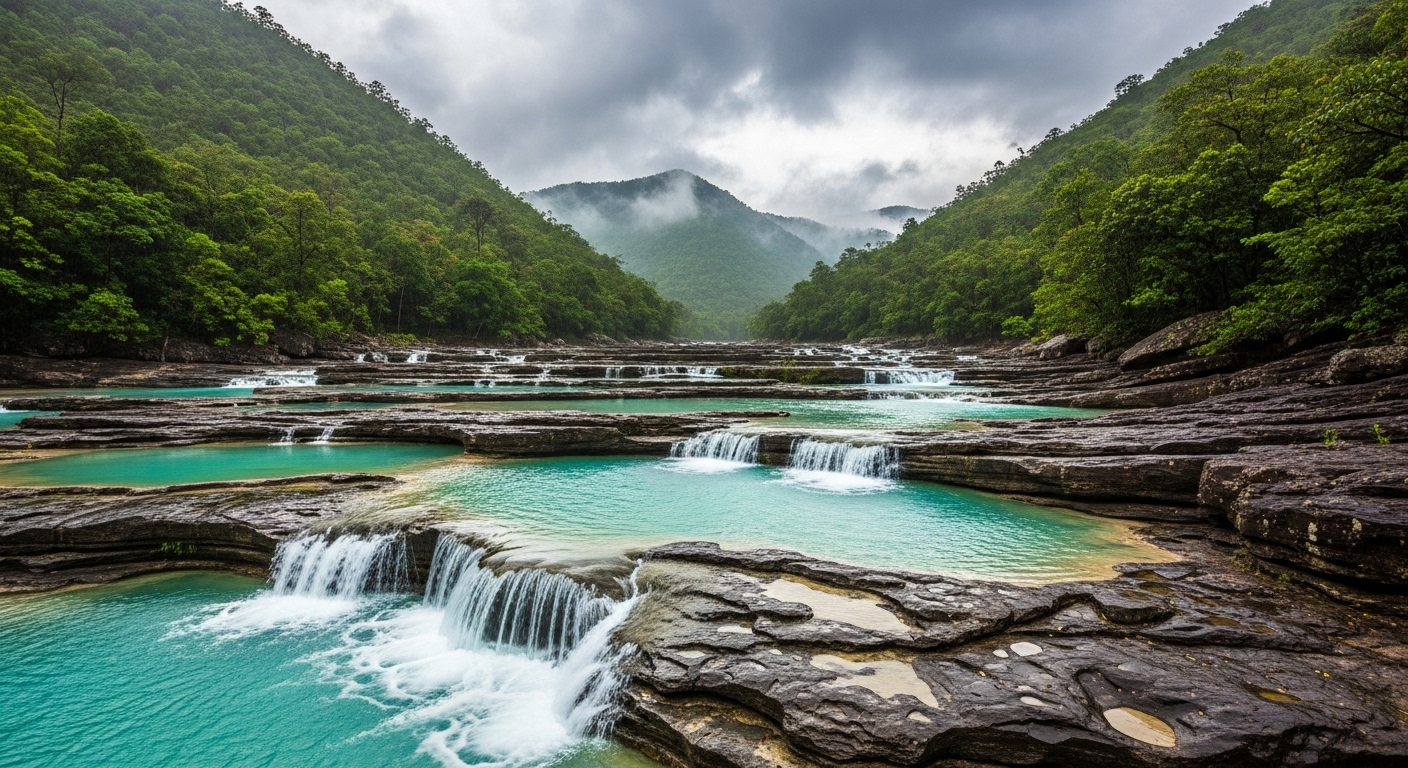
There is something magical about landscapes that exist only for a brief moment. Monsoon step pools that appear for two months are among the most fascinating seasonal phenomena in the world. Hidden in rocky terrains, forested hills, and ancient stone corridors, these temporary water formations emerge during the rainy season, transform into breathtaking turquoise terraces, and then disappear almost as quietly as they arrived.
Imagine climbing a rugged trail in late summer and suddenly discovering natural staircases carved by centuries of water flow. Rainwater fills each rocky depression, forming layered pools that shimmer under cloudy skies. For just a short window each year, these step pools become nature’s temporary infinity pools. Then, as the monsoon retreats, they fade back into dry stone formations. Have you ever seen a natural wonder that only exists for weeks?
What Are Monsoon Step Pools?
Monsoon step pools are natural rock formations that fill with rainwater during intense seasonal rainfall. They often resemble human-made stepwells or terraced baths, but they are entirely shaped by erosion, geological layering, and consistent seasonal flow patterns.
In regions influenced by monsoon systems—such as India, Sri Lanka, parts of Southeast Asia, and even select African highlands—these pools emerge dramatically. Water cascades down sloped rock faces, collecting in depressions that form clear, shallow basins. Because rainfall is heavy but seasonal, the pools remain visible for only one or two months before evaporation and drainage reclaim the landscape.
These formations are sometimes mistaken for ancient architectural structures. In fact, travelers visiting sites like Incredible India often confuse monsoon pools with historic stepwells such as Rani ki Vav. The difference? Stepwells are engineered marvels. Monsoon step pools are nature’s spontaneous architecture.
Why Do They Appear Only for Two Months?
The key lies in rainfall patterns. Monsoon climates are defined by concentrated seasonal rain. During these months, massive amounts of water fall in short periods. Rock surfaces that remain dry for most of the year suddenly channel flowing streams.
When rainfall slows, the water source vanishes. Without continuous flow, pools gradually shrink and disappear. This temporary existence makes monsoon step pools that appear for two months incredibly special. You cannot visit them in winter or spring and expect the same sight.
Doesn’t that make them even more precious? Experiences that are limited in time often feel more meaningful.

Where Can You Find Monsoon Step Pools?
Several regions around the world are known for seasonal step pool formations:
- Western Ghats, India: During peak monsoon season, rocky plateaus in Maharashtra and Karnataka transform into cascading terraces of water. Travelers flying with Air India or regional carriers often plan monsoon treks specifically to witness these formations.
- Sri Lanka’s Hill Country: Rain-fed rock basins form near waterfalls and forest reserves. These temporary pools attract hikers and eco-tourists.
- Thailand’s National Parks: Areas like Erawan National Park display layered waterfall systems that swell dramatically during rainy months. Details are often featured on Thailand Tourism.
- Vietnam’s Highlands: Seasonal rainfall creates terraced rock pools along jungle trails, offering photographers dramatic compositions.
- East African Highlands: In select volcanic terrains, heavy seasonal rains create shallow rock pools that disappear once dry conditions return.
Have you ever planned a trip around the weather instead of avoiding it? Monsoon travel flips the script entirely.
The Geological Science Behind These Pools
These pools form through a process called differential erosion. Softer rock layers erode faster than harder layers, creating natural depressions. Over centuries, water deepens these cavities. During heavy rain, gravity drives water downhill, filling each depression in sequence.
The result is a staircase effect. Water spills from one level to the next, forming symmetrical or organic-looking terraces. Because monsoon rains are intense but temporary, the pools rarely become permanent lakes.
Geologists consider these formations indicators of long-term climate patterns. Their size, depth, and distribution reveal how rainfall has shaped landscapes for centuries.
Photography and Visual Appeal
Few natural scenes rival the aesthetic beauty of monsoon step pools that appear for two months. The combination of dark stone, bright green moss, and reflective water creates dramatic contrasts. Mist from light rain enhances depth, making landscapes look cinematic.
Photographers often visit during early morning or late afternoon when diffused sunlight softens reflections. Travel platforms such as Lonely Planet frequently highlight these seasonal spots for adventure travelers.
If you had only a short window to capture a rare landscape, would you brave rainy trails to photograph it?
Cultural Connections to Seasonal Water
In many monsoon-driven regions, water is deeply spiritual. Temporary pools symbolize renewal, fertility, and seasonal cycles. Local communities often celebrate the arrival of rains with festivals tied to agriculture and natural abundance.
Some villages even treat monsoon step pools as sacred gathering spots. Children swim in shallow terraces. Elders share stories about how the landscape changes with each rainy season.
Have you noticed how seasonal water brings people together?
Safety Considerations
While beautiful, these pools require caution. Slippery rocks, sudden water surges, and unstable terrain can pose risks. Visitors should:
- Wear proper hiking footwear.
- Avoid visiting during heavy storm warnings.
- Travel with local guides when exploring remote areas.
- Respect environmental boundaries to prevent erosion damage.
Responsible tourism ensures that these delicate formations remain intact for future visitors.

Why Monsoon Travel Is Underrated
Many travelers avoid rainy seasons. Yet monsoon landscapes are often greener, less crowded, and dramatically alive. Monsoon step pools that appear for two months represent the peak expression of this seasonal transformation.
Airfares and accommodations may also be more affordable during shoulder seasons. Travel search tools like Skyscanner often reveal better pricing during monsoon months.
Would you trade sunny predictability for lush, dramatic scenery?
The Urgency of Visiting Before They Disappear
Climate change is altering rainfall patterns worldwide. Some regions are experiencing shorter monsoon cycles. Others face unpredictable extremes. This means certain step pool formations may shrink or shift over time.
That urgency adds emotional weight to visiting monsoon step pools that appear for two months. These are not permanent landmarks. They are living reminders of seasonal rhythms.
When nature offers something fleeting, shouldn’t we witness it while we can?
Planning Your Trip
Research peak monsoon months for your destination. In India, this is typically June through September. In Southeast Asia, patterns vary by region.
Pack waterproof gear. Allow extra travel time. Embrace flexibility. Seasonal landscapes reward patience and adaptability.
And most importantly, approach with curiosity. Temporary wonders often leave the strongest impressions.
Have you ever structured a journey around something that exists only briefly each year? Share your thoughts and seasonal travel stories in the comments below.
Follow WentWorld.com on our social media platforms for more rare, time-sensitive travel experiences and hidden natural phenomena around the globe.
Catch up on the top stories and travel deals by subscribing to our newsletter!










Leave a Reply
You must be logged in to post a comment.