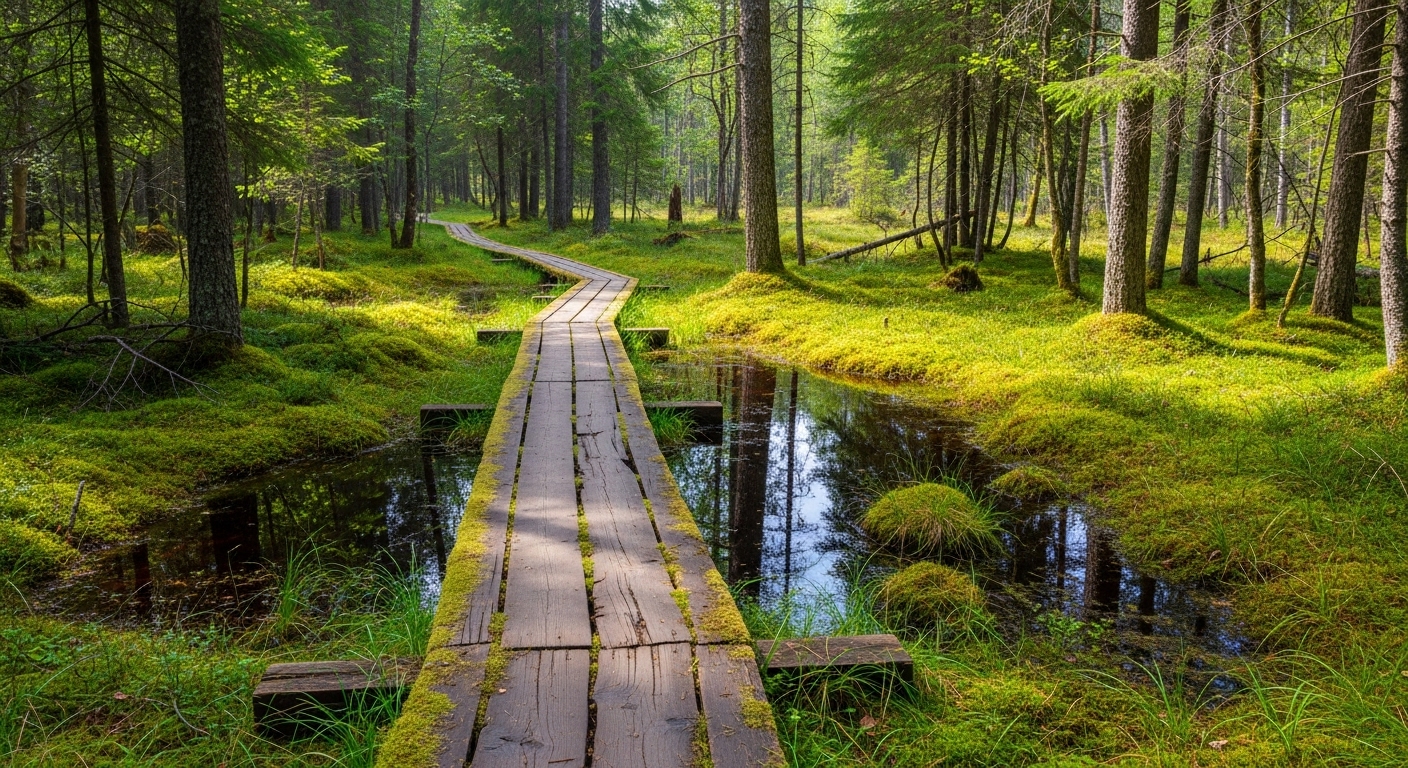
Forest boardwalks over peat and moss gardens offer one of the most peaceful and underrated travel experiences on the planet. These elevated wooden paths guide visitors gently above landscapes that have taken centuries, sometimes thousands of years, to form. Instead of loud viewpoints or dramatic peaks, these places reward patience, curiosity, and a willingness to slow down.
Have you ever walked through a forest where the ground felt soft, springy, and alive beneath your feet? That sensation often comes from peatlands and moss gardens. They may look simple at first glance, yet they are among the most complex and valuable ecosystems on Earth. Forest boardwalks exist not to dominate these environments, but to protect them while still allowing people to experience their quiet beauty.
Understanding Peat and Moss Gardens
Peat and moss gardens are formed in wet, low-oxygen environments where plant material decomposes very slowly. Over time, layers of moss, grasses, and organic matter accumulate, creating peat. This process happens at an incredibly slow pace, often just a few millimeters per year.
Because of this slow formation, peatlands act like natural archives. They store carbon, preserve ancient plant material, and regulate water systems across entire regions. In fact, peatlands store more carbon than all the world’s forests combined, despite covering far less land.
Moss gardens, especially those dominated by sphagnum moss, help maintain this delicate balance. They hold water like a sponge and create acidic conditions that prevent rapid decay. Without careful protection, these systems can be damaged in a single season.
Why Forest Boardwalks Are Essential
Walking directly on peat or moss can compress the ground, disrupt water flow, and permanently damage plant life. Even light foot traffic can alter these ecosystems for decades. Forest boardwalks over peat and moss gardens provide a simple yet powerful solution.
By elevating visitors above the ground, boardwalks reduce pressure on fragile surfaces. They also guide movement, preventing people from wandering into sensitive areas. This controlled access allows ecosystems to remain intact while still being appreciated.
In many protected areas, boardwalks are paired with educational signage. These signs explain how peat forms, why moss is vital, and how climate change affects these environments. As a result, visitors leave not only relaxed, but better informed.
Famous Forest Boardwalks Around the World
Some of the most iconic forest boardwalks over peat and moss gardens can be found in Finland. Finnish national parks such as Repovesi National Park and Lemmenjoki National Park feature long wooden walkways crossing vast peat bogs and moss-covered wetlands.
In Norway, forest boardwalks pass through misty boglands framed by birch and pine forests. The atmosphere often feels timeless, especially in early mornings when fog drifts low across the moss.
Canada also offers remarkable examples. In places like Kejimkujik National Park, raised wooden paths guide visitors through peatlands filled with rare plants, reflective pools, and quiet wildlife habitats.

The Sensory Experience of Walking Above Moss
Forest boardwalks over peat and moss gardens engage the senses in subtle ways. Sound is the first thing many people notice. Footsteps echo softly on wood, while the surrounding moss absorbs noise, creating an unusual sense of calm.
Visually, these landscapes are rich without being overwhelming. Layers of green dominate the scene, broken occasionally by pools of dark water or clusters of delicate flowers. Light filters through trees and reflects off wet surfaces, creating a gentle glow.
There is also a distinct scent in peatlands. It is earthy, clean, and slightly sweet. Many visitors describe it as grounding, almost meditative. Have you ever noticed how certain places seem to slow your thoughts without effort? Moss gardens have that quiet power.
Wildlife Along Forest Boardwalks
Despite their calm appearance, peat and moss gardens support diverse wildlife. Birds nest close to the ground, insects thrive in damp conditions, and amphibians depend on steady moisture to survive.
In northern regions, visitors may spot cranes, owls, or even reindeer moving slowly through the wetlands. In other climates, dragonflies hover above water pools while frogs rest among moss cushions.
Because boardwalks minimize disturbance, animals often behave naturally. This makes forest boardwalks over peat and moss gardens ideal for quiet wildlife observation.
Seasonal Changes in Peat and Moss Landscapes
One of the most rewarding aspects of visiting these boardwalks is seeing how dramatically the landscape changes with the seasons. In spring, fresh moss growth creates bright green carpets, while small flowers bloom briefly but vividly.
Summer brings longer daylight and warmer temperatures. Insects buzz gently, birds call from hidden nests, and reflections shimmer in peat pools. The boardwalk becomes a peaceful corridor through living greenery.
Autumn transforms moss gardens into muted tones of gold, rust, and deep green. In winter, snow-covered boardwalks feel almost surreal, offering silent walks above a resting ecosystem.
Why Travelers Seek These Quiet Trails
Modern travel often feels rushed and overstimulating. Forest boardwalks over peat and moss gardens offer the opposite experience. These trails encourage slow movement and mindful observation rather than speed or achievement.
They appeal to travelers of all ages and abilities. Boardwalks are usually flat, stable, and well-maintained, making them accessible without requiring hiking expertise.

Have you ever returned from a trip feeling mentally refreshed rather than tired? Many visitors describe these walks as moments of reset, where time feels less urgent and nature takes the lead.
Conservation Through Design
Forest boardwalks are more than tourist infrastructure. They represent a conservation philosophy that balances access with protection. Instead of closing sensitive areas entirely, these paths invite respectful exploration.
By experiencing peat and moss gardens firsthand, visitors develop a deeper appreciation for their importance. This awareness often leads to greater support for conservation efforts.
As climate change threatens peatlands worldwide, responsible tourism becomes part of the solution. Well-designed boardwalks help ensure these ecosystems remain intact for future generations.
The Role of Education and Awareness
Many boardwalk trails include interpretive panels explaining how peat forms, why moss is vital, and how wetlands influence global climate. These small details turn a simple walk into a learning experience.
Visitors often leave surprised by how much these quiet landscapes contribute to environmental stability. Understanding this connection changes how people view wetlands, shifting them from overlooked spaces to essential ecosystems.
This educational aspect is one reason forest boardwalks over peat and moss gardens resonate so deeply with thoughtful travelers.
Forest boardwalks over peat and moss gardens remind us that nature does not need spectacle to inspire awe. Sometimes, the most meaningful experiences come from quiet places that ask us to slow down and pay attention.
Would you enjoy walking above centuries-old moss, listening to the forest breathe around you? Or have you already explored a peatland boardwalk somewhere in the world? We would love to hear your experiences and thoughts.
For more rare landscapes, mindful travel ideas, and destinations that reveal the deeper stories of our planet, follow WentWorld on social media and stay connected with journeys that move beyond the surface.
Catch up on the top stories and travel deals by subscribing to our newsletter!