If you’ve ever packed for a trip and stared at your suitcase thinking, “How in the world will all of this fit?”—you’re not alone. Every traveler has faced the classic battle of luggage versus stuff. And that’s exactly where the debate of packing cubes vs compression bags comes into play. Two different tools. Two different promises. But which one actually wins in real use?
Let’s be honest here. Travel gear companies love to market products as “must-haves,” and both packing cubes and compression bags get plenty of hype. But when you’re standing in your room trying to zip up a suitcase that looks like it’s on steroids, all the fancy marketing doesn’t matter. What matters is: do they actually help you? And if they do, which one is worth your money and suitcase space?
The Case for Packing Cubes: Organized Chaos, Tamed
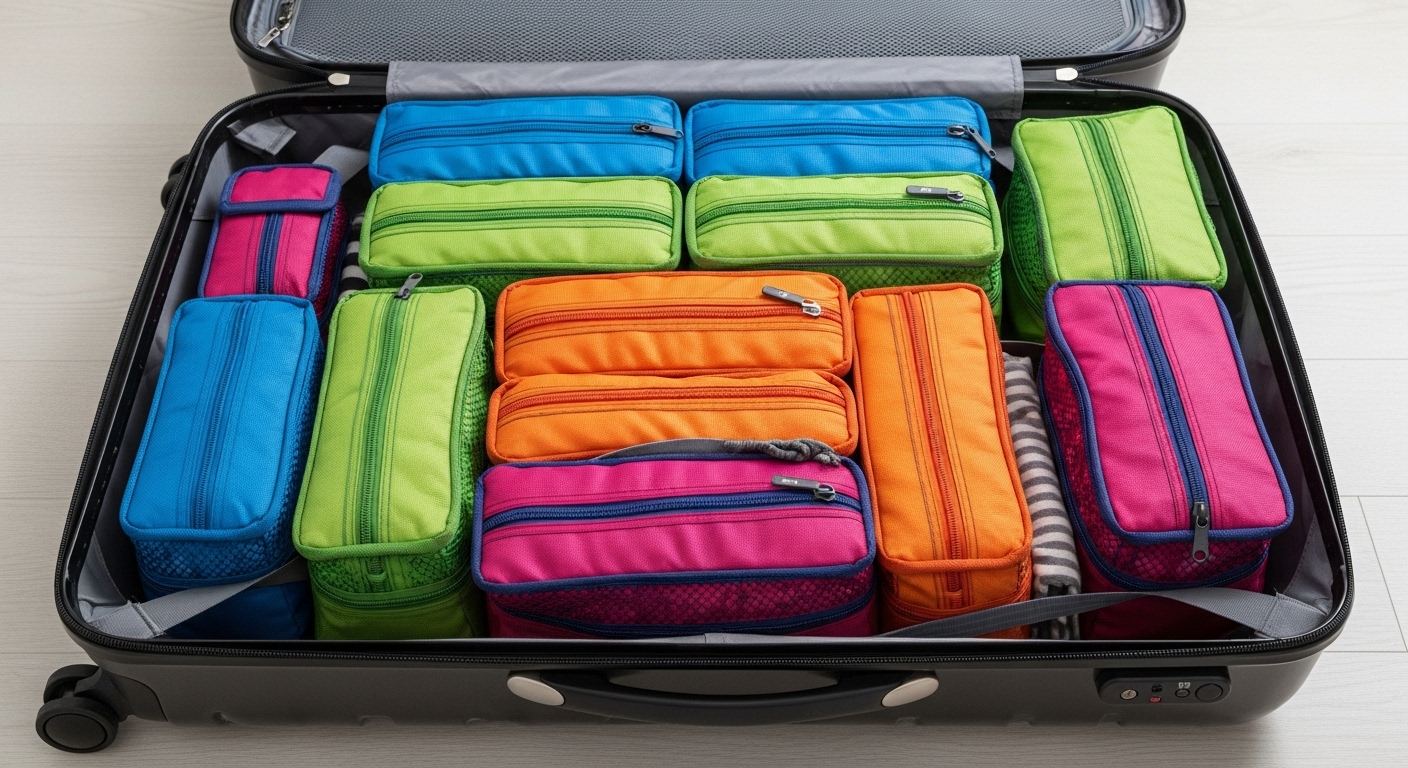
Packing cubes are like drawers for your suitcase. You slip your clothes into these zippered fabric containers, then slide them into your bag. Suddenly, instead of one big messy pile of clothes, you’ve got neat little sections. One cube for shirts, one for pants, one for underwear and socks—it’s suitcase Tetris at its finest.
But here’s the real magic of packing cubes: it’s not just about saving space, it’s about saving sanity. Imagine arriving at your hotel, opening your suitcase, and not having to dig through everything just to find your favorite t-shirt. That’s the kind of stress-free travel that packing cubes promise. And honestly? They deliver on that promise pretty well.
The Case for Compression Bags: The Power of the Squeeze
Compression bags, on the other hand, don’t really care about keeping you organized. They’re all about one thing: making your stuff smaller. You roll or zip your clothes into a bag, squeeze out the air, and suddenly you’ve got a flat, compact package that takes up way less space. If you’re traveling with bulky sweaters, jackets, or winter clothes, compression bags can feel like pure sorcery.
But let’s be real—compression bags aren’t perfect. Sure, they save space, but they don’t make your suitcase lighter. In fact, you might be tricked into packing more just because you’ve suddenly got the room. And when you need to repack for your trip home, finding a spot to sit on the floor and squeeze all the air out again can be… well, less than glamorous.

So, Which One Actually Wins in Real Use?
Here’s the million-dollar question: when it comes to packing cubes vs compression bags, which one should you use? The answer isn’t as simple as picking a “winner.” It really depends on your travel style, your destination, and what kind of traveler you are.
If you’re someone who values organization and wants to keep your clothes neat and tidy, packing cubes are your best friend. If you’re traveling to colder destinations or need to squeeze bulky items into a carry-on, compression bags might feel like a lifesaver. And honestly? Many experienced travelers use both. Cubes for organization, compression bags for the bulkier stuff. It’s like the dream team of packing strategies.
Real-Life Scenarios: Where Each Shines
Let’s put this into context with some scenarios:
- The Minimalist Traveler: You’re flying with just a carry-on. Every inch matters. Compression bags let you pack that extra jacket or pair of jeans without going overboard. But beware—airlines weigh bags, not just size them. Compression won’t help with weight limits.
- The Family Traveler: You’ve got kids, snacks, and half your house in your luggage. Packing cubes will save your sanity. Separate everyone’s clothes into their own cubes and suddenly unpacking doesn’t feel like a nightmare.
- The Backpacker: Organization matters, but so does space. This is where a hybrid approach shines. A couple of cubes for organization, one compression bag for bulky gear like sleeping bags or coats.
- The Business Traveler: You’re on the go, in and out of hotels. Packing cubes help keep your shirts and trousers wrinkle-free and easy to grab before a meeting. Compression bags? Not as practical here.
The Downsides Nobody Talks About
Of course, it’s not all sunshine and rainbows. Both of these tools have downsides. Packing cubes don’t actually save much space—they just reorganize it. And if you’re not naturally neat, you might find yourself stuffing random items into cubes and defeating the purpose.
Compression bags? They can wrinkle the life out of your clothes. That bulky sweater might fit, but your dress shirts will come out looking like they’ve been through a storm. Plus, some require a vacuum, which isn’t exactly handy in a hostel. Even the roll-up ones can be a workout to use.
What Travelers Really Say
If you scroll through forums, travel groups, or YouTube packing videos, you’ll see a pattern. Travelers swear by packing cubes for organization. They make unpacking easier, they keep dirty and clean clothes separate, and they just make life on the road feel less chaotic. Compression bags get love too, but often in a more niche way—mainly for trips that involve winter clothes or long-term travel.
So, if you’re trying to choose between them, ask yourself: do you value order, or do you value space? The answer will point you in the right direction.
At the end of the day, travel is supposed to be fun, not stressful. Don’t feel like you’re failing if you don’t have the perfect packing system. Packing cubes vs compression bags isn’t about one being “right” and the other being “wrong.” It’s about finding what makes your journey smoother. If you’re curious, try both. Experiment. Travel isn’t one-size-fits-all, and neither is packing.
So, what do you think? Have you used packing cubes or compression bags on your trips? Which worked better for you—and why? Drop your thoughts in the comments below! We’d love to hear your tips and stories. And while you’re here, make sure to follow us on our social media platforms for more travel hacks, guides, and real-world experiences. Let’s make travel smarter together.
Catch up on the top stories and travel deals by subscribing to our newsletter!