Deserts are full of stories, but few are as mesmerizing as desert mirages you can photograph safely. Imagine the shimmering heat of the sun bending light over vast sand dunes, creating visions of water or distant objects that aren’t really there. These illusions have fascinated travelers, poets, and scientists for centuries, and with modern photography, capturing them has become an art form.
What makes these mirages so captivating is their ephemeral nature. You might be walking for hours across golden sands, and suddenly, a ripple of water appears on the horizon—or the desert seems to ripple with reflections. But as you approach, the illusion vanishes. The challenge, and the thrill, is capturing it in that perfect moment. Have you ever seen a phenomenon so fleeting it almost feels like magic?
In this WentWorld.com guide, we’ll explore the most photogenic desert mirages, discuss why they occur, and provide tips for photographing them safely. We’ll also uncover which locations around the world are best for mirage photography, so you can plan a trip that blends adventure with the art of capturing light and illusion.
What Are Desert Mirages and Why Do They Happen?
Desert mirages occur when layers of air at different temperatures bend light rays. The effect, known as refraction, tricks the human eye into seeing water, inverted images, or floating objects where none exist. Heat rises from the sand, creating hot air near the surface and cooler air above. Light passing through these layers bends, producing the illusion of lakes, distant vegetation, or even buildings.
There are several types of mirages, but the most common in deserts are inferior mirages. These create the illusion of water on the horizon and are often mistaken by travelers for real oases. Superior mirages, though rarer, can produce floating or inverted images of distant mountains, dunes, or even vehicles.
Understanding how these illusions form can help photographers anticipate them. Have you ever wondered how nature can play tricks on our senses without any technology involved? That’s the wonder of desert mirages.

Top Deserts for Mirage Photography
Some deserts are more likely to produce photogenic mirages than others. Factors like air temperature, sand composition, and terrain affect how light bends. Here are some of the most iconic locations:
Sahara Desert, North Africa
The Sahara is famous for its vast sand seas, or ergs. Inferior mirages appear frequently during midday, creating the classic illusion of water lakes in the distance. Photographers often combine these mirages with dune formations, capturing surreal landscapes that look like something out of a dream. Guided tours provide safe routes to avoid disorientation in these vast sand seas.
Rub’ al Khali, Arabian Peninsula
The “Empty Quarter” is the largest continuous sand desert on Earth. Mirages here are especially dramatic because of the uniformity of the dunes. Superior mirages sometimes make distant dunes appear to float, creating otherworldly compositions. Airlines like Emirates provide easy access to nearby cities, but photography here requires careful planning and hydration.
Namib Desert, Namibia
The Namib offers stark contrasts: red dunes, blue skies, and occasional mirages that seem to turn the desert into a shimmering sea. Photographers are drawn to locations like Sossusvlei, where early mornings and late afternoons provide the best light. Tours guided by local experts ensure safe travel across shifting sands.
Mojave Desert, United States
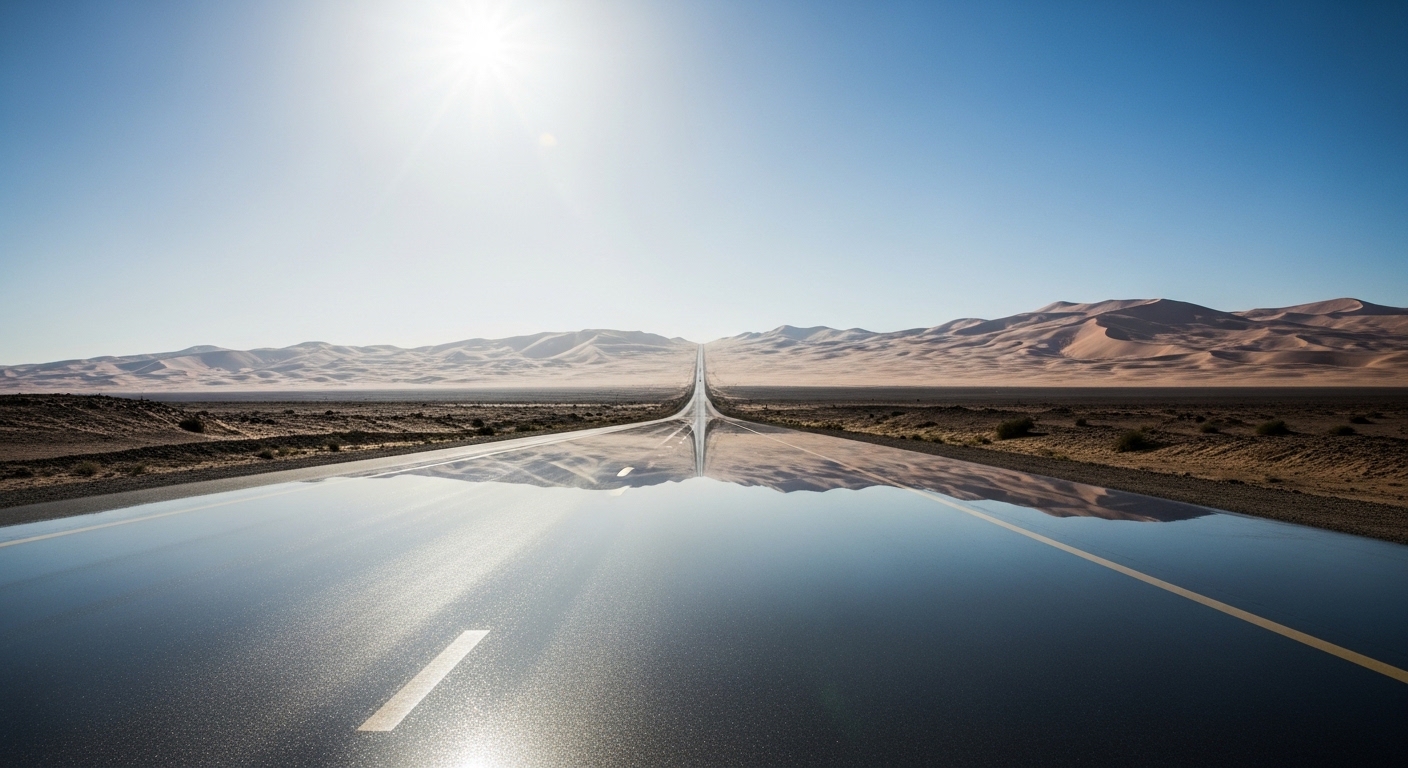
The Mojave is home to famous mirages along desert highways. On hot summer afternoons, stretches of asphalt appear to glisten with water. While these are small-scale mirages compared to vast dunes, they are perfect for creative photography, especially for urban-desert contrasts. Local guides and road safety information from National Park Service ensure that photography is done responsibly.
Tips for Photographing Desert Mirages Safely
Capturing mirages isn’t just about luck; preparation makes a huge difference. Here are some tips:
- Plan your timing: Midday is when inferior mirages are most visible, but early mornings and late afternoons offer softer light for better photos.
- Use proper lenses: Telephoto lenses can help isolate mirages in distant landscapes, while wide angles capture context.
- Keep safe distances: Never chase mirages recklessly. The illusion may tempt you to walk toward “water,” but the desert floor may hide hazards.
- Stay hydrated and informed: Local guides know which areas are safest. Carry sufficient water, sunscreen, and protective clothing.
- Experiment with reflections: Some mirages create inverted images. Using polarizing filters can enhance the effect in photographs.

Creating Art with Desert Mirages
Desert mirages are not just photographic curiosities—they are creative opportunities. They allow photographers to play with composition, light, and optical illusion. By combining dunes, shadows, and mirages, you can create images that feel almost surreal, bridging art and science.
Some photographers even incorporate storytelling into mirage images, suggesting journeys, mysteries, or fantastical landscapes. The fleeting nature of mirages challenges photographers to act quickly, heightening the thrill of the moment.
Responsible Mirage Photography
While chasing mirages, it’s crucial to respect the desert ecosystem. The fragile soil and vegetation can be easily damaged, and local wildlife may be disturbed. Organizations like World Wildlife Fund emphasize sustainable desert tourism. Following their guidelines ensures that these natural illusions remain intact for future visitors.
Remember, the desert is not just a backdrop; it is a living environment. Photographers can capture its beauty without leaving a mark, creating images that inspire others to explore responsibly.
Why Desert Mirages Captivate Us
Mirages remind us of how perception and reality can differ. They challenge our senses, spark imagination, and teach patience. Observing and photographing a desert mirage is a meditation: you wait, you watch, and then you capture. There’s a unique satisfaction in freezing a moment that the naked eye might otherwise miss.
Have you ever experienced an optical illusion in nature that left you in awe? Desert mirages offer a safe and mesmerizing way to experience that feeling, especially when you follow best practices and respect the environment.
Photography enthusiasts, travel dreamers, and nature lovers all find something special in desert mirages. They’re a reminder that even in harsh, seemingly barren environments, the Earth offers moments of wonder and beauty.
If this guide inspired you to explore and photograph desert illusions, follow WentWorld.com on our social media platforms for more breathtaking adventures and insights into the world’s most extraordinary places.
Catch up on the top stories and travel deals by subscribing to our newsletter!