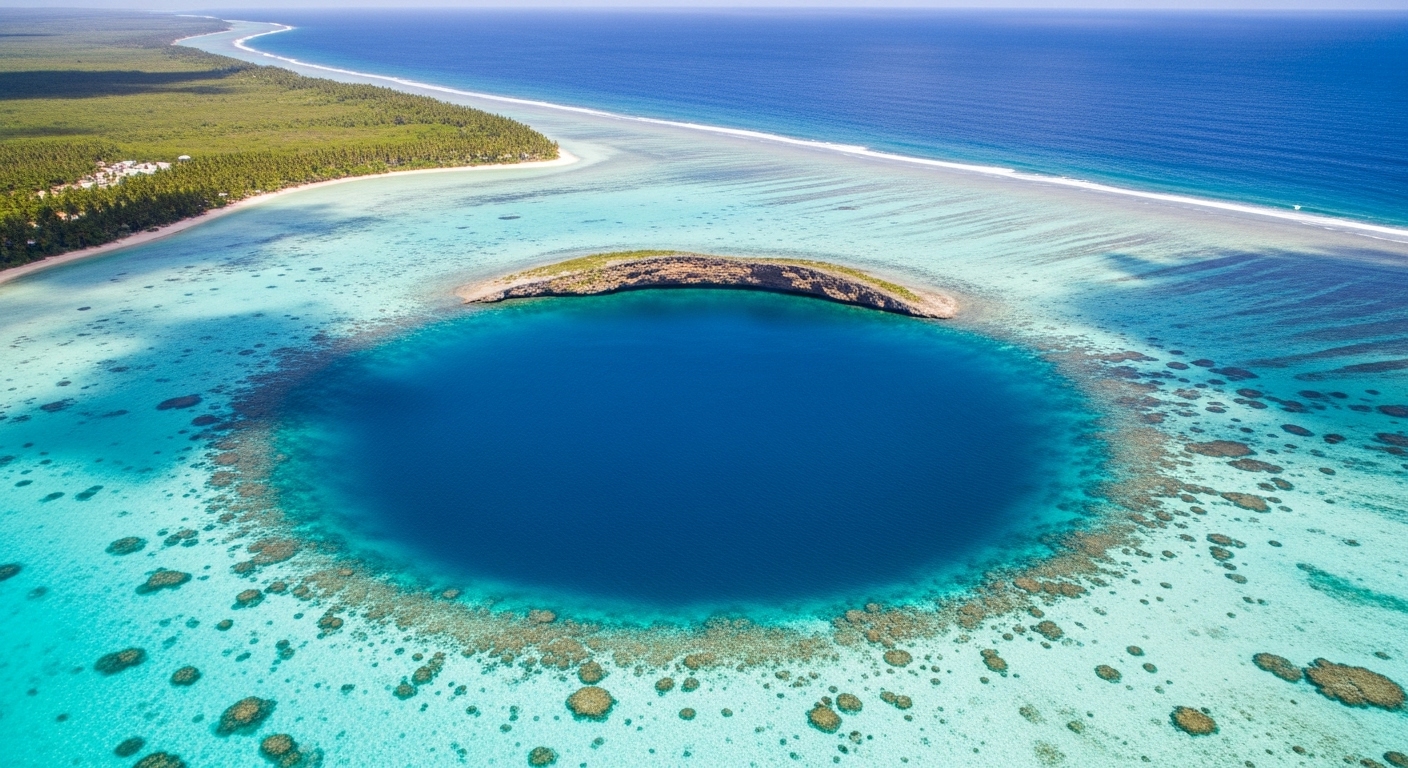
Have you ever stood at the edge of something mysterious — something unseen and ancient? That’s exactly how it feels when you start exploring underwater caves and marine sinkholes. These deep formations beneath the waves hold stories from Earth’s past, rare life forms, and a promise of adventure. Let’s dive together into the mystery, science, and thrill of discovering these hidden worlds.
What Are Underwater Caves and Marine Sinkholes?
Underwater caves and marine sinkholes are natural openings beneath the sea created over thousands of years by the power of water and rock. A sinkhole, also known as a “blue hole,” is usually a deep, round pit that drops vertically into darkness. These holes form when soluble rock like limestone dissolves and collapses, leaving behind large, water-filled shafts. When sea levels rise, the caves that once formed above water become submerged, creating today’s underwater networks.
Some of these caves stretch horizontally, while others drop straight down. In places like Mexico’s Yucatán Peninsula, they connect through long tunnels known as cenotes. Together, they form a vast maze that divers and scientists are still mapping today.
Why They Fascinate Us
So, why are so many people drawn to exploring underwater caves and marine sinkholes? Maybe it’s the mystery. Maybe it’s the beauty. Or maybe it’s the pure sense of exploration. Here are a few reasons why these places capture imaginations:
- They hide secrets: Blue holes look peaceful from above, but inside, they plunge into darkness and silence. What lies below the surface feels almost otherworldly.
- They tell Earth’s story: Inside some caves, you’ll find ancient stalactites — proof that these chambers were once dry. They reveal how sea levels and climates changed over time.
- They challenge us: Diving into a sinkhole demands focus, courage, and respect for nature. Every descent is a test of both skill and curiosity.
Would you ever dive into a place where light disappears and the only sound is your own breath? It’s a question that defines what kind of explorer you might be.

How These Hidden Worlds Form
The science behind underwater caves and marine sinkholes is just as fascinating as their beauty. It begins with a process called karst formation. Rainwater, slightly acidic from carbon dioxide in the air, slowly dissolves limestone and similar rocks. Over thousands of years, tunnels and voids appear underground. When the roof collapses, a sinkhole forms. If this happens near the ocean, saltwater fills the space, creating a marine sinkhole.
When glaciers melted after the last Ice Age, sea levels rose and flooded many of these caves. That’s why divers often find dry-cave formations far below today’s sea surface. Nature wrote its story inside these rocks, layer by layer, long before humans arrived.
Famous Caves and Sinkholes Around the World
Let’s take a quick world tour of some of the most iconic examples:
1. The Great Blue Hole, Belize: This massive circular sinkhole is 318 meters wide and over 120 meters deep. It’s so large that it can be seen from space. Divers visit from around the world to see its limestone formations and eerie depths. Stalactites deep inside show that it was once a dry cave before being flooded by the ocean.
2. Dragon Hole, South China Sea: Also called the “Eye of the South China Sea,” this blue hole reaches about 300 meters deep. Its depth and isolation make it one of the least explored places on Earth.
3. Taam Ja’ Blue Hole, Mexico: Discovered recently, this underwater sinkhole is believed to be over 420 meters deep — even deeper than Belize’s Great Blue Hole. Scientists are still studying its structure and life within.
4. Sistema Ox Bel Ha, Yucatán Peninsula: This is the longest known underwater cave system on the planet. It stretches more than 500 kilometers, connecting hundreds of cenotes through intricate passages. It’s a labyrinth of water and stone — a true wonder beneath our feet.

The Thrill of Exploration
Imagine gliding through clear turquoise water as sunlight fades above you. The deeper you go, the bluer the world becomes until everything turns dark and quiet. You’re surrounded by rock walls shaped by ancient water, and your flashlight reveals what no one else has seen in centuries. That’s the feeling of exploring underwater caves and marine sinkholes.
But it’s not just beauty — it’s a challenge. Divers face narrow tunnels, limited visibility, and the ever-present need to stay calm. Preparation and experience matter more than anything else. These dives remind us how fragile and powerful nature can be at the same time.
If you’ve ever thought, “What’s at the bottom of that deep blue hole?”, maybe it’s time to find out. Or at least, to keep dreaming about it.
Safety and Responsibility
Exploring these environments requires respect and caution. Here’s what divers focus on before taking the plunge:
- Training: Only certified cave divers should attempt to enter underwater caves. The training teaches how to handle tight spaces, use guide ropes, and manage emergencies.
- Equipment: Specialized lights, backup air tanks, and reels are essential. In cave diving, redundancy saves lives.
- Planning: Every dive starts with a map, clear communication, and a plan to turn back before air runs low. There’s no room for shortcuts.
- Conservation: These sites are delicate. Even a careless fin kick can damage ancient formations or stir up silt that takes hours to settle. Responsible divers leave no trace.
It’s not just about exploring; it’s about protecting what few have seen so others can experience it too.
Why They Matter for Science and Conservation
Beyond adventure, underwater caves and marine sinkholes are scientific goldmines. They preserve the history of Earth in layers of rock and sediment. They also hold unique ecosystems that thrive without sunlight. Microbes here survive in low-oxygen, high-sulfur conditions — offering clues to how life might exist on other planets.
For geologists, these formations act like time capsules. Stalactites, minerals, and fossils reveal how the planet changed over thousands of years. For biologists, they’re living laboratories where strange and resilient species evolve. And for environmentalists, they remind us of how fragile ocean systems are — and why protecting them matters more than ever.
Can You Explore Them Without Diving?
Absolutely! You don’t need to be a deep diver to appreciate these natural wonders. Many blue holes are visible from the air or accessible by snorkeling around their edges. Others can be explored virtually through 3D mapping projects or documentaries. Supporting marine conservation efforts and learning about these places is another meaningful way to “explore” them from home.
Would you ever take a trip just to see a blue hole in person? Tell us what you think in the comments — your story might inspire someone else!
Looking Ahead: The Future of Exploration
Technology is opening new frontiers for exploring underwater caves and marine sinkholes. Advanced drones, underwater robots, and sonar mapping are now revealing details beyond the reach of human divers. Scientists can explore safely while collecting data on temperature, salinity, and life forms deep within these systems. Every year, new caves are discovered, proving there’s still so much left to uncover beneath our oceans.
Exploring underwater caves and marine sinkholes isn’t just about adventure — it’s about curiosity and respect for nature’s power. These places remind us how small we are compared to the planet’s vastness. Yet they also show how much we can learn by looking deeper, both literally and figuratively.
Have you ever imagined descending into a world of darkness and discovery? If you have, you already share the spirit of an explorer. So keep asking questions, keep learning, and keep the sense of wonder alive. If you enjoyed this deep dive, follow us on our social media platforms for more fascinating stories about our planet’s hidden places. Stay curious — and keep exploring!
Catch up on the top stories and travel deals by subscribing to our newsletter!