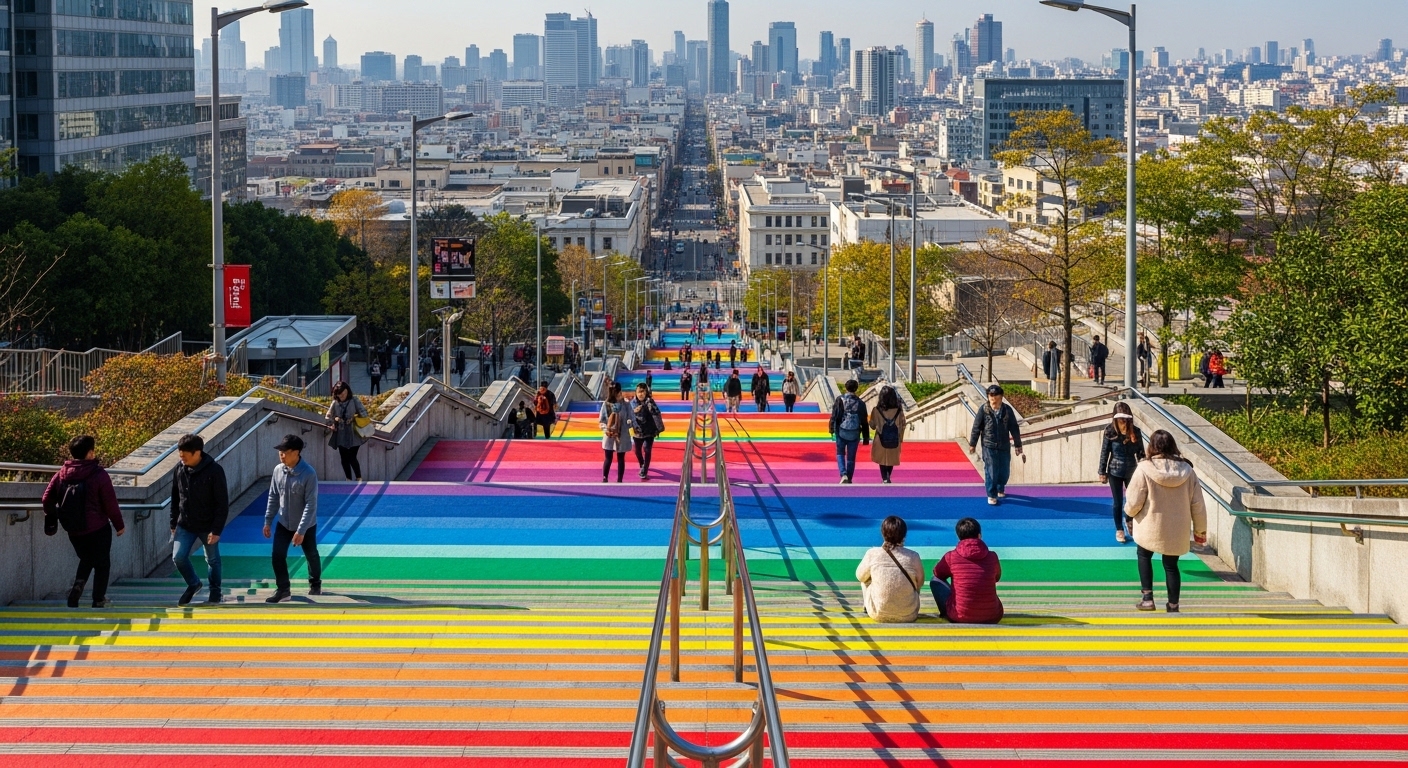
Urban workouts no longer belong only to gyms and running tracks. Across the world, rainbow stairs urban hikes (art + cardio) are reshaping how people move through cities by transforming plain staircases into colorful, expressive experiences. These painted steps invite locals and travelers to climb, pause, observe, and reconnect with their surroundings in a way that feels playful rather than demanding.
Instead of avoiding steep stairways, many people now seek them out. With every painted step, these staircases remove the intimidation factor of physical effort. At the same time, they replace it with curiosity, creativity, and a sense of discovery. As a result, urban hiking becomes accessible to more people, regardless of fitness level.
More importantly, rainbow stairs demonstrate how small artistic interventions can change behavior. When movement feels rewarding, people naturally engage more. Would you be more likely to take the stairs if each step felt like part of an artwork?
What Rainbow Stairs Really Represent
At first glance, rainbow stairs may look like decorative street art. However, their purpose runs much deeper. These staircases represent a shift in how cities think about public health, walkability, and creative placemaking.
Traditionally, stairways are purely functional. Because of this, they are often neglected, poorly maintained, or visually uninviting. By contrast, rainbow stairs elevate these overlooked spaces into destinations. Color, pattern, and storytelling transform something ordinary into something memorable.
In many cases, rainbow stairs urban hikes (art + cardio) are part of broader community initiatives. Local artists, residents, and students collaborate to design themes that reflect neighborhood identity. Consequently, the stairs become shared symbols rather than isolated art pieces.
Why Urban Hiking Is Gaining Momentum
Urban hiking has emerged as a response to crowded cities, limited green spaces, and sedentary lifestyles. Instead of traveling far to reach nature trails, people now explore elevation within city limits.
Stair hikes offer cardiovascular benefits comparable to traditional hiking. Additionally, they require no special equipment and no entry fees. When art is introduced, the experience becomes emotionally engaging as well.
Meanwhile, travelers are increasingly drawn to experiences that feel authentic rather than staged. Rainbow stairs fit perfectly into this shift. They exist as part of everyday life, not as tourist-only attractions.
Global Cities Leading the Rainbow Stair Movement
Several cities have embraced stair art as a way to revitalize neighborhoods and promote active lifestyles.
- Valparaíso, Chile: Famous for its hills and murals, Valparaíso uses painted staircases as extensions of its street art culture. These stairways connect neighborhoods while doubling as open-air galleries. More insights can be found through Chile Travel.
- Rio de Janeiro, Brazil: The Selarón Steps combine tile art with a demanding climb, turning fitness into an artistic pilgrimage. Over time, the staircase has become both a workout and a cultural landmark.
- San Francisco, USA: Community-led projects like the 16th Avenue Tiled Steps blend mosaic art with sweeping city views. Visitors often discover them through San Francisco Travel.
- Istanbul, Türkiye: Colorful staircases in hillside districts sparked conversations about art, public space, and expression. Even after repainting controversies, the idea of artistic stairs remains influential.
- Seoul, South Korea: In dense neighborhoods, painted stairs encourage walking over driving. City initiatives highlighted by Seoul Metropolitan Government emphasize wellness and accessibility.

Why Travelers Are Drawn to Rainbow Stair Hikes
For travelers, rainbow stairs offer discovery without obligation. They do not require tickets, guides, or schedules. Instead, they reward curiosity.
Because stair hikes slow you down, they create space for observation. You notice details, overhear conversations, and feel the rhythm of daily life. Consequently, memories formed on these climbs feel personal rather than rushed.
Rainbow stairs urban hikes (art + cardio) also appeal to travelers who enjoy combining activity with exploration. After all, seeing a city from elevated viewpoints often provides perspectives that streets cannot.
The Physical Benefits Hidden in Plain Sight
Stair climbing is among the most effective bodyweight exercises available. It strengthens the legs, improves balance, and boosts cardiovascular endurance.
Unlike gyms, staircases integrate exercise naturally into daily routines. As a result, people are more likely to stay consistent. When visual stimulation is added, motivation increases further.
Urban planners increasingly recognize this connection. Therefore, rainbow stairs are now viewed as wellness infrastructure rather than decorative extras.
Community Identity Painted Step by Step
Many rainbow stair projects begin with a simple goal: improve a neglected space. Over time, they evolve into community symbols.
Residents contribute stories, cultural references, or color themes. As a result, each staircase reflects local identity rather than a generic design.
When people see themselves represented in public art, they feel a stronger sense of belonging. Have you ever felt more connected to a neighborhood simply because it cared about beauty?

Maintenance, Challenges, and Longevity
Despite their success, rainbow stairs face practical challenges. Weather exposure fades colors. Heavy foot traffic wears down paint.
However, cities that plan for upkeep see lasting results. Some organize repainting days as community events. Others use protective coatings to extend durability.
Ultimately, long-term success depends on shared ownership. When people value the stairs, they help protect them.
The Future of Rainbow Stairs Urban Hikes
Looking ahead, rainbow stairs urban hikes (art + cardio) are likely to expand alongside walkability and wellness initiatives.
Some cities are experimenting with glow-in-the-dark paint, interactive storytelling, and mapped stair-hiking routes. Meanwhile, others are integrating stair art into tourism strategies.
Rather than requiring massive budgets, rainbow stairs prove that creativity can reshape cities one step at a time.
Have you encountered rainbow stairs during your travels, or would you go out of your way to climb them? Share your thoughts and experiences in the comments.
Follow WentWorld.com on our social media platforms for more stories about creative cities, active travel, and unexpected urban adventures.
Catch up on the top stories and travel deals by subscribing to our newsletter!