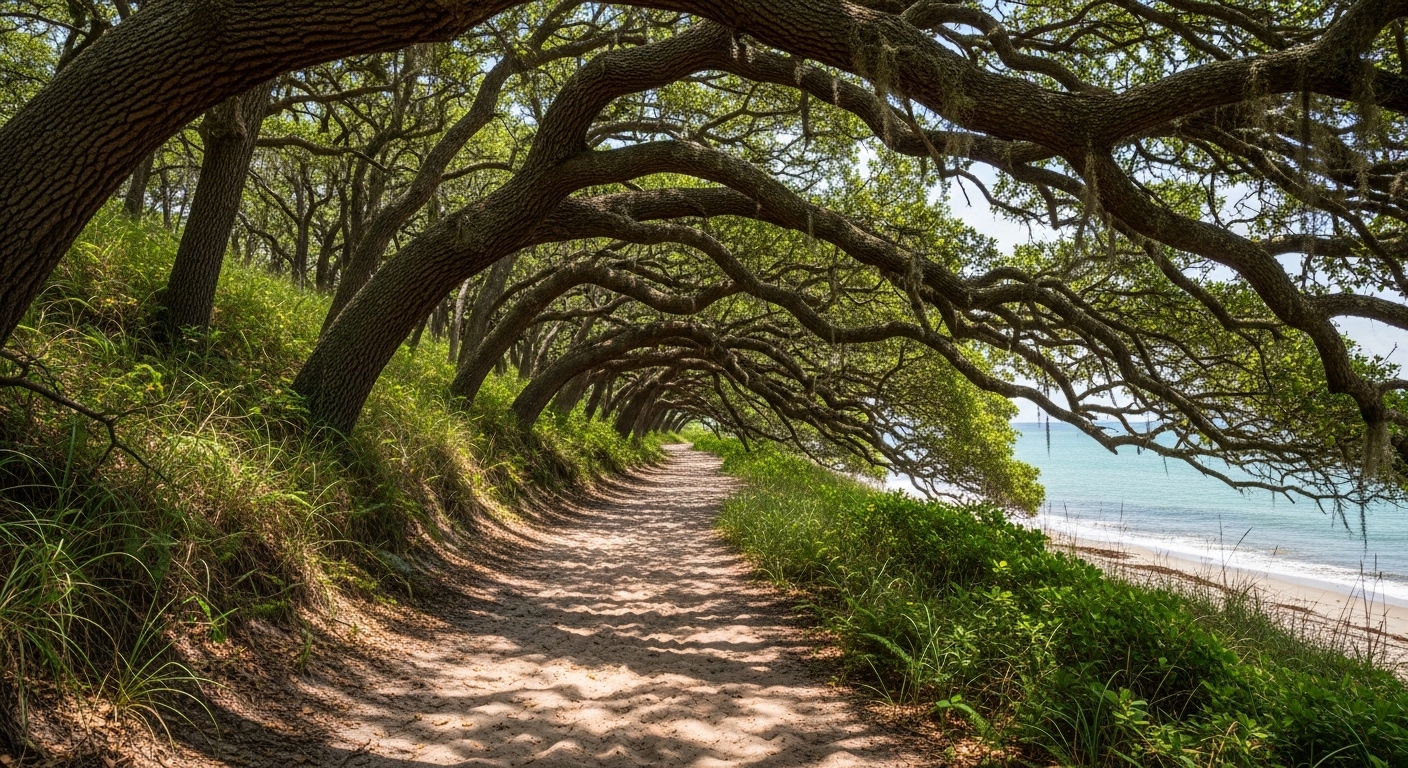
Maritime forests beach hikes are some of the most surprising coastal experiences in the world. Most people imagine beaches as wide-open spaces filled with blazing sun, sand dunes, and endless horizons. However, in certain destinations, the coastline tells a very different story. Here, dense forests stretch right up to the shore, forming shaded trails where you can walk beneath towering trees while hearing waves crash just steps away.
This rare blend of forest and sea creates an environment that feels calm, immersive, and almost magical. Instead of seeking shade from umbrellas or hats, hikers enjoy natural canopy cover while exploring beaches in a completely new way. Have you ever walked along a shoreline where trees arch overhead and the air feels cooler, fresher, and quieter?
At WentWorld.com, we love uncovering landscapes that challenge what travelers expect. Maritime forests prove that beaches are not always open and exposed. In fact, some of the most peaceful coastal hikes happen under leafy canopies where land and sea exist in perfect balance.
What Are Maritime Forests?
Maritime forests are coastal woodlands found near shorelines, often just behind dunes or directly along beaches. These forests have adapted to salty air, sandy soil, and strong winds. Trees here grow lower and more twisted than inland forests, yet they form dense canopies that provide shade and shelter.
Because of their location, maritime forests act as natural barriers. They protect inland areas from storms, reduce erosion, and support diverse ecosystems. At the same time, they create shaded pathways that make beach hiking more comfortable and visually stunning.
Why Maritime Forest Beach Hikes Are So Unique
Unlike typical beach walks, maritime forests beach hikes offer variety. One moment, you walk beneath oak branches or palm fronds. The next, the trail opens briefly to reveal the ocean before pulling you back into shade. This constant shift between forest and sea keeps the experience engaging.
Additionally, temperatures remain cooler under tree cover. Even during warmer months, hikers often feel relief compared to open beaches. As a result, these trails attract nature lovers who prefer slower, more reflective travel experiences.
Famous Places With Maritime Forest Beach Trails
Cumberland Island, Georgia, USA
Cumberland Island National Seashore is one of the most iconic examples of maritime forests meeting the sea. Massive live oaks draped in Spanish moss create shaded corridors just beyond the sandy shore.
Wild horses roam freely, adding to the sense of timelessness. Hikers often move between forested paths and quiet beaches, enjoying long stretches of shade before stepping back into open sunlight.
Assateague Island, Maryland & Virginia, USA
Assateague Island combines dunes, maritime forests, and undeveloped beaches. According to the National Park Service, these forests play a vital role in protecting the island from storms.
Walking here feels immersive. Pine trees and shrubs create shaded trails that parallel the coastline, offering a peaceful alternative to exposed beach walks.

Daintree Coast, Queensland, Australia
Along parts of Australia’s Daintree coastline, rainforest reaches the sea. This area near the Daintree Rainforest offers rare coastal hikes where dense canopy meets sandy shores.
The experience feels almost prehistoric. Thick vegetation, filtered sunlight, and ocean sounds blend into a setting that feels untouched by time.
Île de Ré, France
On Île de Ré, maritime pine forests sit close to the Atlantic coast. Cycling and walking paths wind through shaded woodland before opening onto calm beaches.
This balance between forest shade and ocean views makes the island popular with travelers seeking gentle outdoor activities rather than intense sun exposure.
The Experience of Walking Under Canopy by the Sea
Maritime forests beach hikes engage all senses. You hear waves through leaves instead of directly facing the wind. The scent of salt mixes with earthy forest aromas. Light filters softly through branches, creating patterns on sandy paths.
This environment encourages slower movement. Many hikers find themselves stopping often, not from fatigue but from curiosity. Birds, small mammals, and coastal plants appear more frequently here than on open beaches.
Wildlife and Ecosystems in Maritime Forests
These forests support a wide range of wildlife. Birds nest in tree canopies, while reptiles and small mammals shelter in undergrowth. Insects thrive, providing food for larger species.
Because maritime forests sit between land and sea, they act as ecological bridges. Their preservation helps maintain biodiversity and coastal stability.
Best Times to Explore Maritime Forest Trails
Spring and autumn are ideal for maritime forest hikes. Temperatures remain mild, and insects are less active. Summer remains enjoyable thanks to shade, though humidity can rise in tropical regions.
Early mornings often offer the best experience. Trails feel quieter, wildlife activity increases, and sunlight filtering through trees creates dramatic visuals.
Practical Tips for Hiking These Coastal Forests
- Wear sturdy shoes suitable for sand and roots.
- Carry water, even though shade keeps temperatures lower.
- Use insect repellent in warmer regions.
- Stay on marked trails to protect fragile ecosystems.
- Check tide schedules where trails approach the shoreline.

Why Maritime Forests Matter for Sustainable Travel
Maritime forests help combat coastal erosion and buffer storms. When travelers explore responsibly, they support conservation efforts by raising awareness of these fragile environments.
Many protected areas rely on tourism funding to maintain trails and habitats. Visiting these forests respectfully contributes to their long-term survival.
How These Trails Change the Way We See Beaches
Maritime forests challenge the idea that beaches must be open, hot, and crowded. Instead, they offer quiet, shaded alternatives that appeal to hikers, photographers, and travelers seeking peace.
Would you choose a shaded forest path over a sun-drenched shoreline? Or does the combination of both sound even better?
Maritime forests beach hikes reveal a softer side of coastal travel. They remind us that nature thrives in unexpected combinations. Walking beneath trees while waves roll nearby creates a sense of balance that few landscapes offer.
Follow WentWorld.com on our social media platforms to discover more hidden travel environments, rare landscapes, and meaningful journeys around the world.
Catch up on the top stories and travel deals by subscribing to our newsletter!