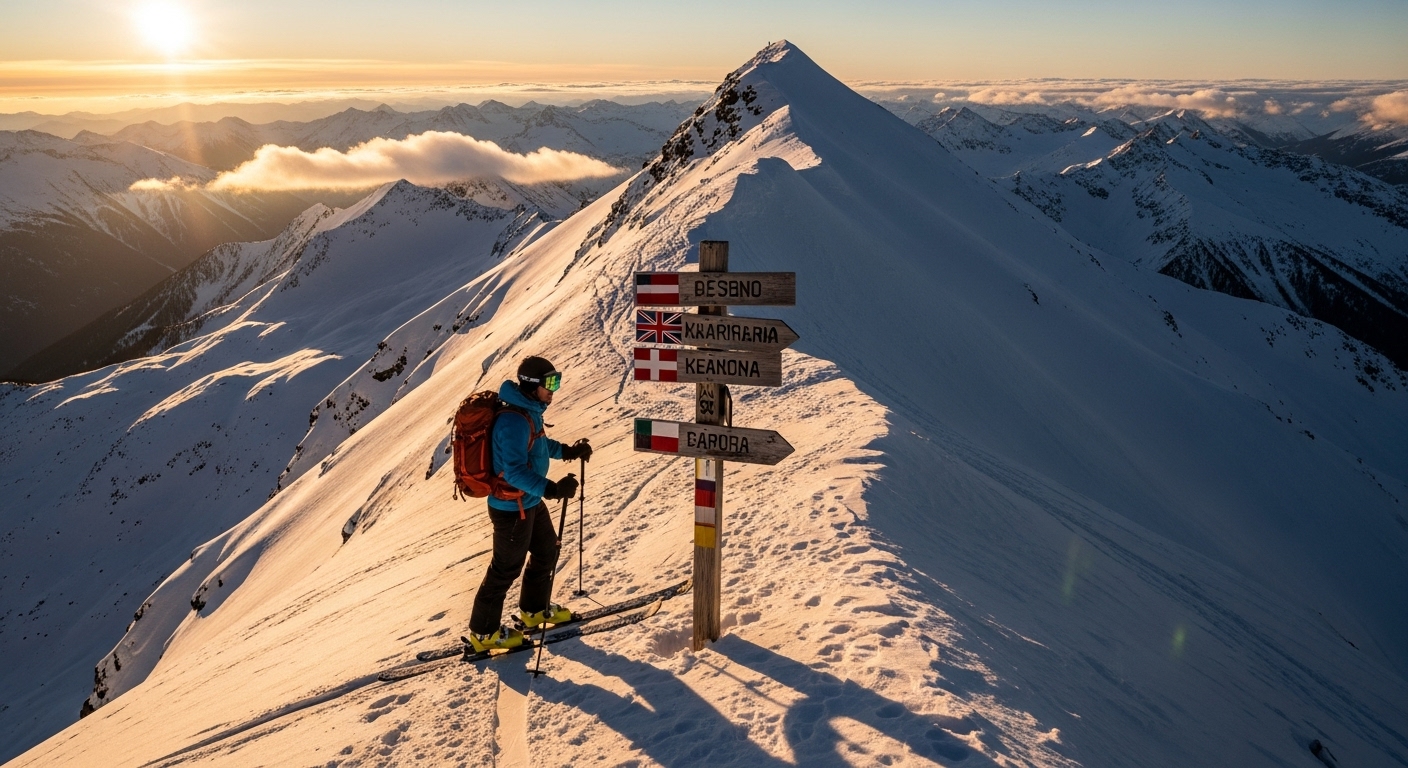
Imagine carving through fresh snow, crossing an invisible line, and suddenly realizing you’re skiing in another country. Borderless ski valleys: glide across countries turn international borders into seamless downhill journeys, where geography fades and pure motion takes over.
These ski regions exist because mountain landscapes don’t follow political boundaries. Over time, neighboring countries connected their resorts, lifts, and trails, creating vast ski areas that allow skiers to move freely across borders.
Have you ever traveled internationally without a passport check, simply by skiing downhill? And does the idea of changing countries mid-run make the experience more exciting? Let’s explore the world’s most fascinating borderless ski valleys.
What Makes Borderless Ski Valleys Possible
Borderless ski valleys rely on agreements between neighboring countries that share alpine terrain. Ski infrastructure, safety protocols, and trail markings are coordinated to allow smooth cross-border movement.
These regions often lie within the Schengen Area, where border controls are minimal. As a result, skiers enjoy uninterrupted travel while still respecting national regulations.
In borderless ski valleys: glide across countries, cooperation turns mountains into shared playgrounds.
Les Portes du Soleil: France and Switzerland
Les Portes du Soleil is one of the world’s largest international ski areas, linking resorts in France and Switzerland. Skiers can start their day in Morzine, cross into Switzerland at Champéry, and return by afternoon.
The region offers over 600 kilometers of pistes, with lifts designed to handle cross-border traffic effortlessly. France’s official tourism site France.fr highlights this area as a symbol of alpine collaboration.
Language, cuisine, and scenery subtly shift as you ski, adding cultural layers to every run.

Zermatt–Cervinia: Switzerland and Italy
At the foot of the Matterhorn lies one of the most iconic borderless ski valleys in the world. Zermatt in Switzerland connects directly with Breuil-Cervinia in Italy, allowing skiers to cross the border multiple times in a single day.
Wide slopes, high-altitude snow reliability, and panoramic views define this area. Switzerland Tourism MySwitzerland.com details how lifts and pistes link both sides seamlessly.
Many skiers plan lunch in Italy and dessert back in Switzerland.
Silvretta Arena: Austria and Switzerland
The Silvretta Arena connects Ischgl in Austria with Samnaun in Switzerland. Known for its modern lift system and long season, this valley blends lively après-ski culture with high-alpine terrain.
Crossing the border feels effortless, marked only by signs and subtle changes in architecture. Austria’s tourism portal Austria.info promotes the region as a premier international ski destination.
The experience combines sport, culture, and convenience.
Espace San Bernardo: France and Italy
Espace San Bernardo links La Rosière in France with La Thuile in Italy. This lesser-known international ski area offers wide slopes and fewer crowds.
The border crossing sits high on a mountain ridge, offering dramatic views in every direction. Italy’s tourism site Italia.it features this valley as a hidden gem.
Snow conditions and terrain vary slightly between countries, adding variety to the day.
Why Skiers Love Borderless Valleys
Borderless ski valleys offer scale. Skiers access more terrain, longer runs, and diverse landscapes without needing transportation.
They also provide cultural contrast. Skiing from one country to another may change food options, languages, and architectural styles, all within a few hours.
This combination keeps days dynamic and memorable.

Practical Considerations for Cross-Border Skiing
While borders feel invisible, skiers should still carry identification. Weather changes, lift closures, or injuries may require crossing back through controlled areas.
Ski passes usually cover the entire international area, but checking coverage in advance is essential. Booking platforms like Booking.com list accommodations that sit close to border crossings.
Local signage clearly marks country transitions for safety and orientation.
Safety and Rescue Coordination
Rescue services coordinate across borders in these valleys. Ski patrols train together and share communication systems.
If an incident occurs, responders operate based on location rather than nationality. This cooperation ensures fast and effective assistance.
Such coordination makes international skiing both thrilling and secure.
Environmental Impact and Responsibility
Borderless ski valleys face environmental challenges due to climate change and increased traffic. Many resorts invest in sustainable lift systems and snow management.
Organizations such as UNESCO encourage cross-border cooperation in protecting alpine ecosystems.
Responsible skiing helps preserve these landscapes for future generations.
Who Should Try Borderless Ski Valleys
These valleys suit intermediate to advanced skiers who enjoy long-distance exploration. They also appeal to travelers interested in cultural variety and alpine geography. If you enjoy skiing as a journey rather than isolated runs, borderless valleys deliver unmatched freedom.
Would you enjoy skiing into another country without stopping? Which international ski valley would you explore first? Share your experiences and winter travel dreams.
For more boundary-breaking destinations, unique travel experiences, and hidden geographic wonders, follow WentWorld on our social media platforms and keep exploring the world differently.
Catch up on the top stories and travel deals by subscribing to our newsletter!