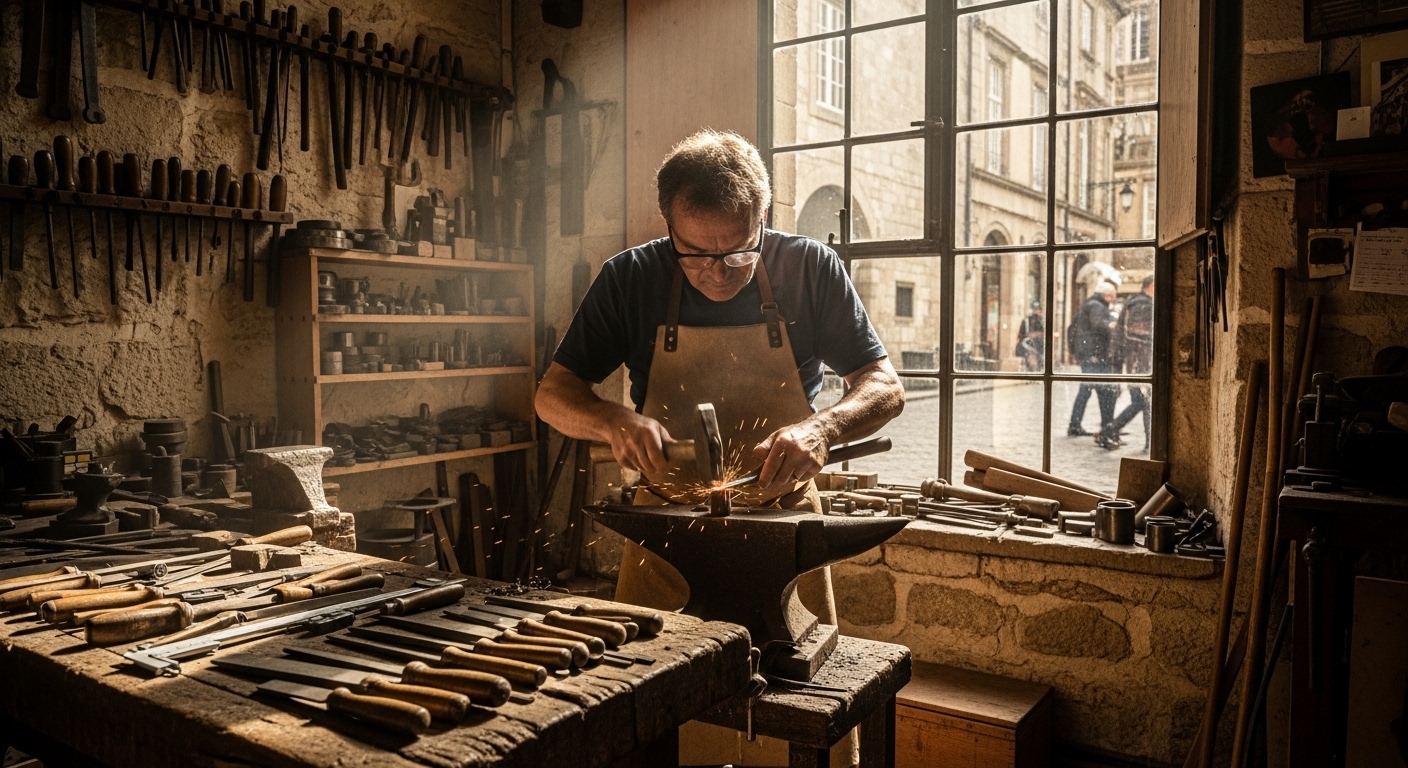
In a world driven by automation, fast production, and digital convenience, there are still places where human hands shape everyday life. Scattered across continents, there are remarkable Historic Towns Preserving Ancient Trades and Crafts, where skills passed down through generations continue to define identity, economy, and culture.
These towns are not museums frozen behind glass. They are living communities where blacksmiths still hammer iron, weavers still work looms, potters still shape clay, and woodworkers still carve by hand. Walking through these streets feels like stepping into another era — one where patience, precision, and tradition matter more than speed.
Have you ever wondered what craftsmanship looked like before machines replaced muscle and memory?
Why Ancient Trades Have Survived in Certain Towns
The survival of traditional crafts is rarely accidental. Geography, isolation, cultural pride, and historical importance often combine to protect these skills from extinction.
Many Historic Towns Preserving Ancient Trades and Crafts were once trade hubs, religious centers, or royal towns where specific skills were essential. Over time, these trades became deeply embedded in local identity, making them difficult to abandon.
In some cases, limited access to industrial resources slowed modernization, allowing traditional techniques to persist naturally.
Fes, Morocco – The Heart of Traditional Craftsmanship
Fes is one of the most celebrated examples of a city where ancient trades remain alive. Within its medieval medina, artisans practice leather tanning, metalwork, woodworking, tile-making, and textile dyeing using methods unchanged for centuries.
The famous Chouara Tannery still processes leather using natural dyes and manual labor, producing goods exported around the world. Apprentices learn by observing masters, often starting at a young age.
Morocco actively promotes cultural preservation through initiatives supported by Visit Morocco.
Murano, Italy – The Art of Glassmaking
Just outside Venice lies Murano, a small island world-renowned for its glassmaking tradition. For over 700 years, Murano artisans have refined techniques such as glassblowing, millefiori, and lampworking.
Glass furnaces still operate today, and master glassmakers guard their methods carefully. Each piece is shaped by breath, heat, and instinct — not machines.
Murano’s survival demonstrates how specialization can protect craftsmanship even in modern economies.
Varanasi, India – Silk Weaving Along the Ganges
Varanasi is one of the world’s oldest continuously inhabited cities and a center for handwoven silk textiles. Banarasi silk saris are created on wooden looms, often within family homes.
The weaving process is slow and intricate, involving detailed patterns woven thread by thread. These textiles are deeply tied to religious ceremonies and cultural identity.
India recognizes the importance of protecting such heritage through programs detailed by Incredible India.

Toledo, Spain – Steel Forged Through History
Toledo has been synonymous with steel craftsmanship since Roman times. Its swords, blades, and metalwork were once considered the finest in Europe.
Today, small workshops still produce ceremonial swords and knives using traditional forging methods. Visitors can watch artisans heat, hammer, and polish steel by hand.
Toledo’s metalworking legacy reflects how warfare, trade, and craftsmanship once shaped entire cities.
Bhaktapur, Nepal – Pottery and Woodcarving Traditions
Bhaktapur is a medieval town where artisans continue to shape clay and carve wood using centuries-old techniques. Pottery squares fill with spinning wheels, drying bowls, and artisans working barefoot in the dust.
Intricately carved wooden windows and temples demonstrate craftsmanship that has survived earthquakes, political change, and modernization.
Nepal’s cultural preservation efforts are supported by organizations such as Nepal Tourism Board.
What It Feels Like to Watch a Craftsperson at Work
Observing a skilled artisan is a quiet but powerful experience. There’s a rhythm to their movements — shaped by years of repetition — that feels almost meditative.
Unlike factory production, mistakes are visible, corrections are manual, and every finished piece carries subtle imperfections.
Have you ever noticed how handmade objects feel more personal, even when you don’t know who made them?
The Role of Apprenticeship in Craft Survival
Most ancient trades survive through apprenticeship rather than formal education. Knowledge is transmitted through observation, correction, and repetition.
In many Historic Towns Preserving Ancient Trades and Crafts, families pass skills down through generations, ensuring continuity and cultural pride.
This system creates deep respect for mastery and patience.
Challenges Facing Traditional Crafts Today
Despite their cultural value, traditional crafts face significant challenges. Mass-produced goods are cheaper, faster, and often more accessible.
Younger generations may leave towns in search of higher-paying jobs, threatening the continuity of ancient trades.
Preservation requires both economic support and social recognition.
How Tourism Supports Craft Preservation
Responsible tourism plays a crucial role in sustaining ancient crafts. When travelers purchase handmade goods directly from artisans, they help keep skills alive.
Workshops, demonstrations, and cultural tours provide additional income while raising awareness.
Airlines such as Qatar Airways and Iberia connect travelers to many historic craft towns worldwide.
Why Handmade Still Matters in a Digital World
Handmade objects carry time within them. They reflect hours of labor, learned mistakes, and human decision-making.
In contrast to automated production, ancient crafts remind us that value is not always measured by speed or volume.
These traditions also promote sustainability through local materials and minimal waste.

Who Should Visit These Towns
These destinations appeal to travelers who value culture, authenticity, and human connection. Artists, designers, historians, and slow travelers often find deep inspiration here.
They are ideal for those who prefer stories over souvenirs.
Why Preserving Ancient Trades Is Essential
Historic Towns Preserving Ancient Trades and Crafts are guardians of human knowledge. Once lost, these skills cannot easily be recovered.
They teach patience, discipline, and respect for materials — values increasingly rare in modern life. Protecting them means protecting cultural diversity itself.
Ancient trades survive because people choose to practice them, support them, and value them. When you visit these towns, you’re not just observing history — you’re participating in its continuation.
If meaningful cultural travel inspires you, follow us on our social media platforms for more stories like this. And tell us — which ancient craft would you love to learn firsthand?
Catch up on the top stories and travel deals by subscribing to our newsletter!