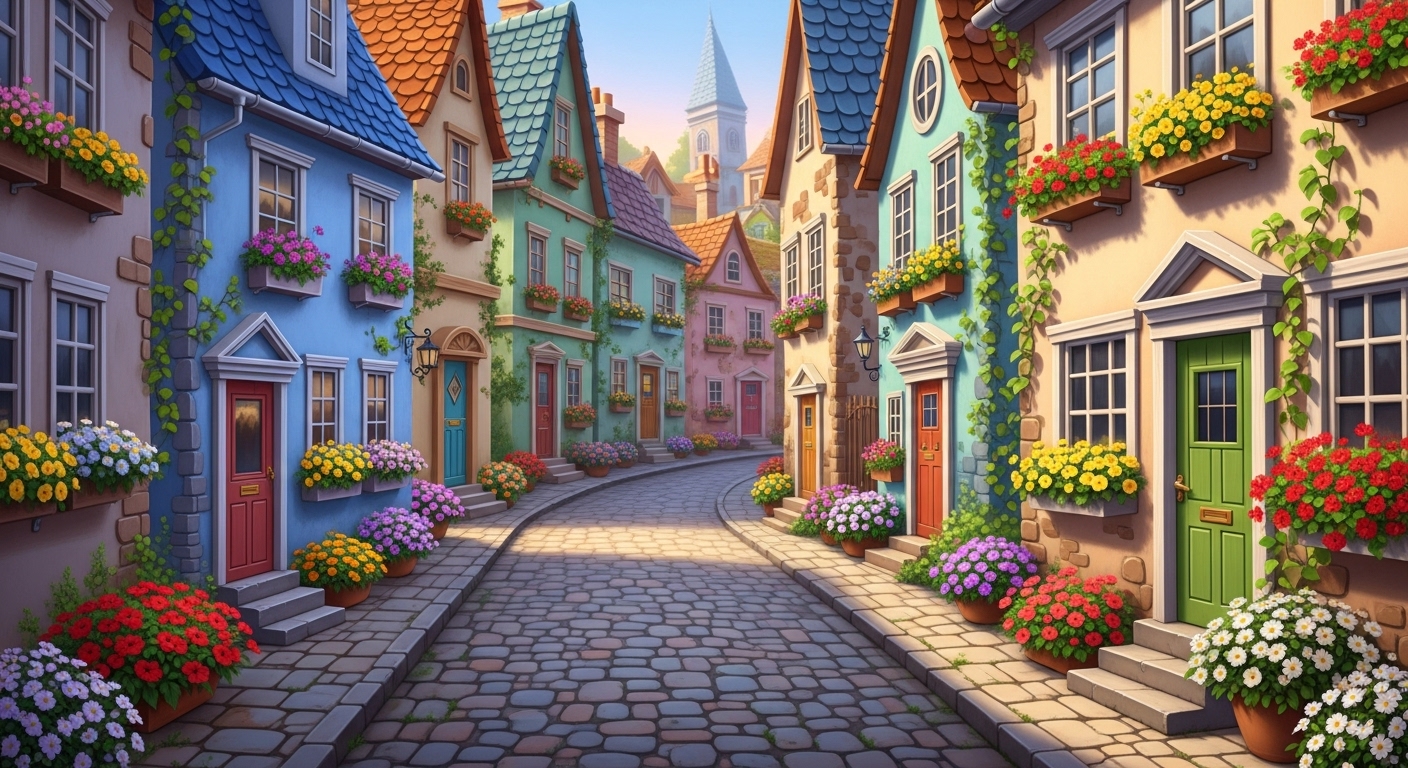
There are places in the world where reality feels slightly suspended. Streets curve more gently, houses wear brighter colors, rooftops look exaggerated, and every corner seems intentionally charming. These are not movie sets or theme parks — they are real, lived-in communities known as Themed Villages Built to Look Like Storybook Towns.
From cobblestone lanes that feel borrowed from fairy tales to pastel houses that seem hand-painted, these villages blur the line between imagination and everyday life. They invite visitors to slow down, look closely, and momentarily forget the modern world.
Have you ever walked somewhere and felt like you’d accidentally stepped inside a children’s book?
Why Humans Are Drawn to Storybook Settings
Storybook-style villages tap into something deeply emotional. Long before skyscrapers and highways, stories shaped how people imagined safety, beauty, and community.
These villages are often designed to feel intimate rather than grand. Buildings are scaled to human proportions, colors are warm, and public spaces feel welcoming. It’s no accident — this design language evokes comfort, nostalgia, and curiosity.
In a fast-paced digital world, Themed Villages Built to Look Like Storybook Towns offer a visual and emotional escape.
Hallstatt, Austria – The Real-Life Fairytale Blueprint
Hallstatt looks almost unreal, even to first-time visitors. Nestled between a reflective lake and steep Alpine mountains, its pastel houses climb the hillside in perfect imperfection.
Though not originally built as a “themed” village, Hallstatt’s preserved medieval architecture has inspired countless replicas worldwide, including one in China.
Austria promotes Hallstatt as a cultural gem through Austria Tourism, helping protect its charm while managing global attention.
Giethoorn, Netherlands – A Village Without Roads
Often called the “Venice of the North,” Giethoorn replaces streets with canals. That alone makes it feel fictional.
Thatched-roof cottages sit beside narrow waterways, connected by wooden footbridges. Locals move around by boat or bicycle, adding to the sense of stepping into another world.
Giethoorn’s design feels less engineered and more organically whimsical — a quality common in storybook settings.
Colmar, France – Color, Curves, and Timber Frames
Colmar’s half-timbered houses, pastel colors, and flower-lined canals have made it one of Europe’s most photographed towns.
The architecture dates back centuries, but its careful preservation gives it a storybook aesthetic that feels deliberate.
France’s tourism authority, France.fr, highlights Colmar as an example of heritage meeting visual storytelling.
Popeye Village, Malta – Fiction Turned Permanent
Some themed villages are born directly from fiction. Popeye Village was originally built as a film set for the 1980 movie “Popeye.”
Instead of dismantling it, Malta preserved the village. Today, it stands as a colorful, exaggerated coastal town that feels straight out of a cartoon.
Malta’s cultural preservation is supported by Visit Malta.

Hobbiton, New Zealand – Fantasy Architecture Brought to Life
Hobbiton may be the most famous example of fiction influencing real-world design. Created for “The Lord of the Rings,” it was intentionally built with rounded doors, grassy roofs, and uneven stone paths.
What makes it special is the commitment to detail — nothing looks manufactured.
New Zealand’s cinematic tourism is promoted globally by NewZealand.com.
Why These Villages Feel Different When You’re There
Photos rarely capture the full experience. What truly makes these villages special is how they feel.
Sounds are softer. Streets are narrower. Human interaction feels more natural. There’s a sense of safety and belonging embedded in the layout.
Have you noticed how certain places make you slow down without trying?
The Role of Architecture in Storytelling
Storybook villages use architecture as narrative. Rooflines slope gently. Windows are irregular. Colors feel intentional but not uniform.
These imperfections signal warmth and humanity. They contrast sharply with modern architecture designed for efficiency rather than emotion.
In Themed Villages Built to Look Like Storybook Towns, architecture doesn’t just house people — it tells stories.
Are These Villages Real Communities or Tourist Illusions?
This is a fair question. Some villages are fully functional towns with schools, shops, and residents. Others are hybrids — partially residential, partially curated.
The key difference lies in intent. When design supports community life rather than replacing it, authenticity survives.
Successful themed villages balance visual charm with livability.
How Tourism Shapes Storybook Villages
Tourism can preserve or damage these places. When managed carefully, visitor interest funds restoration and supports local economies.
However, excessive tourism can turn living villages into backdrops.
Airlines like Lufthansa and KLM connect travelers to many European storybook towns, increasing both opportunity and responsibility.
Why Adults Love Storybook Villages Too
Storybook aesthetics aren’t just for children. Adults often experience deeper emotional reactions — nostalgia, calm, even creative inspiration.
These villages remind us of slower rhythms, simpler pleasures, and environments designed for humans, not systems.
When was the last time a place made you feel genuinely curious again?
Can New Storybook Villages Be Built Today?
Yes — and some already are. Architects and planners increasingly borrow storybook principles to design walkable, human-centered communities.
However, authenticity takes time. Without lived history, new villages must rely on thoughtful design and community-building.
Storybook charm cannot be mass-produced.
Who Should Visit These Villages
These destinations are ideal for slow travelers, photographers, writers, artists, and anyone craving atmosphere over attractions.
They reward wandering, observation, and curiosity rather than checklists.
Why These Places Matter in the Modern World
Themed Villages Built to Look Like Storybook Towns remind us that design affects how we feel, interact, and remember.
They prove beauty and functionality don’t have to be opposites. Preserving these environments means preserving imagination itself.
Storybook villages aren’t about escaping reality — they’re about reshaping it. They show us that places can be practical, beautiful, and emotionally rich all at once.
If destinations like these inspire you, follow us on our social media platforms for more remarkable places around the world. And tell us — which storybook town would you want to walk through at sunset?
Catch up on the top stories and travel deals by subscribing to our newsletter!