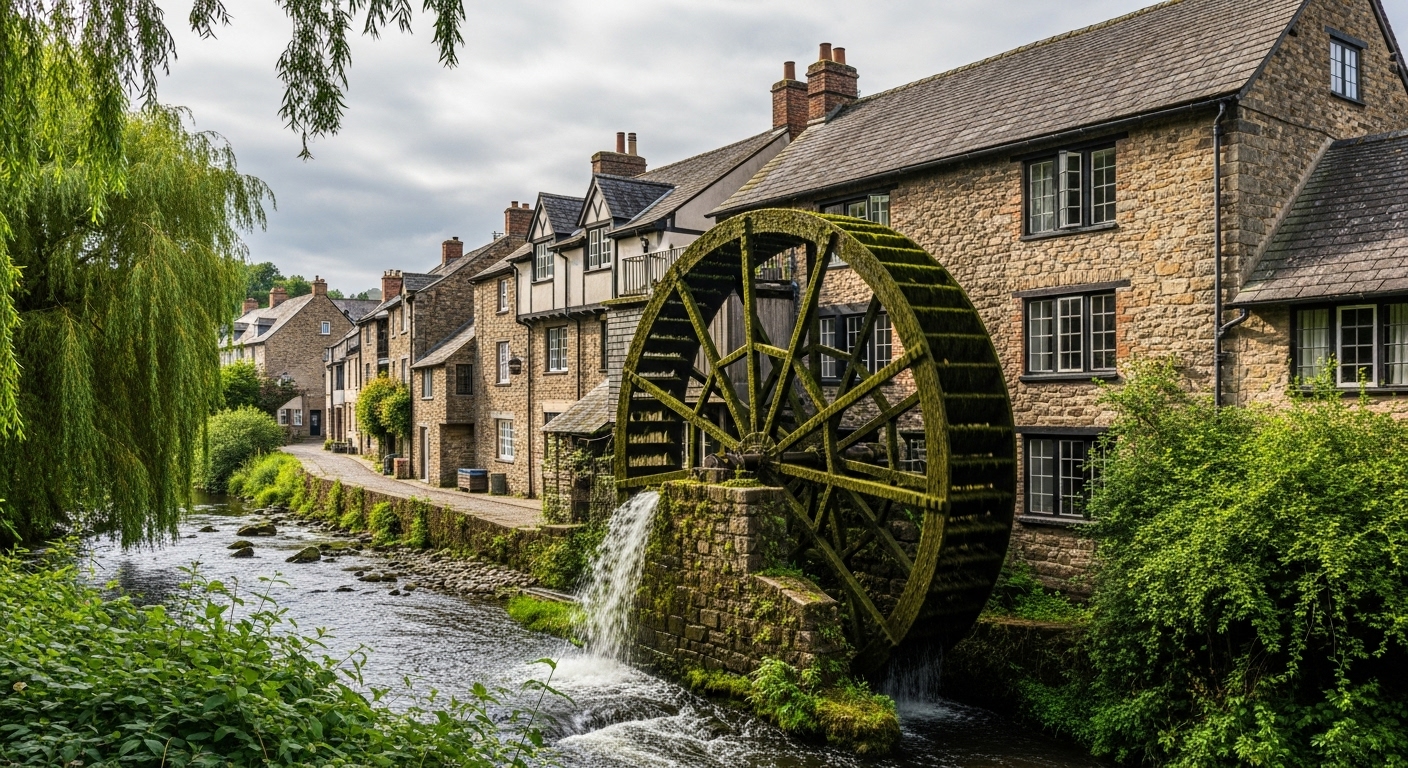
Ancient Mill Towns With Working Waterwheels feel like places where time never fully moved on. Water still flows through narrow channels, wooden wheels continue to turn, and the steady rhythm of moving water echoes stories from centuries ago. These towns do not preserve history behind glass. Instead, they live inside it, allowing visitors to witness how daily life once revolved around rivers and streams.
While many historic mills now sit silent, some towns chose a different path. They kept their waterwheels operational, maintaining skills passed down through generations. Ancient Mill Towns With Working Waterwheels offer a rare opportunity to see heritage in motion rather than memory.
Have you ever watched a machine powered only by water and felt a sense of calm instead of noise? These towns often create that exact feeling.
Why Waterwheels Shaped Entire Towns
Before electricity and engines, water provided one of the most reliable sources of power. Rivers flowed constantly, offering predictable energy for grinding grain, sawing timber, weaving cloth, and pressing oil. Towns grew around this dependable force.
Ancient Mill Towns With Working Waterwheels formed where water flow remained steady throughout the year. Mill placement influenced street layouts, housing clusters, and marketplaces. Life followed the rhythm of the wheel, with workdays structured around water levels and seasonal flow.
Rather than isolated structures, mills acted as economic and social centers. Farmers gathered to grind grain, traders exchanged goods, and news traveled along riverbanks.
The Engineering Simplicity Behind the Power
Waterwheels succeeded because of their simplicity. Gravity and flow did most of the work. Builders adjusted wheel size, blade angle, and water channels to maximize efficiency without complex mechanisms.
Ancient Mill Towns With Working Waterwheels still showcase these principles today. Overshot wheels capture falling water from above, while undershot wheels rely on fast-moving currents. Each design reflects local geography rather than standardized plans.
Do you find it surprising that such simple systems powered entire communities for centuries?

European Mill Towns Where Wheels Still Turn
Across Europe, several towns preserved their working waterwheels as part of daily life rather than static heritage displays.
In southern Germany, towns like Gengenbach and nearby Black Forest villages maintain operational mills that continue producing flour. Regional preservation efforts often align with cultural documentation supported by Germany Travel.
France features mill towns along the Dordogne and Loire rivers where waterwheels still power small-scale production. These towns integrate mills into walking routes and local markets, supported by heritage initiatives such as France Tourism.
In England, villages like Bourton-on-the-Water maintain functioning mills that demonstrate traditional grain processing. Historical records and visitor guidance frequently appear through organizations such as English Heritage.
How Daily Life Revolves Around the Mill
In Ancient Mill Towns With Working Waterwheels, mills remain woven into everyday routines. Residents pass them on morning walks, hear the constant movement of water, and understand seasonal changes through flow patterns.
Some towns still use water-powered systems for local production, while others focus on education and demonstration. In both cases, the mill remains active rather than symbolic.
Children grow up watching wheels turn, gaining early exposure to sustainable energy principles without formal lessons.
The Sensory Experience of Standing Near a Working Wheel
Standing beside a working waterwheel engages the senses gently. Water splashes softly, wood creaks under motion, and cool air rises from flowing channels.
Ancient Mill Towns With Working Waterwheels offer a contrast to modern industrial noise. The soundscape feels calming rather than overwhelming. Visitors often linger longer than planned, drawn by the repetitive, meditative rhythm.
Have you noticed how moving water naturally slows your thoughts?
Why These Towns Value Function Over Display
Keeping a mill operational requires commitment. Maintenance involves regular inspections, replacement of worn wooden parts, and careful management of water flow.
Ancient Mill Towns With Working Waterwheels accept this responsibility because function preserves authenticity. A turning wheel communicates history more effectively than signs or replicas.
Working systems also encourage skills preservation. Craftspeople learn techniques that might otherwise disappear.
Sustainability Lessons From Water-Powered Living
Waterwheels represent renewable energy long before modern sustainability discussions began. They produce power without emissions, noise pollution, or resource depletion.
Ancient Mill Towns With Working Waterwheels demonstrate how small-scale energy solutions can meet local needs efficiently. Modern engineers increasingly revisit these principles when designing low-impact systems.
Do you think future cities could benefit from integrating more visible renewable energy sources?
Planning a Visit to a Working Mill Town
Visitors should approach mill towns with respect. Many mills still serve local purposes, so observation matters more than interaction.
Travel guides such as Lonely Planet often provide practical advice for visiting heritage towns responsibly. Comfortable footwear and patience enhance the experience.
Early mornings or late afternoons offer the best opportunities to observe daily rhythms without crowds.

Why These Towns Leave a Lasting Impression
Ancient Mill Towns With Working Waterwheels stay with visitors because they reveal continuity rather than nostalgia. Life continues alongside history instead of replacing it.
Watching water power real work creates a sense of trust in simple systems. These towns remind us that progress does not always require complexity.
Have you visited a place where traditional systems still shape everyday life?
Ancient Mill Towns With Working Waterwheels offer more than scenic beauty. They present a living lesson in balance, sustainability, and respect for natural forces.
As water continues to turn the wheels, these towns quietly show how the past can remain useful, relevant, and deeply human.
If thoughtful travel stories like this inspire you, follow WentWorld on social media for more journeys shaped by history, craft, and place.
Catch up on the top stories and travel deals by subscribing to our newsletter!