Imagine arriving in a remote village where ancient traditions meet cutting-edge digital trust. Instead of struggling with unreliable bookings or confusing payments, everything works smoothly through a transparent blockchain system. That vision is no longer futuristic because rural villages using blockchain for tourism are already reshaping how travelers and communities connect.
At the same time, modern travelers are seeking experiences that are authentic, ethical, and trustworthy. Meanwhile, villages are searching for fair income, global visibility, and protection from exploitation. As a result, blockchain is emerging as the unexpected bridge between these two worlds.
Before moving ahead, ask yourself something honestly: would you feel more confident traveling to a rural village if every booking, payment, and review was fully verified and tamper-proof? If your answer is yes, then you are already aligned with this growing transformation.
Understanding What Blockchain Brings to Rural Tourism
At its foundation, blockchain is a decentralized and transparent digital ledger. Unlike traditional systems, it does not rely on a central authority. Instead, every record is shared across a network and cannot be altered without collective verification.
Because of this structure, rural villages using blockchain for tourism gain something extremely valuable: digital trust. For example, when a traveler books a homestay, that transaction becomes permanent and verifiable. Consequently, fraud, fake listings, and payment disputes dramatically decrease.
Moreover, villagers no longer depend on large tourism platforms that take heavy commissions. Instead, payments flow directly from travelers to hosts, allowing communities to retain the true value of their hospitality.
Why Trust Has Always Been the Biggest Barrier in Rural Tourism
Traditionally, rural tourism has relied on storytelling and word-of-mouth publicity. However, in today’s digital-first world, that method alone is no longer enough. Travelers now expect instant verification, seamless payments, and reliable reviews.
In contrast, many rural destinations lack strong digital infrastructure. As a result, travelers often hesitate due to safety concerns, unclear ownership, or fear of scams. On the other hand, villagers fear delayed payments, chargebacks, or exploitation by intermediaries.
Therefore, rural villages using blockchain for tourism are solving a trust crisis that conventional tourism systems have failed to address for decades.
How Blockchain Is Transforming the Discovery of Rural Villages
For years, discovery has been one of the hardest challenges for rural tourism. Beautiful villages often remain invisible online simply because they cannot compete with large commercial destinations in search rankings or advertising.
Through blockchain-powered platforms, however, villages can now register their identity, land ownership, services, and hosts using verified digital records. As a result, travelers do not just see a destination—they trust it.
Additionally, fake reviews and manipulated ratings become nearly impossible. That alone significantly increases confidence for first-time rural travelers.
Smart Contracts and the End of Booking Disputes
One of the most powerful tools supporting rural villages using blockchain for tourism is the smart contract. These are self-executing digital agreements that activate automatically when conditions are met.
For instance, when a guest books a homestay, the payment is securely locked in a contract. If the guest checks in successfully, the payment is instantly released to the host. However, if a cancellation happens within the policy window, the refund is issued automatically.
Because of this automation, both travelers and hosts are protected without the need for customer service battles. As a result, operational friction drops significantly.
Empowering Local Artisans Through Verified Digital Markets
Beyond accommodation, rural economies depend heavily on handmade crafts, farming products, and cultural items. Unfortunately, middlemen often dominate these supply chains, leaving artisans with only a small fraction of the profit.
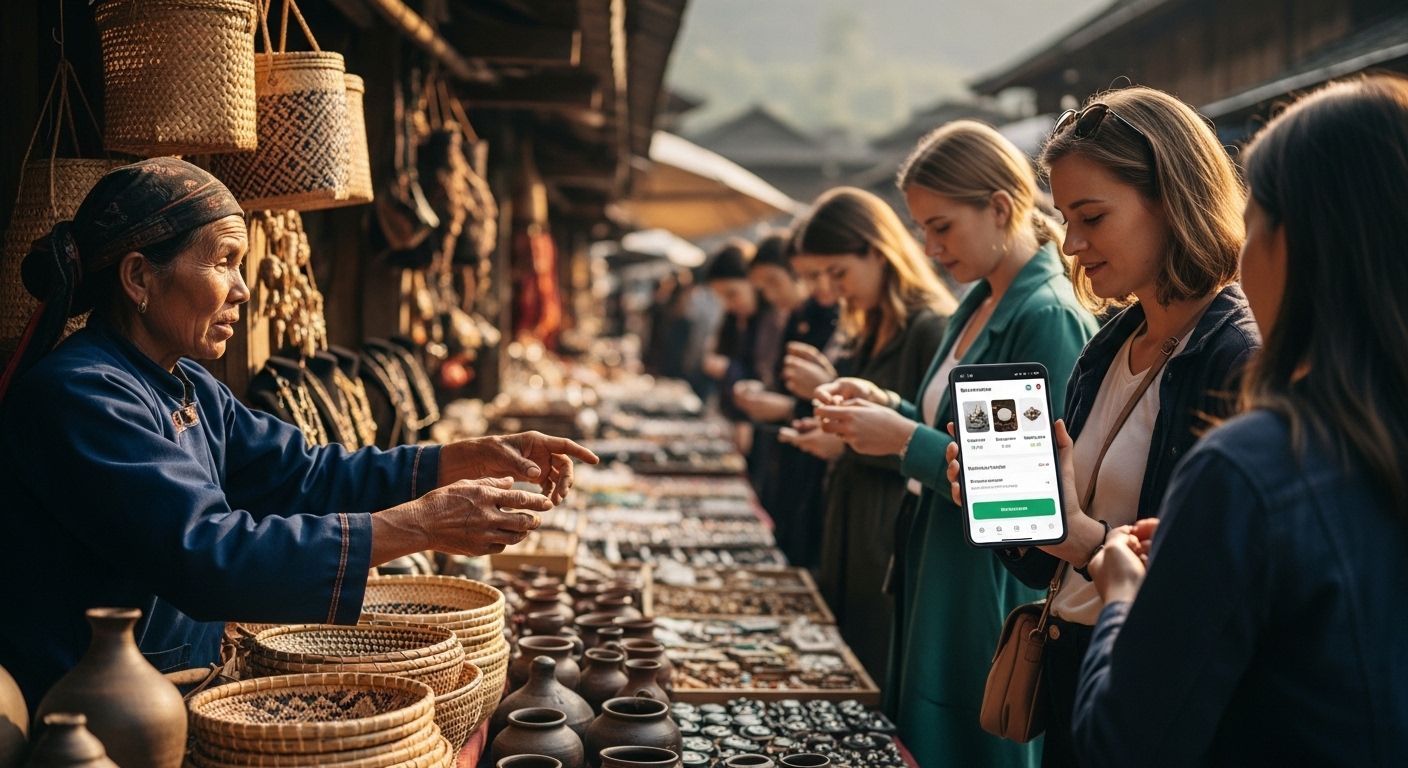
Through blockchain marketplaces, however, artisans can now sell directly to travelers and global buyers. Furthermore, each product can carry a digital certificate of authenticity, proving its origin and ethical production.
Consequently, travelers gain meaningful souvenirs, while villagers receive fair compensation. This economic balance is one of the strongest arguments for rural villages using blockchain for tourism.
Community-Led Governance Without External Control
Another major benefit of blockchain tourism lies in decentralized governance. Instead of decisions being controlled by external investors or corporations, villages can collectively vote on tourism policies using blockchain-based systems.
In addition, revenue distribution becomes fully transparent. As a result, funds for development projects such as schools, clean water, and healthcare can be tracked by every community member. Most importantly, this structure protects rural villages from over-tourism, cultural exploitation, and environmental damage.
Real-World Progress of Rural Villages Using Blockchain for Tourism
Across Asia, Europe, and Latin America, several villages are already experimenting with blockchain-enabled tourism platforms. For example, eco-tourism villages in Southeast Asia now accept blockchain-based payments for accommodations and tours.
Meanwhile, indigenous communities in Central America are using blockchain to document land ownership while offering ethical cultural tourism. Consequently, tourism revenue supports preservation instead of exploitation.
Although still in early stages, these initiatives clearly prove that rural villages using blockchain for tourism is no longer theoretical—it is actively unfolding.
NFTs as a Tool for Cultural Preservation
While NFTs are often associated with digital art, their use in rural tourism is far more meaningful. Villages can tokenize their cultural heritage, including dances, rituals, storytelling traditions, and festivals.
As a result, tourists may access exclusive cultural experiences through verified NFT passes. Meanwhile, income generated from these sales supports community development.Ultimately, culture is not merely showcased; it is digitally preserved and financially protected.
Blockchain Transparency in Donations and Development
Many travelers want to contribute to village development beyond tourism spending. However, trust issues often discourage donations. Blockchain removes this uncertainty through complete transparency.
Every donation is permanently recorded, allowing donors to see exactly how funds are used. Consequently, corruption risks decrease while emotional trust increases.Over time, this transparency converts tourists into long-term supporters of rural development.
Challenges That Still Exist in Blockchain Adoption
Despite its enormous potential, blockchain adoption in rural regions is not without challenges. Internet connectivity, digital literacy, and infrastructure limitations remain ongoing hurdles.
Moreover, fear and misconception about blockchain still exist. Therefore, training and community education are essential components for successful implementation. Nevertheless, once villagers begin receiving consistent and transparent income, skepticism rapidly turns into confidence.
Why This Shift Is Socially and Economically Powerful
For decades, youth migration to cities has drained rural villages of talent and labor. However, blockchain-driven tourism introduces digital job opportunities within villages themselves.
As a result, young people become digital hosts, tourism managers, platform operators, and cultural promoters. This not only strengthens village economies but also preserves community identity. In turn, women artisans gain economic independence without leaving their homes.
When travelers can see exactly where their money is going, the emotional dynamic of tourism changes completely. Instead of feeling like consumers, travelers feel like contributors. Furthermore, villagers feel respected rather than exploited. This mutual dignity transforms tourism into a meaningful human exchange.
The Future of Rural Villages Using Blockchain for Tourism
In the coming years, we may witness village-based digital passports, community-owned tourism tokens, and decentralized rural travel networks.
Instead of competing for mass tourism, villages will collaborate for sustainable growth. Meanwhile, travelers will increasingly prioritize ethical impact over discounts. Ultimately, data ownership will shift from corporations to communities.
Your Role in This Global Tourism Shift
Every booking decision you make shapes the global tourism economy. When you choose verified, ethical rural experiences, you directly strengthen village livelihoods. Therefore, the next time you travel, consider where your money truly goes and who it empowers. Would you personally prefer a blockchain-verified rural stay over a traditional booking platform? Do transparency and fair income matter to you as a traveler?
Share your thoughts, questions, and opinions. Your feedback truly helps guide ethical tourism forward. Rural villages using blockchain for tourism represent a powerful blend of tradition and transformation. They protect culture, empower communities, and restore trust in the tourism industry.
This movement is still evolving. However, its potential to reshape rural economies is undeniable. If stories like this inspire you, stay connected with WentWorld across our social platforms to explore more real-world tourism innovations.
Catch up on the top stories and travel deals by subscribing to our newsletter!