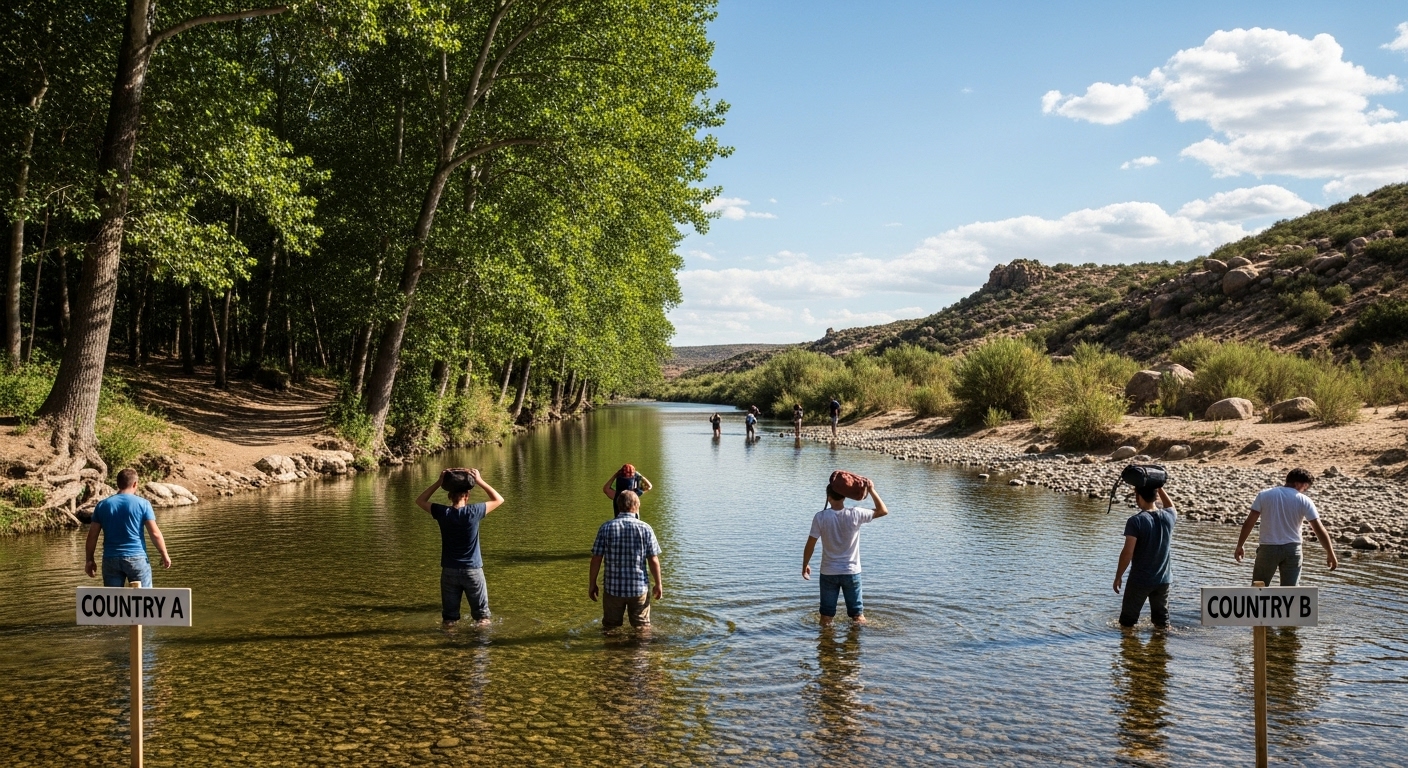
Imagine standing on one riverbank, taking a few swimming strokes, and suddenly finding yourself in another country. It sounds unreal, yet in several places around the world, this is exactly how borders work. Some international boundaries are defined not by walls or fences, but by flowing water. In fact, rivers you can swim across to cross borders reveal how geography, history, and diplomacy blend in surprisingly human ways.
At first, the idea feels adventurous. However, it also raises questions. Where are these rivers? Are they safe to cross? And what makes them different from heavily guarded border zones? As you read on, you’ll discover how these rivers became borders, which ones people actually swim across, and why they continue to fascinate travelers.
So, would you ever swim from one country into another? Let’s explore some remarkable places where borders feel fluid—literally.
Why Rivers Often Become International Borders
Throughout history, rivers naturally became borders because they were visible, continuous, and easy to describe on maps. Moreover, they provided water, trade routes, and natural separation. As a result, many treaties defined borders using rivers long before modern border control existed.
Even today, several international rivers remain lightly guarded. In some cases, locals cross them daily for work, family visits, or cultural reasons. While laws still apply, the experience feels far more relaxed than crossing a land checkpoint.
Rivers You Can Swim Across to Cross Borders
Across continents, these rivers create some of the world’s most unusual border crossings. Let’s look at the most fascinating examples.
1. Rio Grande – United States and Mexico
The Rio Grande forms a large portion of the border between the United States and Mexico. In certain areas, especially near smaller towns, the river becomes shallow and narrow. Consequently, people have historically crossed it by swimming or wading.
That said, border enforcement varies by location. While some stretches remain calm and shallow, others are dangerous due to currents and patrols. Therefore, understanding local laws is essential. Learn more from U.S. National Park Service.
2. Bidasoa River – Spain and France
Flowing between Spain and France, the Bidasoa River marks a peaceful European border. In summer, the water becomes calm enough that locals swim across casually. Because both countries are part of the Schengen Area, crossing here feels informal.
Interestingly, the river also includes Pheasant Island, a tiny island jointly governed by both nations. This unique political arrangement adds even more intrigue to an already fascinating border. Tourism info: Spain Tourism.
3. Mekong River – Thailand and Laos
The Mekong River acts as a natural border between Thailand and Laos in several regions. During dry seasons, the river narrows significantly. In rural areas, locals sometimes swim or use small boats to cross.
However, seasonal changes matter. While calm in winter, monsoon rains can transform the river into a powerful force. Therefore, timing and local guidance are crucial. Learn more via Tourism Thailand.
4. Suchiate River – Mexico and Guatemala
The Suchiate River separates Mexico and Guatemala and is among the most casually crossed borders in the world. In many places, the river is shallow enough to walk or swim across. Locals cross daily for trade and family visits.
Although informal crossings exist, official border rules still apply. As a result, travelers should always follow legal entry requirements. Guatemala tourism details: Visit Guatemala.

5. Evros River – Greece and Turkey
The Evros River forms part of the border between Greece and Turkey. In certain areas, especially during dry seasons, the river narrows enough to swim across. However, security varies greatly along its length.
While the river illustrates how natural borders work, it also highlights the complexity of modern border control. Official info: Visit Greece.
Are These Rivers Safe to Swim Across?
Safety depends heavily on location, season, and local regulations. While some rivers remain calm and shallow, others hide strong currents, debris, or sudden depth changes. Additionally, wildlife and water quality can vary.
More importantly, legality matters. Even if a river looks easy to cross, immigration laws still apply. Therefore, travelers must always respect border regulations to avoid serious consequences.
The Cultural Side of River Borders
In many border regions, rivers unite rather than divide. Families live on both sides, sharing languages, traditions, and markets. Consequently, swimming or boating across becomes part of everyday life rather than a dramatic act.
This cultural closeness often surprises visitors. Have you ever imagined borders as places of connection rather than separation?

Planning Travel Near River Borders
If you plan to visit these regions, preparation matters. Airlines such as Emirates and Qatar Airways connect travelers to nearby hubs. Once there, guided tours and local advice help ensure safety and legality.
Accommodation platforms like Airbnb often offer stays close to river-border towns, allowing you to observe daily life on both sides.
Why These Rivers Fascinate Travelers
Rivers you can swim across to cross borders challenge our traditional ideas of borders. Instead of walls and checkpoints, they offer flowing water and shared landscapes. As a result, they remind us that borders are human concepts layered onto natural geography.
Would you ever swim across a river knowing another country waits on the other side? Or would you prefer to simply watch and reflect on how fluid borders can be?
Follow us on our social media platforms for more fascinating travel stories, unusual geography, and hidden wonders from around the world.
Catch up on the top stories and travel deals by subscribing to our newsletter!