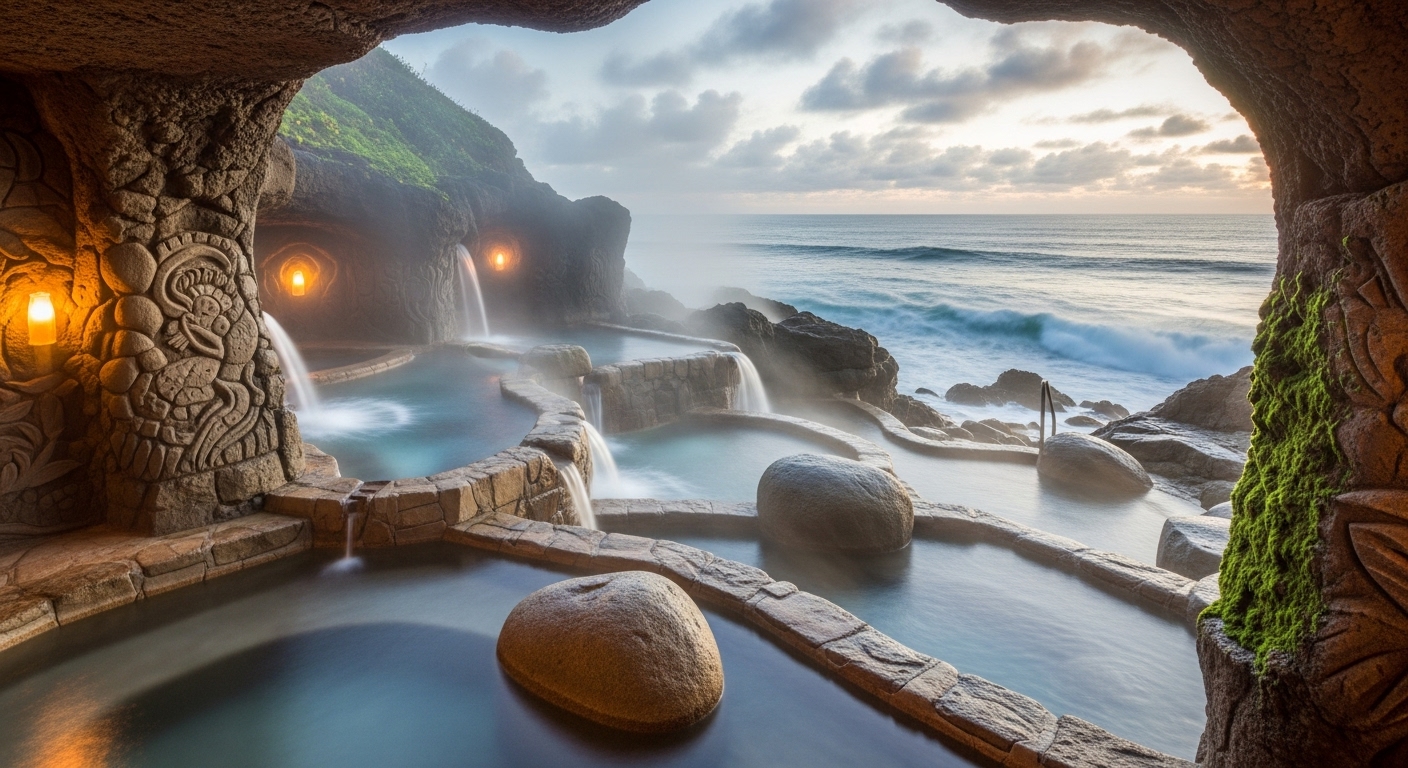
Imagine warm steam rising from seawater, salty air filling your lungs, and waves crashing just a few steps away. Salt-steam spas: natural saunas by the sea combine ocean therapy with heat in a way no indoor spa ever could.
These natural or semi-natural spa experiences have existed for centuries, long before wellness became a trend. Coastal communities discovered that heated seawater, mineral-rich steam, and ocean air could soothe muscles, clear breathing, and calm the mind.
Would you choose a steam room with tiled walls, or one where the sea itself provides the atmosphere? Let’s explore how salt-steam spas work, where to find them, and why travelers are rediscovering these seaside wellness rituals.
What Are Salt-Steam Spas
Salt-steam spas use heated seawater or naturally warm coastal conditions to create steam-rich environments. Unlike dry saunas, these spaces maintain high humidity infused with salt particles.
The salt comes from evaporating seawater or direct exposure to ocean spray. When combined with warmth, it creates a breathable mist that many people find cleansing and restorative.
In salt-steam spas: natural saunas by the sea, nature replaces machinery.
The Science Behind Salt and Steam
Salt particles can help open airways and reduce irritation in the respiratory system. Steam increases circulation, loosens muscles, and promotes sweating.
When combined, salt and steam create a microclimate that supports relaxation and respiratory comfort. Many coastal spas rely on natural evaporation and geothermal heat rather than artificial systems.
This balance makes the experience feel gentle rather than overwhelming.
Blue Lagoon Area, Iceland
While famous for its milky waters, Iceland’s coastal geothermal regions also feature salt-infused steam rooms overlooking the sea. Heated mineral water mixes with ocean air, creating warm mist-filled spaces.
These spas draw energy from the Earth itself. Visit Iceland VisitIceland.com highlights geothermal spa traditions rooted in nature.
The contrast between cool air and warm steam enhances the sensory experience.

Hammams of Essaouira, Morocco
Essaouira’s Atlantic coastline influences its traditional hammams. Sea air naturally mixes with steam generated inside stone chambers.
These salt-laced environments have been part of Moroccan wellness culture for centuries. Morocco’s tourism portal VisitMorocco.com describes coastal hammams as deeply restorative.
Here, wellness feels communal, cultural, and timeless.
Sea Cave Saunas in Italy
Along Italy’s southern coast, natural sea caves trap warm air and salt mist. Some have been adapted into controlled spa environments, allowing visitors to sit inside while waves crash outside.
The caves act as natural steam chambers, with seawater evaporation creating consistent humidity. Learn more through Italia.it.
The experience feels elemental and deeply grounding.
Japan’s Coastal Onsen Steam Baths
Japan’s coastal onsens often feature steam rooms fed by mineral springs near the ocean. Salt from sea air blends with geothermal steam.
Unlike hot pools, these steam spaces allow gentle heat exposure. Japan National Tourism Organization Japan.travel highlights seaside onsens as ideal for slow wellness travel.
Silence, ritual, and respect define the experience.
Portugal’s Atlantic Steam Retreats
Portugal’s rugged Atlantic coast hosts wellness centers that use heated seawater for steam baths. Natural salt content remains intact, offering a mild but effective sauna effect.
Visit Portugal VisitPortugal.com promotes these retreats as part of coastal wellness tourism.
Guests often alternate between steam and cold ocean dips.
What It Feels Like Inside a Salt-Steam Spa
The air feels dense yet breathable. Your skin warms slowly. Breathing becomes deeper as salt-infused steam enters the lungs.
Unlike dry heat, salt-steam feels soothing rather than draining. Many people report improved breathing and relaxed muscles after just one session.
The nearby sound of waves adds a meditative quality.

Health and Wellness Benefits
Salt-steam environments may help reduce sinus congestion, ease joint stiffness, and promote relaxation. The experience encourages slow breathing and mindfulness.
While not medical treatment, many cultures consider these spas preventive wellness practices.
Responsible facilities emphasize hydration and time limits.
Best Time to Visit Salt-Steam Spas
Cooler months often provide the most contrast between steam and sea air. Early mornings and late afternoons offer quieter sessions.
Booking through trusted platforms like Booking.com ensures regulated facilities and safety standards.
Respecting the Environment
Salt-steam spas depend on fragile coastal ecosystems. Many locations limit visitor numbers and ban chemical products.
Organizations such as UNESCO emphasize preserving coastal wellness traditions through sustainable tourism.
Responsible use keeps these natural spas viable for the future.
Who Should Try a Salt-Steam Spa
These experiences suit travelers seeking relaxation rather than adrenaline. They appeal to wellness-focused visitors, slow travelers, and anyone curious about natural therapies. If you enjoy nature-based comfort, salt-steam spas offer a unique alternative to modern wellness centers.
Would you relax in a natural steam spa beside the sea? Which coastline would you choose for your first visit? Share your thoughts and experiences.
For more coastal wellness traditions, hidden travel experiences, and nature-based escapes, follow WentWorld on our social media platforms and continue exploring the world differently.
Catch up on the top stories and travel deals by subscribing to our newsletter!