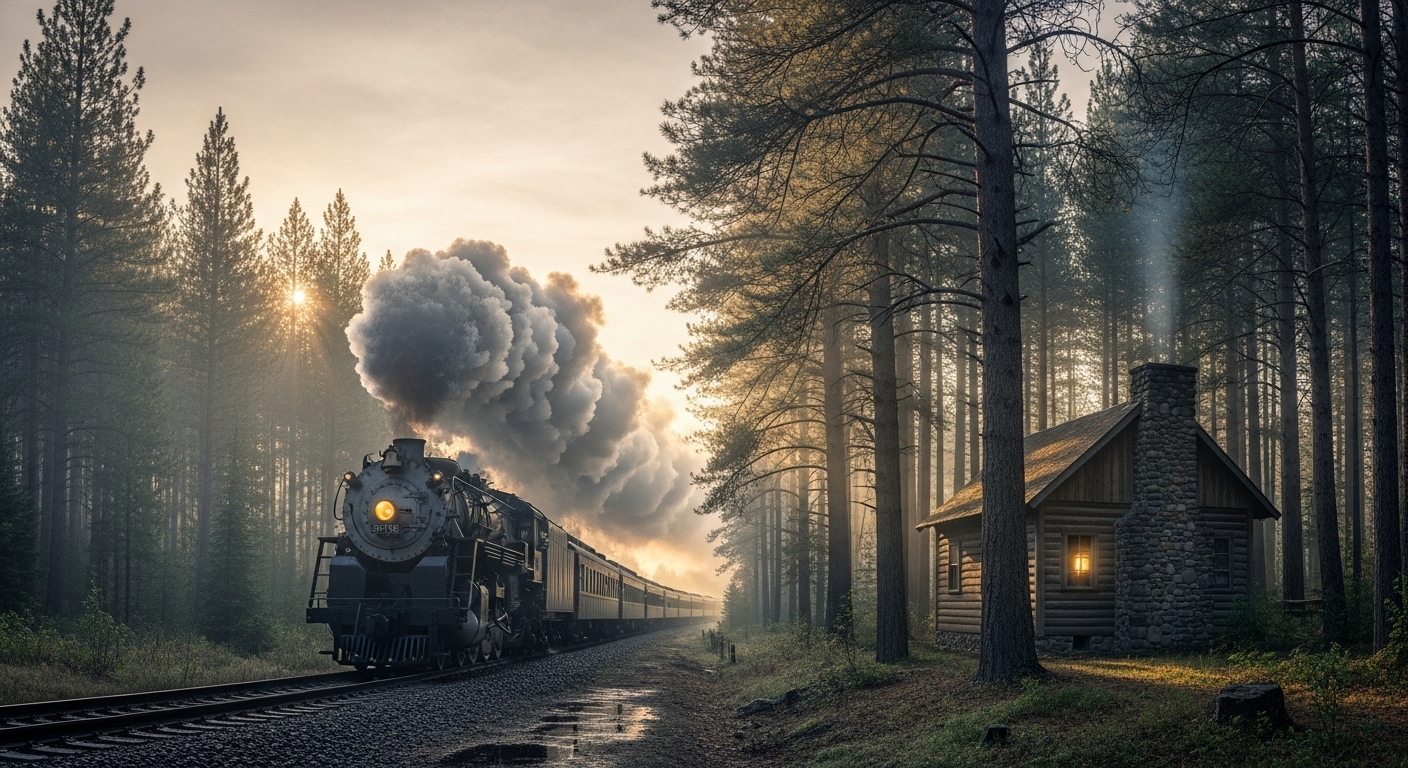
Imagine stepping off a vintage train and being greeted by the scent of pine, birdsong, and the soft rustle of leaves in the wind. No taxis, no city noise—just a cozy cabin waiting for you among the trees. That’s the magic of train-to-cabin adventures, a growing trend among travelers who crave both comfort and connection with nature. You board a train in one world and disembark in another—a quieter, greener, slower one. Sounds like something out of a dream, doesn’t it?
Over the past few years, train travel has experienced a renaissance. People are rediscovering its rhythm—the soothing clack of wheels on rails, the window-seat daydreaming, and the sense of timeless adventure. Combine that with the growing desire for eco-friendly getaways, and you’ve got the perfect recipe for an unforgettable escape: train-to-cabin adventures that let you step straight from the platform into the woods.
Why Train-to-Cabin Adventures Are Gaining Popularity
There’s something undeniably romantic about the idea of arriving by train. Maybe it’s nostalgia, maybe it’s sustainability—or maybe it’s the simplicity of trading airport chaos for scenic rail lines that wind through valleys and mountains. Travelers are tired of crowds and carbon footprints. They want slower travel, deeper experiences, and destinations that feel personal.
In a train-to-cabin adventure, the journey is part of the reward. You’re not just getting from point A to B—you’re immersing yourself in the landscapes along the way. It’s like watching a movie unfold outside your window, with forests, rivers, and villages passing in slow motion until you finally step into your forest retreat.
The Connection Between Rail Travel and Nature Escapes
It’s no coincidence that many of these cabins are located near old scenic railway routes. These lines were once lifelines for logging, mining, or rural communities—now they’re pathways to peace. The combination of train travel and forest stays offers something unique: convenience and tranquility without compromise. You can carry your luggage on board, sip coffee while reading a book, and then arrive directly at a cabin nestled in the woods. No endless transfers, no car rentals—just you, the trees, and maybe a hot cup of cocoa.
Examples of Stunning Train-to-Cabin Adventures Around the World
Let’s travel (virtually) to a few destinations where you can still live this fairytale.
1. Norway’s Flåm Railway to Aurland Cabins
In Norway, the legendary Flåm Railway winds through fjords and waterfalls before stopping near quaint wooden cabins. You can book one right at the base of the Aurlandsfjord, where mist rolls over the water in the morning and sunsets bathe the mountains in gold.
2. Japan’s Gono Line to Shirakami-Sanchi Forest Lodges
The Gono Line hugs Japan’s northern coastline before turning inland toward the Shirakami-Sanchi, a UNESCO-listed beech forest. Travelers can step off at remote stations and walk to eco-lodges that blend seamlessly with their surroundings. If peace had a sound, it would be the wind in those trees.
3. Canada’s Rocky Mountaineer to Cabin Stays in British Columbia
Western Canada’s mountain railways are tailor-made for train-to-cabin adventures. Imagine waking up to glacial peaks, stepping off at a rustic siding, and following a short path to your log cabin by a lake. Bonus: many lodges include kayak rentals and local food baskets for your stay.
4. Switzerland’s Glacier Express to Alpine Chalets
No one does scenic rail like the Swiss. The Glacier Express links Zermatt and St. Moritz, offering panoramic views of snow-capped peaks. Some travelers choose to disembark mid-route and spend a night or two in alpine cabins accessible directly from the train station—talk about the perfect mix of luxury and nature.

How to Plan Your Own Train-to-Cabin Adventure
Before you rush to book the first scenic train you find, a little planning goes a long way. These trips are simple but require coordination between train schedules and cabin check-in times.
Step 1: Choose Your Region
Start by choosing a destination where scenic rail networks exist. Europe, Japan, and parts of Canada are excellent starting points. If you prefer offbeat routes, consider Eastern Europe or the American Pacific Northwest—areas with charming, less-crowded train lines that often stop near forests.
Step 2: Research Train Connections
Look for rail lines with stops close to nature lodges or small-town stations. You’d be surprised how many “hidden” connections there are—local trains that serve tiny forest communities or eco-resorts accessible only by rail and footpath.
Step 3: Book Cabins in Advance
Since these experiences are trending, forest cabins near rail lines can fill up fast. Make sure to book your stay early, and confirm accessibility from the station. Some cabins even offer shuttle pickups or provide walking trail maps to guide you there.
Step 4: Pack Light (But Smart)
Unlike road trips, you’ll have to carry everything by hand—so pack efficiently. Lightweight clothing, a travel kettle, reusable utensils, and a good book are must-haves. And don’t forget an extra sweater; forest nights can get chilly even in summer.
What Makes These Adventures Eco-Friendly?
One of the best parts about train-to-cabin adventures is how sustainable they are. Train travel emits far less CO₂ than flights or car trips. Many of the cabins on these routes are powered by solar energy or use sustainable building materials. When you combine eco-transportation with eco-accommodation, your carbon footprint shrinks dramatically.
Plus, these journeys support local communities. Small towns that once relied on industrial transport now benefit from tourism that respects the environment and culture. You’re not just taking a trip—you’re helping sustain a greener form of travel.

Unexpected Perks of Going Off the Grid
Think about the last time you truly disconnected. No constant notifications, no meetings, no honking cars. On a train-to-cabin adventure, you rediscover silence—and yourself. Many travelers report sleeping better, feeling more creative, and forming deeper connections with their travel companions.
Have you ever felt like you needed a reset button? This might be it. When you swap screens for starlight and train tracks for trails, something changes inside. You start listening more, feeling more, and rushing less.
How to Find Lesser-Known Routes
Here’s a pro tip: don’t always go for the famous trains. Some of the best experiences come from local commuter routes that pass through national parks or forest reserves. These smaller lines are affordable, flexible, and often stop near hidden gems. Use regional travel forums, local blogs, or even ask residents for advice—they’ll often point you toward places that tourists overlook.
Tips for a Perfect Train-to-Cabin Experience
- Check the weather before you travel. Mountain or forest routes can experience sudden rain or fog.
- Bring snacks—many rural trains don’t have dining cars.
- Download offline maps before leaving urban areas.
- Carry cash; remote cabins might not accept cards.
- Book both train tickets and accommodation with cancellation flexibility in case of schedule changes.
Now that you know what train-to-cabin adventures are all about, what do you think? Would you trade hotels and highways for trains and treetops? Picture yourself sipping morning coffee by a cabin window while a light mist rises from the forest floor. Tempting, right?
We’d love to hear from you—have you ever taken a trip like this, or do you know a route we should feature next? Drop your thoughts in the comments and share your favorite forest destinations! And hey—don’t forget to follow us on our social media platforms for more travel inspiration, unique itineraries, and eco-adventure ideas. We’re always sharing real stories from travelers like you who find magic in the journey itself.
Catch up on the top stories and travel deals by subscribing to our newsletter!