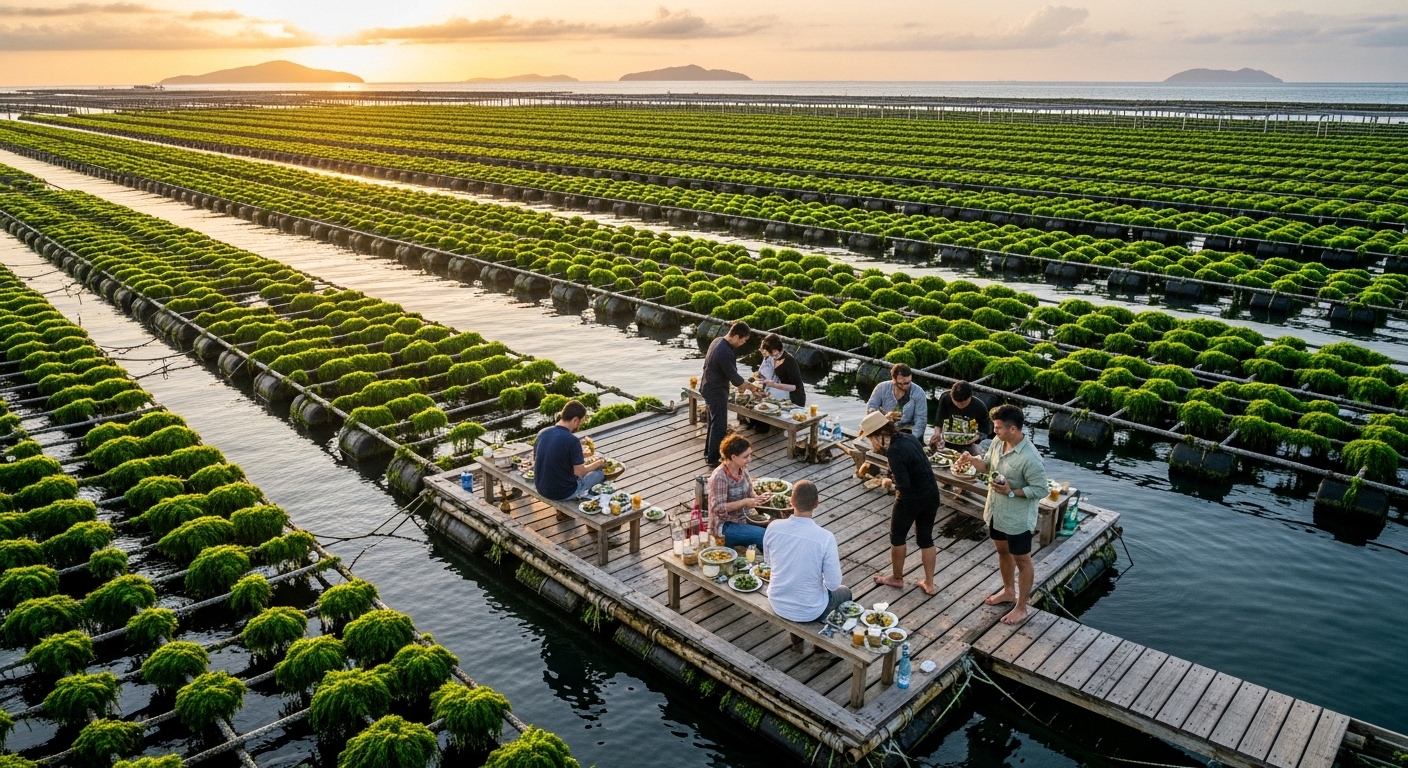
What if your next food experience happened on the water, surrounded by gently swaying seaweed and open horizons? Seaweed farms with tasting pontoons are redefining how travelers experience coastal food culture. These floating platforms invite visitors to taste freshly harvested seaweed right where it grows, turning sustainable farming into an immersive travel experience.
Once considered a niche ingredient, seaweed is now celebrated as a superfood, a climate solution, and a culinary frontier. Around the world, innovative coastal communities are opening their seaweed farms to visitors, pairing marine agriculture with tasting pontoons that allow people to sample seaweed dishes, learn about cultivation, and connect directly with the ocean. Would you try a meal that comes straight from the sea beneath your feet?
What Are Seaweed Farms With Tasting Pontoons?
Seaweed farms with tasting pontoons are marine cultivation sites where seaweed is grown on ropes, nets, or floating lines, paired with accessible platforms designed for visitors. These pontoons serve as tasting rooms, educational spaces, and sometimes small restaurants, offering freshly harvested seaweed prepared in simple but flavorful ways.
Unlike traditional aquaculture facilities, these farms focus on transparency and experience. Visitors can see how seaweed grows, understand its role in marine ecosystems, and taste it moments after harvest. This direct connection between ocean, farmer, and diner creates a deeper appreciation for sustainable food systems.
Why Seaweed Is Becoming a Culinary Star
Seaweed has been part of coastal diets for centuries, particularly in East Asia. Today, it is gaining global popularity due to its nutritional value, low environmental impact, and culinary versatility. Seaweed requires no freshwater, fertilizer, or land, making it one of the most sustainable foods on the planet.
At seaweed farms with tasting pontoons, visitors discover flavors ranging from briny and mineral-rich to subtly sweet. Chefs prepare seaweed as salads, broths, snacks, and even desserts, proving that marine plants can rival land-based vegetables in creativity and taste.
Have you ever thought about how much of our food future might come from the ocean rather than farmland?

Scandinavian Seaweed Farms Leading the Way
Scandinavia has become a leader in seaweed tourism, particularly in Norway, Denmark, and Sweden. Along rugged coastlines, small-scale seaweed farms welcome visitors onto floating tasting pontoons where cold, clean waters produce exceptionally high-quality seaweed.
In Norway, seaweed farms near fjords offer guided tastings paired with storytelling about Nordic food traditions. Visitors often reach these locations by boat after flying into hubs served by Scandinavian Airlines. The experience feels both wild and refined, combining minimalism with deep respect for nature.
Denmark’s coastal farms focus on innovation, experimenting with fermented seaweed, seaweed-infused oils, and seaweed snacks. Many of these tasting pontoons double as research spaces where chefs and scientists collaborate. Would you expect fine dining inspiration to begin on a floating platform?
Asia’s Floating Seaweed Tastings
Asia has cultivated seaweed for generations, and now some regions are opening their farms to experiential tourism. In Japan, coastal towns are creating tasting pontoons where visitors sample fresh wakame, nori, and kombu while learning traditional harvesting techniques.
South Korea’s seaweed farms, particularly along the southern coast, have begun offering boat-accessible tasting platforms where seaweed soups and snacks are prepared using daily harvests. Travelers can learn more about coastal food culture through resources such as Visit Korea.
These experiences blur the line between farm visit and cultural immersion. Would tasting seaweed on the water change how you view seafood-based cuisines?
Seaweed Farms as Climate Solutions
Beyond taste, seaweed farms with tasting pontoons highlight the environmental role of marine farming. Seaweed absorbs carbon dioxide, improves water quality, and creates habitats for marine life. Many farms operate as regenerative ecosystems rather than extractive industries.
Visitors often leave these pontoons with a deeper understanding of how seaweed farming can combat climate change while supporting coastal economies. Organizations like World Wildlife Fund recognize seaweed as a promising tool for sustainable ocean management.
Would you be more likely to support climate-friendly food if you could see its benefits firsthand?
What You Taste on a Seaweed Tasting Pontoon
The tasting experience varies by region, but common offerings include:
- Fresh seaweed salads with citrus or sesame
- Seaweed broths served warm on cool waters
- Crispy dried seaweed snacks
- Seaweed-infused butter and oils
- Experimental dishes blending seaweed with local seafood
Many tastings emphasize simplicity, allowing natural flavors to shine. On a floating pontoon, the sounds of water and wind become part of the meal, turning eating into a sensory experience rather than just consumption.

Who Visits Seaweed Farms With Tasting Pontoons?
These experiences attract a wide range of visitors: food travelers, sustainability advocates, chefs, researchers, and curious tourists seeking something different. Unlike traditional restaurants, tasting pontoons encourage conversation and learning.
Families often visit to educate children about ocean ecosystems, while culinary professionals explore new ingredients. Some farms even collaborate with culinary schools and travel platforms like Lonely Planet to promote responsible food tourism.
Could seaweed tastings become as popular as vineyard tours in the future?
Challenges Facing Seaweed Tourism
Despite growing interest, seaweed farms with tasting pontoons face challenges. Weather conditions can limit access, regulatory frameworks vary by country, and maintaining food safety on water requires careful planning.
There is also the challenge of balancing tourism with farming productivity. Too many visitors can disrupt delicate marine environments. Successful farms prioritize small-group experiences and education over mass tourism.
The Future of Seaweed Farms With Tasting Pontoons
The future looks promising for seaweed farms with tasting pontoons. As global interest in sustainable food grows, these floating experiences may expand to new regions, including North America, Australia, and parts of Africa.
Innovations such as solar-powered pontoons, digital storytelling, and chef-led tastings are already emerging. These farms may soon become essential stops for travelers interested in food, sustainability, and ocean conservation.
Would you add a seaweed tasting pontoon to your travel bucket list?
We would love to hear your thoughts. Have you ever tried fresh seaweed, or would this be your first time? Share your opinions and questions in the comments below.
Follow WentWorld.com on our social media platforms for more stories that explore how travel, food, and sustainability intersect in unexpected ways.
Catch up on the top stories and travel deals by subscribing to our newsletter!