
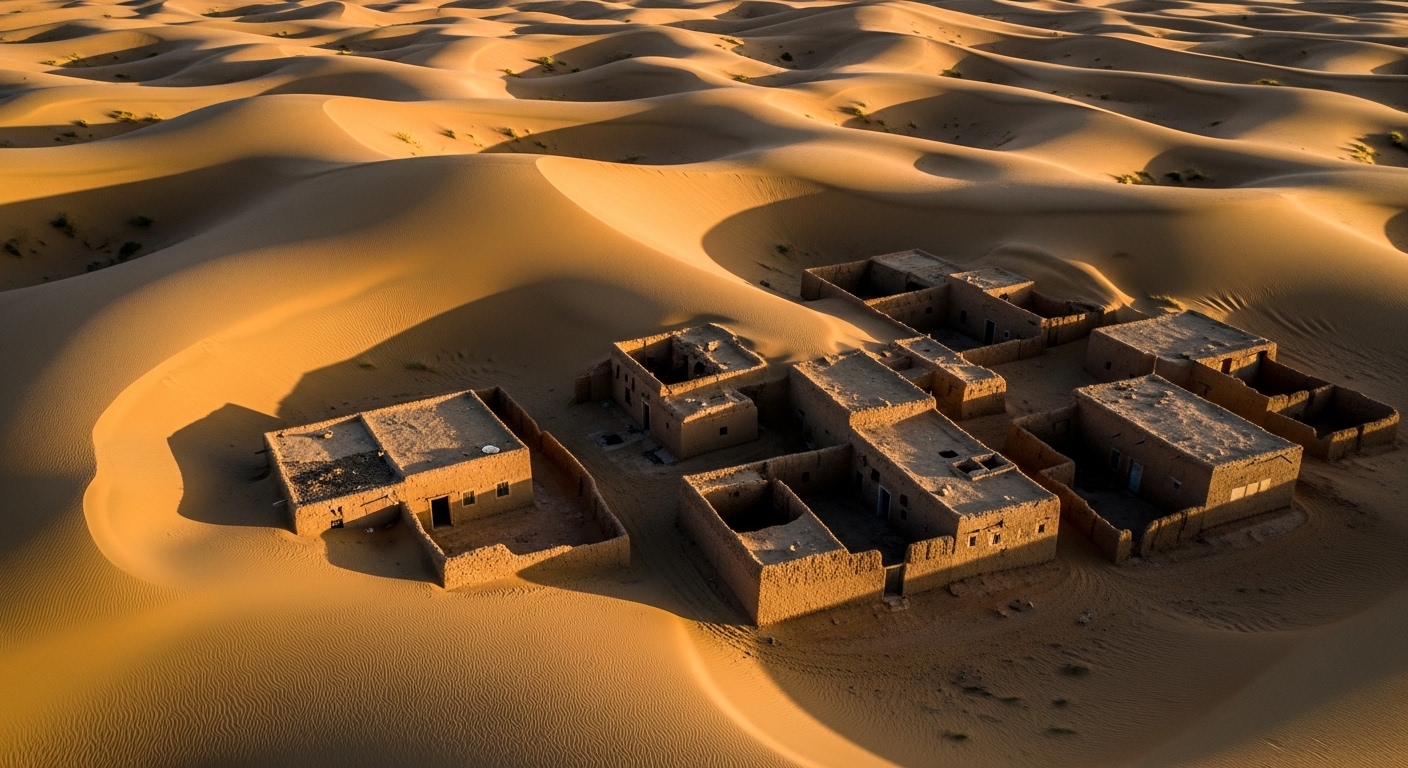
Wind-sculpted villages buried and reborn by sand are living testimonies of nature’s relentless artistry and human resilience. Imagine entire communities hidden under layers of golden sand, only to emerge centuries later, reshaped and revitalized by desert winds. This is not a scene from a fantasy novel—it is a reality in several parts of the world where humans have learned to coexist with shifting dunes.
Have you ever wondered how people adapt to extreme environments where the landscape itself is constantly changing? How do civilizations thrive when nature seems determined to reclaim its territory? These villages tell stories of survival, innovation, and the delicate balance between human life and the desert’s power.
In this blog, we’ll explore the history of these extraordinary settlements, the forces that bury them, and the remarkable ways they come back to life. Along the way, we’ll ask you to reflect: how would you adapt if your home could vanish under sand in a single storm?
Understanding Wind-Sculpted Villages
Deserts are dynamic landscapes. Sand is constantly on the move, shaped by wind patterns into dunes, ridges, and ripples. Some settlements have been built in these shifting sands for centuries. Over time, strong winds and sandstorms bury buildings and streets, creating a surreal and often eerie environment where only rooftops or minarets peek above the dunes.
These villages are called “wind-sculpted” because the sand doesn’t just cover them—it transforms them. Houses, walls, and streets gradually take on the contours of dunes, as if the desert itself were redesigning the settlement. Some villages are abandoned for decades, only to be rediscovered and restored later, giving them a dual identity: ancient and renewed.
The Forces Behind the Transformation
The primary agent of change is wind. In deserts like the Sahara or Arabian Peninsula, prevailing winds carry fine sand over long distances. When these winds encounter obstacles, such as buildings or natural rock formations, sand accumulates. Over time, layers build up, burying entire structures.
Seasonal storms also play a critical role. Sudden bursts of wind can sweep across villages, depositing meters of sand in hours. Flash floods occasionally follow, reshaping dunes and washing away loose soil. The result is a constant cycle of destruction and rebirth, where the desert keeps both humans and structures on their toes.
But these forces are not entirely destructive. They protect ruins from looters and preserve architectural details beneath layers of sand. In a way, sand acts as a natural time capsule.

Historical Significance of Buried Villages
Many wind-sculpted villages hold deep historical and cultural significance. Archaeologists have uncovered settlements in places like Egypt, Morocco, and Iran, revealing insights into trade, agriculture, and social life in harsh desert environments.
For example, in Morocco, the village of Aït Benhaddou—famous for its ancient earthen buildings—faces constant threats from encroaching sand. Yet, its unique architecture has endured, showcasing ingenious techniques for coping with heat, wind, and erosion. Similarly, in Iran’s Lut Desert, ancient villages buried under dunes reveal patterns of water management and community planning that were highly advanced for their time.
Visiting these sites provides a window into history, offering travelers and researchers alike a chance to witness how humans once adapted to the desert’s unforgiving conditions.
How Villages Are Reborn
The rebirth of these settlements often begins with excavation. Local communities, archaeologists, and conservationists work together to carefully remove layers of sand, revealing streets, homes, and public spaces. In some cases, the reconstruction involves using traditional materials and techniques to restore the village while preserving its historical integrity.
Modern interventions sometimes include protective walls, drainage systems, or windbreaks to slow down future sand accumulation. Yet, many projects aim to maintain the natural interplay between sand and settlement, allowing villages to continue evolving alongside the desert.
This approach transforms villages into living museums where visitors can witness ongoing natural processes rather than static ruins. It also allows local populations to continue inhabiting or using the areas, blending tourism, culture, and community life.
The Role of Architecture and Design
One of the most fascinating aspects of wind-sculpted villages is how architecture adapts to shifting sands. Buildings are often constructed with thick mud bricks or compacted clay, which resist erosion and insulate interiors from heat. Flat rooftops serve as observation points for approaching sandstorms, and narrow alleyways channel wind to prevent accumulation in critical areas.
Some villages incorporate elevated platforms or stepped designs, allowing sand to pass beneath structures instead of blocking them. Courtyards and cisterns manage water, collecting precious rain while minimizing the risk of erosion.
These design principles show that survival in the desert is not only about enduring extreme conditions—it is about anticipating and integrating change.
Ecological and Cultural Significance
Beyond their architectural value, these villages contribute to the desert ecosystem. Sand-covered ruins provide shelter for reptiles, birds, and small mammals. As dunes shift, they create microhabitats for desert plants. Even abandoned villages become part of the ecological cycle, demonstrating resilience and interdependence between humans and nature.
Culturally, wind-sculpted villages embody collective memory. They preserve stories, traditions, and craftsmanship that would otherwise vanish. Festivals, markets, and rituals often return to these areas, blending history with contemporary life. Visitors can witness not only the physical rebirth of settlements but also the intangible revival of heritage and identity.
Traveling to Sand-Buried Villages
For adventurous travelers, visiting these villages is a unique experience. You might explore partially buried homes, wander through sand-filled courtyards, or hike along dunes that redefine the village layout every season. Guides often share stories passed down through generations, connecting natural phenomena to local myths and legends.
Destinations like the Sahara in Morocco, the Thar Desert in India, and the Lut Desert in Iran offer unforgettable journeys into these wind-sculpted landscapes. Airlines such as Emirates and Qatar Airways provide access to desert gateways, while local accommodations blend traditional and modern comforts.
Photographers and nature enthusiasts are particularly drawn to the striking visual contrast between golden sand and ancient clay structures. Sunrise and sunset often reveal dramatic patterns, highlighting the fluid interaction between wind and architecture.

Lessons from Villages Buried by Sand
These villages teach us valuable lessons about resilience, adaptability, and humility. Human ingenuity can thrive even in extreme conditions, but it must respect the forces of nature. By embracing change rather than resisting it, communities can survive and even flourish in seemingly hostile environments.
Visitors can take away more than just photographs. They can reflect on their own lives and ask:
How do we adapt to changes in our environment?
What elements of our communities are truly resilient?
And how can we design our cities to live in harmony with natural forces rather than against them?
Challenges and Preservation Efforts
Preserving wind-sculpted villages is not easy. Sand continues to move, climate change intensifies storms, and modern development pressures threaten fragile sites. Conservation requires ongoing monitoring, collaboration with local communities, and careful balance between tourism and preservation.
Some successful projects combine archaeological research with community engagement, ensuring that locals benefit from cultural tourism while maintaining traditional knowledge and practices. International organizations like UNESCO often provide support for protecting these unique sites.
Experiencing the Magic Firsthand
Visiting wind-sculpted villages buried and reborn by sand is more than a sightseeing trip. It is a journey into history, geology, ecology, and human resilience. You walk among structures that have survived centuries of storms, touch walls molded by wind, and witness nature and culture intertwined in ways rarely seen elsewhere.
Would you dare to explore a village half-buried in sand? How would it feel to witness a landscape that is alive, constantly reshaping itself, yet still sustaining human life?
We’d love to hear your thoughts and travel stories. Have you ever encountered desert villages or sand-buried settlements? How did it change your perspective on nature and culture? Share your experiences in the comments below.
If you enjoy uncovering extraordinary travel stories and hidden corners of the world, follow WentWorld on social media to stay inspired.
Catch up on the top stories and travel deals by subscribing to our newsletter!










Leave a Reply
You must be logged in to post a comment.