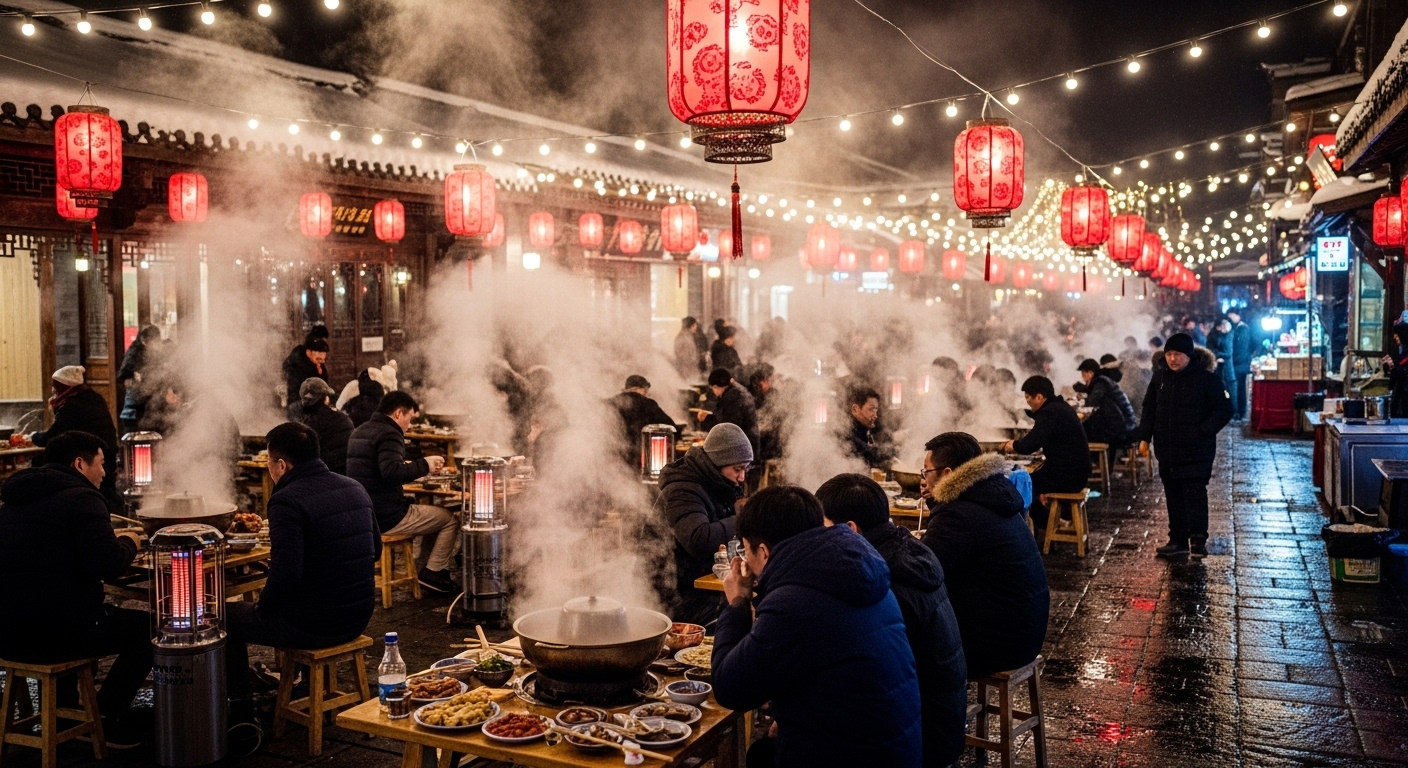
Open-air hot pot streets are proof that cold weather doesn’t push people indoors everywhere. In some cities, winter does the opposite — it brings people out. As temperatures drop, streets fill with bubbling pots, rising steam, clinking chopsticks, and conversations that linger far longer than the cold should allow.
There’s something deeply comforting about sitting outside while snowflakes fall or frost gathers on rooftops, knowing the heat in front of you is constant. Open-air hot pot streets turn winter into a shared ritual rather than something to endure. Wrapped in coats, hands warmed by bowls, strangers sit side by side, united by steam and spice.
These streets don’t exist year-round. They appear when winter arrives and fade when spring returns, making them as seasonal and anticipated as festivals. For travelers, discovering these hot pot street feels like stepping into a living tradition — one that’s warm, loud, aromatic, and unforgettable.
What Makes Open-Air Hot Pot Streets So Special
Eating hot pot indoors is already a communal experience, but taking it outside changes everything. Open-air hot pot streets blend food with environment. Cold air sharpens flavors. Steam rises dramatically into the night. Conversations feel louder, laughter warmer.
Unlike restaurants, these streets have no walls. You hear vendors calling out orders, see passersby slowing down to watch, and feel the pulse of the city around you. These hot pot streets don’t isolate diners — they place them directly inside urban life.
Have you ever noticed how food tastes better when your hands are cold and your bowl is hot? That contrast is part of the magic.
How These Streets Come Alive Each Winter
Open-air hot pot streets are usually seasonal transformations of existing neighborhoods. When temperatures drop, restaurants roll tables onto sidewalks, install portable burners, and hang plastic wind shields or fabric canopies.
Local authorities often regulate these setups carefully, balancing safety with tradition. In many cities, permits allow outdoor cooking only during colder months, when steam and heat are welcome rather than intrusive.
What’s remarkable is how quickly these streets develop an atmosphere. Within days, familiar vendors return, regular customers reappear, and the street feels reborn.
Famous Open-Air Hot Pot Streets Around the World
Some open-air hot pot streets have become legendary, drawing visitors specifically for the experience.
In Chengdu, China, winter streets glow with red lanterns and clouds of chili-infused steam. Known as the heart of Sichuan cuisine, Chengdu’s hot pot culture thrives outdoors during colder months. Travelers often plan food-focused trips through guides like Travel China Guide to experience these scenes authentically.
Chongqing offers a more intense version. Streets there are lined with metal pots filled with fiery broth, numbing peppercorns, and endless skewers. The colder it gets, the more crowded the streets become.
In parts of Seoul, open-air winter dining takes on a quieter tone. Streets fill with steaming broths, portable tables, and shared meals late into the night. Tourism platforms such as Visit Korea highlight these winter food scenes as cultural experiences rather than simple meals.
The Sensory Experience: More Than Just Food
Open-air hot pot streets engage every sense. The smell of simmering broth hits you before you even see the tables. Steam blurs neon signs and streetlights. Metal lids clatter. Spices crackle in oil.
You feel the heat on your face while your back stays cold. Gloves come off briefly, then go back on. Drinks cool instantly, encouraging slow sipping. Time stretches.
These moments often feel cinematic — not staged, but naturally dramatic. It’s no surprise that photographers and filmmakers are drawn to these streets.
Why Winter Makes Hot Pot Better
Hot pot is about warmth, patience, and sharing — all qualities winter encourages. These hot pot streets amplify that connection by making the cold visible.
Instead of hiding from winter, diners embrace it. Breath fogs in the air. Snow collects on coats. And yet, no one rushes. The meal becomes an anchor against the cold.
Would the experience feel the same on a warm night? Probably not. Winter isn’t a backdrop here — it’s an ingredient.
Social Rituals on Open-Air Hot Pot Streets
These streets are social spaces first, dining spaces second. Groups linger long after the food is gone. Strangers share condiments. Tables merge when space runs out.
In many cities, coworkers gather after long days, families celebrate milestones, and solo diners are quietly welcomed into conversations. Open-air hot pot streets soften social boundaries.
There’s an unspoken understanding: if you’re willing to sit outside in the cold, you belong there.

Traveling for Open-Air Hot Pot Experiences
Food-focused travelers increasingly plan winter trips around open-air hot pot streets. Flights operated by carriers such as Cathay Pacific and Korean Air make reaching East Asian winter destinations easier, even during peak cold seasons.
Unlike fine-dining reservations, these streets don’t require planning. You arrive, wait, sit, and eat. That spontaneity is part of their charm.
For travelers used to curated experiences, the informality can feel refreshing.
Health, Safety, and Practical Considerations
Open-air hot pot streets operate under strict local regulations in many cities. Gas burners are monitored, walkways kept clear, and food safety standards enforced.
Visitors should dress warmly, avoid standing too close to open flames, and follow local customs — such as waiting patiently for seating or sharing tables when asked.
It’s also wise to pace yourself. Hot pot meals are long, rich, and surprisingly filling.
Why These Streets Are Disappearing — and Why They Matter
Urban development, rising rents, and stricter regulations threaten many open-air hot pot streets. Some cities relocate vendors indoors, losing the atmosphere that made these places special.
Others protect them as cultural heritage, recognizing their role in community life. Food isn’t just nourishment — it’s memory, identity, and connection. When an open-air hot pot street disappears, a city loses more than a meal. It loses a winter tradition.
Would you choose steam and spice over comfort and walls? Would you trade a warm dining room for a plastic stool and a bubbling pot under winter skies? Many travelers say yes — not despite the cold, but because of it.
If you’ve experienced an open-air hot pot street, we’d love to hear where it was and what you remember most. And if it’s on your list, tell us what city you’d try first.
For more stories about seasonal food cultures, hidden streets, and travel shaped by climate and tradition, follow WentWorld on our social media platforms and stay curious.
Catch up on the top stories and travel deals by subscribing to our newsletter!