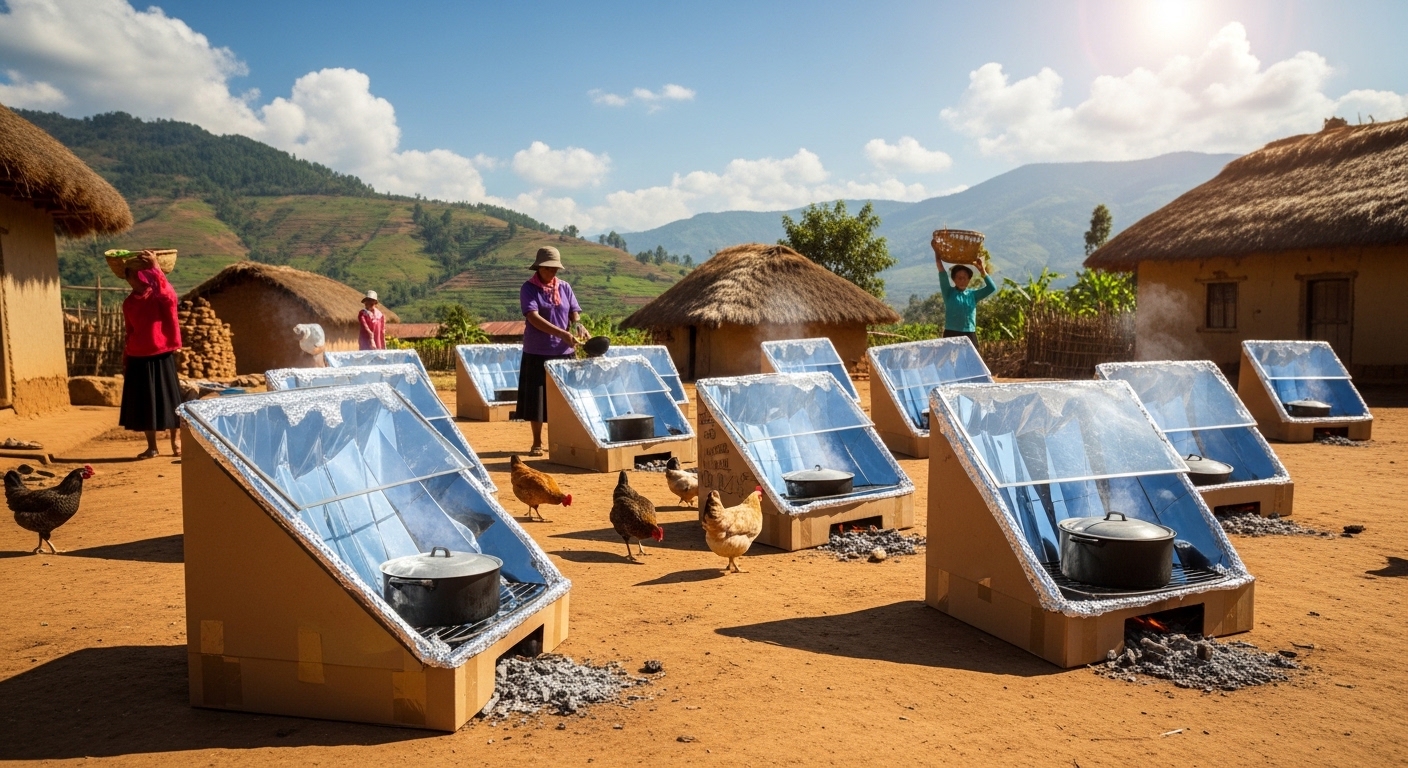
Solar oven villages are quietly redefining how communities cook, eat, and live. In places where sunlight is abundant and fuel is scarce or expensive, entire villages have turned to the sun itself to prepare daily meals. Imagine tasting bread baked without fire, rice simmered without gas, and stews cooked slowly by pure sunlight. It sounds futuristic, yet these villages exist today, proving that sustainability can be practical, affordable, and surprisingly delicious.
At first, the idea may seem simple, almost too simple. A box, reflective panels, and sunlight. But behind this simplicity lies a powerful story of resilience, innovation, and community-driven change. Solar oven villages are not just about cooking food; they are about reducing environmental damage, improving health, and giving people control over their energy needs.
As WentWorld.com explores these remarkable places, we invite you to slow down and imagine a different rhythm of life. What would it feel like to plan your meals around the sun instead of the clock? Would food taste different if you knew it was cooked without harming the planet?
What Are Solar Oven Villages?
Solar oven villages are communities where solar cookers are widely adopted and used for daily cooking. Instead of relying on wood, charcoal, gas, or electricity, residents use specially designed ovens that trap and concentrate sunlight to generate heat. These ovens can reach temperatures high enough to bake, boil, roast, and even fry.
In many of these villages, solar cooking is not an experiment or novelty. It is part of everyday life. Families wake up, prepare ingredients, and place pots inside solar ovens early in the day. By midday or early afternoon, meals are ready, cooked slowly and evenly by sunlight.
Does this slower pace change how people relate to food? Many visitors say it does. Cooking becomes intentional, communal, and deeply connected to nature.
How Solar Ovens Work
The technology behind solar ovens is surprisingly accessible. Most designs rely on three basic principles: reflection, insulation, and absorption. Reflective surfaces direct sunlight into a cooking chamber. Dark-colored pots absorb heat efficiently. Insulated walls trap that heat, allowing temperatures to rise steadily.
There are different types of solar ovens used across solar oven villages. Box cookers are common for daily meals. Parabolic cookers, which focus sunlight to a single point, can cook faster and reach higher temperatures. Panel cookers are lightweight and portable, often used by families who cook outdoors.
What makes these ovens special is not complexity, but adaptability. Many are built using locally available materials, making them affordable and easy to repair.

Why Solar Oven Villages Matter
In many parts of the world, traditional cooking methods depend on burning wood or charcoal. This leads to deforestation, indoor air pollution, and long hours spent collecting fuel, often by women and children. Solar oven villages offer an alternative that addresses all of these challenges at once.
By using sunlight, communities reduce pressure on local forests. Indoor air quality improves, lowering the risk of respiratory diseases. Time once spent gathering firewood can be used for education, work, or rest.
Beyond health and environment, there is dignity in energy independence. Solar oven villages are not waiting for large infrastructure projects or external aid. They are using a resource that shines on them every day.
India’s Solar Cooking Communities
India is home to some of the most inspiring examples of solar oven villages. In regions with strong sunlight, solar cookers have been introduced through community programs and non-profit initiatives. One of the most famous examples is the solar kitchen at the Shirdi Sai Baba temple, which uses large-scale solar concentrators to cook meals for thousands of people daily.
Smaller villages across Rajasthan and Gujarat have also adopted solar cooking at the household level. Early mornings are busy as families prepare lentils, vegetables, and dough before placing pots in solar ovens.
Organizations supported by institutions like TERI have played a role in promoting solar energy solutions across rural India, showing how technology and tradition can coexist.
Solar Oven Villages in Africa
Across parts of Africa, solar oven villages are emerging as powerful responses to energy poverty. In countries like Kenya, Uganda, and Morocco, solar cookers are being used to reduce reliance on wood fuel.
In refugee settlements and rural communities, solar ovens provide a safe and cost-free way to cook. The reduction in firewood collection also lowers the risk of conflict and environmental degradation.
Programs supported by groups such as Solar Cookers International have helped introduce and scale these solutions. Visitors often remark on the flavor of solar-cooked meals, noting that slow cooking preserves moisture and nutrients.
Latin America’s Sun-Cooked Traditions
In parts of Latin America, solar oven villages blend indigenous knowledge with modern design. Communities in Bolivia, Peru, and Mexico have embraced solar cooking as both a practical and cultural practice.
At high altitudes where fuel is scarce and sunlight is intense, solar ovens perform exceptionally well. Beans, corn, and traditional stews are cooked gradually, often developing deeper flavors.
Local universities and sustainability groups, including initiatives highlighted by UNESCO, have documented how these practices support education and environmental stewardship.
What Does Solar-Cooked Food Taste Like?
One of the most common questions travelers ask is whether food cooked by sunlight tastes different. The answer, according to many, is yes, but in a subtle way. Solar cooking uses gentle, consistent heat rather than intense flames. This reduces burning and allows flavors to develop slowly.
Vegetables retain their color and nutrients. Grains cook evenly. Breads develop a soft interior with a lightly crisp exterior. Some compare solar-cooked meals to slow-cooked dishes prepared over low heat.
Would you notice the difference in a blind taste test? Perhaps not immediately. But knowing the story behind the meal often enhances the experience.

Visiting a Solar Oven Village
Travelers interested in sustainability often seek out solar oven villages as part of eco-tourism experiences. Visiting these communities offers a chance to learn directly from residents, participate in meal preparation, and understand daily life shaped by sunlight.
Responsible travel is essential. Visitors should approach with curiosity and respect, understanding that these villages are not attractions but homes. Travel resources such as Responsible Travel emphasize ethical engagement with local communities.
Would you be willing to adapt your schedule to the sun for a day, or even a week?
Challenges Solar Oven Villages Face
Despite their benefits, solar oven villages are not without challenges. Cloudy weather can disrupt cooking schedules. Cultural preferences for fast cooking or frying can limit adoption. Initial training and awareness are crucial for success.
However, many communities address these challenges through hybrid systems, combining solar ovens with traditional stoves for backup. Over time, as familiarity grows, solar cooking becomes second nature.
The Future of Solar Oven Villages
The future of solar oven villages looks promising as climate awareness increases and technology improves. Designs are becoming more efficient, portable, and affordable. Educational programs are introducing solar cooking to younger generations.
As cities explore solar-powered infrastructure, rural communities continue to lead by example. Solar oven villages remind us that innovation does not always come from complexity, but from rethinking what we already have.
At WentWorld.com, we believe these stories deserve attention. They show that sustainability can be flavorful, communal, and deeply human.
Have you ever tasted food cooked using alternative energy? Would you try a meal prepared entirely by sunlight? Share your thoughts and experiences with us.
If stories like this inspire you to rethink travel, food, and energy, follow WentWorld.com on our social media platforms and stay connected with journeys that explore the world’s most thoughtful communities.
Catch up on the top stories and travel deals by subscribing to our newsletter!