
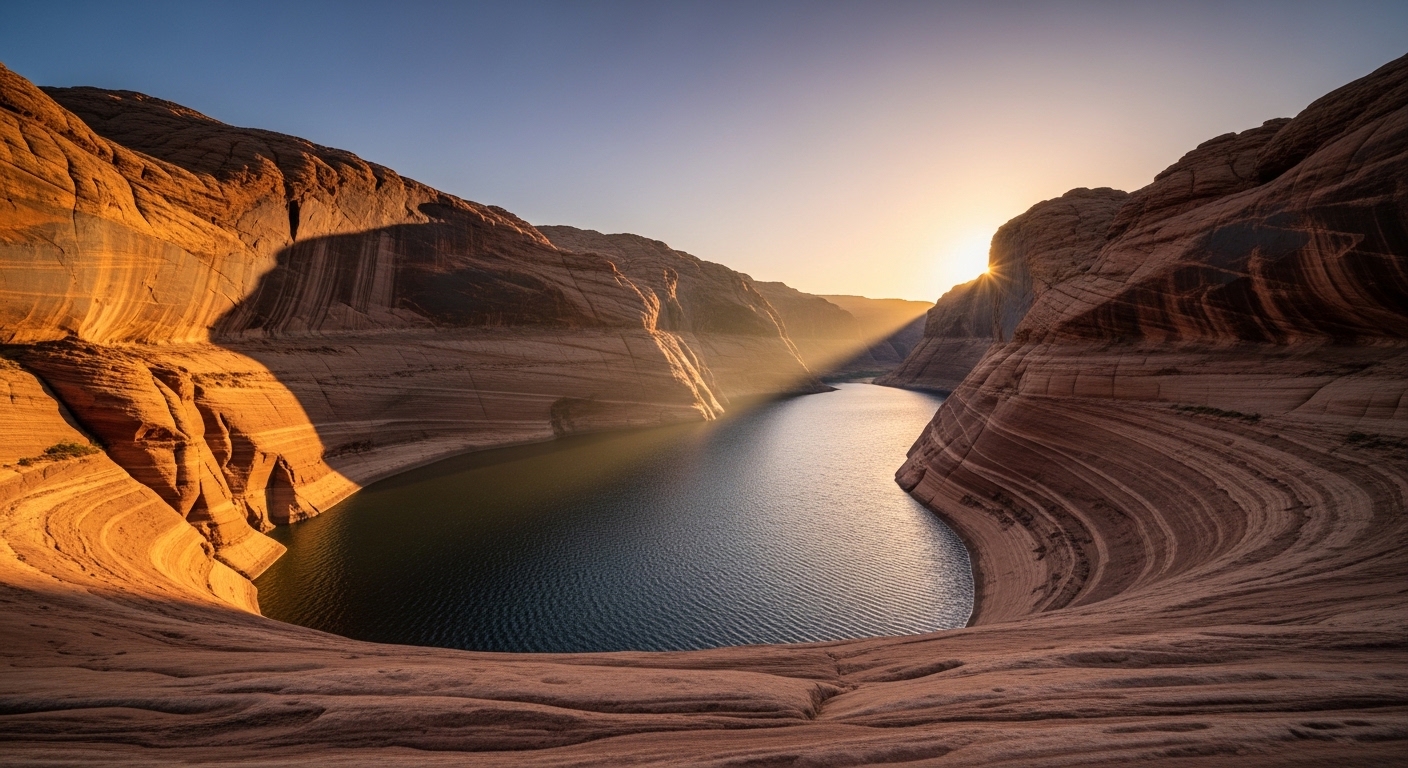
The world holds many hidden wonders, but few landscapes feel as dramatic as wind-carved amphitheaters in stone basins. These natural formations look like ancient theaters sculpted not by human hands but by centuries of wind and weather. Vast curved walls rise from quiet basins, forming spaces that feel designed for gathering, storytelling, and reflection. Standing inside one of these stone arenas often creates a strange sensation, as if nature itself built a stage and invited the sky to perform.
Wind-carved amphitheaters in stone basins appear in deserts, canyons, and rocky plateaus where erosion works slowly and patiently. Over thousands or millions of years, wind carries grains of sand that polish and carve solid rock. The result is a sweeping bowl-shaped landscape where cliffs curve inward like seats in a grand theater. When you walk into one of these places, sound echoes softly and light shifts across the stone walls throughout the day.
Have you ever stood somewhere that felt both enormous and intimate at the same time? These natural amphitheaters often create that feeling. They feel vast enough to inspire awe, yet enclosed enough to make you feel sheltered. In this WentWorld.com journey, we explore how these remarkable places formed and why travelers find them unforgettable.
The Beauty of Wind-Carved Landscapes
Wind is often invisible, yet its influence on landscapes is undeniable. Over time, constant airflow erodes softer rock layers while leaving harder surfaces behind. This gradual shaping process produces curved cliffs and smooth surfaces that resemble architecture.
Wind-carved amphitheaters in stone basins often develop where sedimentary rocks are exposed to persistent winds. Sand particles act like natural tools, slowly grinding away the rock. The process is so gradual that a single human lifetime would barely notice the change.
Because erosion is uneven, the rock forms sweeping arcs and terraces. These layers often reveal colors ranging from pale cream to deep red. During sunrise and sunset, shifting light enhances the textures and makes the formations appear almost alive.
Have you ever noticed how certain landscapes feel designed rather than accidental? Natural amphitheaters often create that impression.
Natural Acoustics in Stone Basins
One fascinating feature of wind-carved amphitheaters in stone basins is their natural acoustics. The curved rock walls reflect sound waves, allowing voices to carry surprisingly far. Even a quiet conversation can echo across the basin.
Travelers often test the acoustics by speaking softly or clapping their hands. The echoes are not overwhelming but gentle and layered. It feels as though the rocks are responding.
Many ancient cultures valued places with strong natural acoustics. Although most wind-carved amphitheaters were never used as formal gathering sites, it is easy to imagine storytelling or music filling these spaces.
Would you prefer to listen to music in a crowded hall or in a quiet natural arena carved by time?
Desert Amphitheaters of the American Southwest
The deserts of the American Southwest contain some of the most impressive examples of wind-carved amphitheaters in stone basins. Regions shaped by sandstone erosion reveal sweeping formations that look almost architectural.
One well-known area is Bryce Canyon National Park, where curved rock formations rise in layered terraces. Although famous for its hoodoos, the park also contains bowl-shaped valleys that resemble enormous amphitheaters.
Information about visiting can be found through nps.gov, which provides guidance on trails and conservation efforts.
Walking along the rim of these formations offers views into vast stone basins where shadows move slowly across the rock. Early morning often provides the quietest atmosphere.

Wadi Rum’s Stone Arenas
In Jordan’s desert landscapes, wind-carved amphitheaters appear among towering sandstone mountains. The region of Wadi Rum contains basins surrounded by steep rock faces that feel like natural stages.
Over centuries, desert winds shaped the sandstone into smooth curves and vertical walls. Some basins open wide toward the horizon, while others remain enclosed and secluded.
Travelers often reach Wadi Rum by flying into Jordan with airlines such as Royal Jordanian. Despite increasing tourism, many areas remain peaceful.
Watching sunlight move across the rock surfaces here is a memorable experience. The colors shift from pale gold to deep orange as the day progresses.
Namib Desert Stone Basins
The Namib Desert contains ancient rock formations shaped by some of the oldest winds on Earth. Over millions of years, erosion has carved basins surrounded by curved rock faces.
These formations often appear isolated, separated by wide stretches of sand and gravel plains. Their remoteness adds to their atmosphere.
Travel information and conservation efforts are often documented by organizations such as World Wildlife Fund, which emphasizes the importance of protecting fragile desert ecosystems.
Standing in one of these basins can feel like stepping into a silent monument built by nature.
Stone Amphitheaters in Cappadocia
The region of Cappadocia in Turkey is famous for unusual rock formations shaped by erosion. Among the valleys are stone basins where curved rock walls create amphitheater-like settings.
Wind and water worked together to sculpt the soft volcanic rock into layered shapes. Some basins appear smooth and rounded, while others contain dramatic ridges.
Travel resources such as Lonely Planet describe the region’s hiking routes and viewpoints.
Hot air balloons drifting overhead at sunrise add another dimension to the experience. The quiet movement of balloons contrasts with the stillness of the stone.
How Wind Shapes Stone Over Time
The formation of wind-carved amphitheaters in stone basins requires patience on a geological scale. Wind alone rarely creates dramatic shapes quickly. Instead, the process depends on consistent conditions over long periods.
First, rock layers must be exposed. Then winds carrying sand gradually erode weaker sections. Rainfall occasionally washes away loosened material, deepening the basin.
Temperature changes also play a role. Rocks expand in heat and contract in cold, creating cracks that allow erosion to continue.
This slow process reminds us that landscapes evolve continuously. What we see today represents only a moment in a much longer story.
Experiencing Silence in Natural Arenas
Wind-carved amphitheaters in stone basins often feel unusually quiet. The surrounding rock walls block distant noise and create a sense of isolation.
This silence allows visitors to notice subtle details: the sound of footsteps on gravel, the movement of air, and the distant call of birds.
Many travelers describe a sense of calm when spending time in these environments. Without distractions, attention shifts naturally toward the landscape.
Have you ever visited a place where silence felt meaningful rather than empty?

Best Times to Visit
Early morning and late afternoon are often the best times to explore wind-carved amphitheaters in stone basins. During these hours, temperatures are more comfortable and lighting enhances the textures of the rock.
Midday sun can flatten shadows and reduce the visual depth of the formations. Cooler hours reveal the details that make these landscapes special.
Photographers often prefer sunrise because the first light moves gradually across the basin. Watching the stone brighten slowly is part of the experience.
Respecting Fragile Landscapes
Many wind-carved amphitheaters exist in delicate environments where footprints and erosion can have lasting effects. Staying on established paths helps protect the landscape.
Responsible travel ensures that these places remain unchanged for future visitors.
Simple actions such as carrying out waste and avoiding damage to rock surfaces make a difference.
Why These Natural Amphitheaters Matter
Wind-carved amphitheaters in stone basins remind us that nature creates beauty without intention. These landscapes exist because physical forces interact over time.
They also remind us of scale. Human history feels brief compared with the ages required to shape stone.
Traveling to such places can shift perspective. The experience encourages patience and appreciation.
As WentWorld.com continues exploring unusual landscapes, we invite you to reflect on your own experiences.
Have you ever visited a place that felt like a natural stage? Did the landscape change how you thought about time and nature?
Share your thoughts and travel stories with us. Your experiences help inspire future journeys.
If you enjoy discovering rare and meaningful destinations, follow WentWorld.com on our social media platforms to stay connected with new travel stories and hidden places around the world.
Catch up on the top stories and travel deals by subscribing to our newsletter!








Leave a Reply
You must be logged in to post a comment.