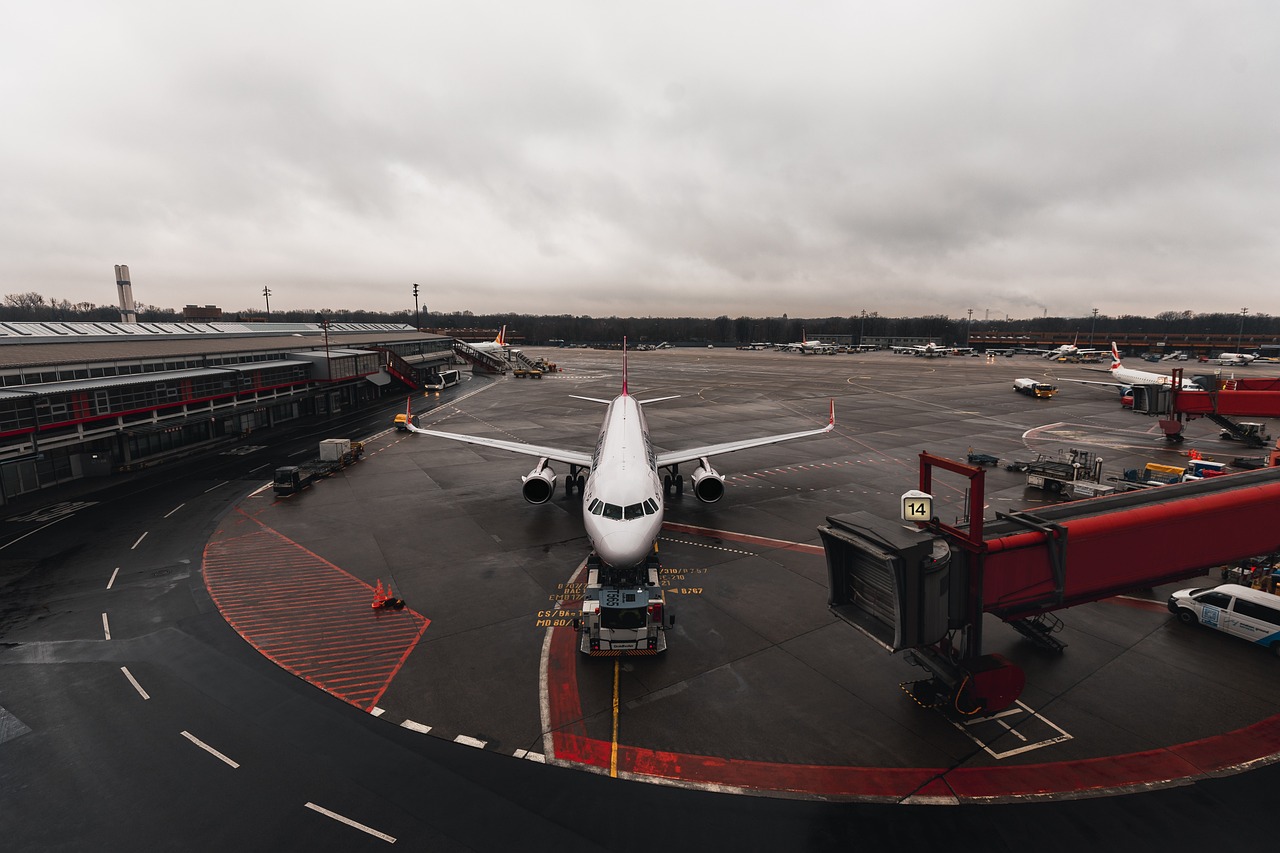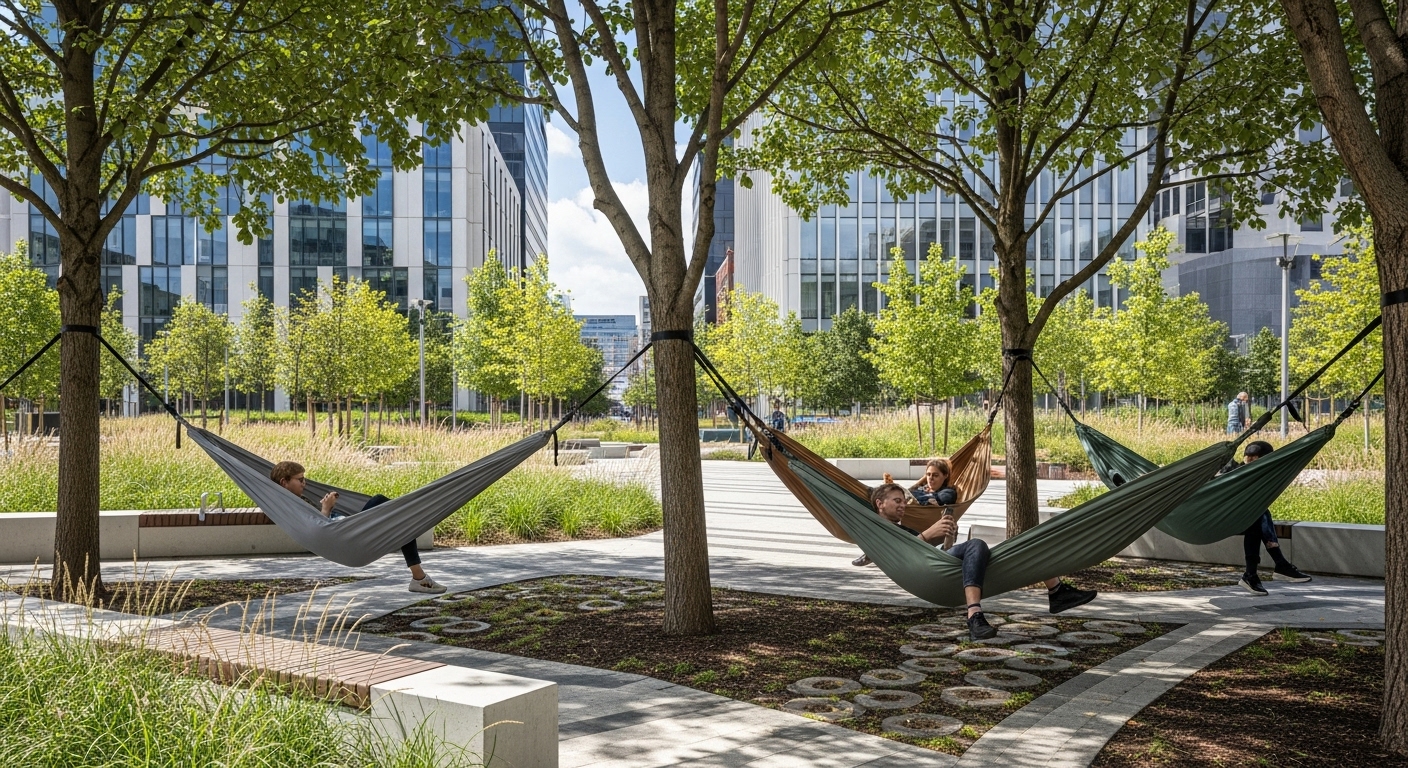
Cities with public hammocks and nap parks may sound like a dream, but they already exist in several parts of the world. As urban life grows louder, faster, and more demanding, some cities are doing the unexpected. Instead of adding more productivity zones, they are creating spaces designed for rest.
From hammocks strung between trees to quiet parks made specifically for napping, these cities recognize that rest is not laziness. Rather, rest is a public good. Interestingly, these places do not hide relaxation behind resort walls. Instead, they offer it openly, right in the middle of everyday life.
At WentWorld.com, we explore destinations that challenge how cities should feel. These nap-friendly cities prove that slowing down can be a civic value.
Why Cities Are Designing Spaces for Rest
Modern cities often celebrate speed, efficiency, and constant movement. However, stress-related burnout has become a global issue. As a result, urban planners are rethinking public spaces.
Rather than treating rest as something people must earn after work, some cities now treat rest as something people deserve during the day. Public hammocks and nap parks reduce stress, improve focus, and make cities feel more human.
Public Hammocks: More Than Just a Trend
Public hammocks are exactly what they sound like—hammocks installed in parks, waterfronts, campuses, and plazas for anyone to use. They require little space, encourage short breaks, and invite people to pause.
Unlike benches, hammocks gently cradle the body. Because of that, people tend to relax faster and stay calmer even during brief rests.
Copenhagen, Denmark
Copenhagen consistently ranks among the world’s happiest cities, and its approach to public space plays a role. Several parks and waterfront areas feature hammock-friendly zones, especially during warmer months.
The city’s focus on balance aligns closely with Denmark’s cultural concept of hygge, which emphasizes comfort and well-being. According to Visit Copenhagen, public spaces are designed to support everyday life, not just movement.
Helsinki, Finland
In Helsinki, rest is seen as essential rather than optional. Temporary hammock installations often appear in parks during summer festivals and design weeks.
Finland also promotes micro-breaks during workdays, which aligns naturally with the presence of nap-friendly public spaces. Helsinki’s design philosophy prioritizes mental health alongside functionality.
Tokyo, Japan
Although Tokyo is known for its fast pace, it also quietly supports rest culture. Small nap parks, capsule-style rest zones, and shaded green spaces allow people to recharge.
In Japan, short naps—known as inemuri—are culturally accepted. Public rest spaces complement this mindset by offering places to pause without judgment.
Paris, France
Paris has gradually reimagined its parks as places not only for walking but also for resting. Along the Seine and in redesigned urban parks, hammocks appear during summer seasons.
According to Paris Tourism Office, the city’s recent urban projects aim to make public spaces more livable, calmer, and people-centered.

Nap Parks: A New Urban Concept
Nap parks go a step further than hammocks. These spaces are intentionally quiet, shaded, and designed to minimize interruption.
Soft grass, reclining platforms, tree canopies, and noise-reducing layouts create environments where rest feels natural rather than awkward.
Madrid, Spain
Madrid’s cultural acceptance of the siesta influences its public spaces. Several parks encourage long breaks during hot afternoons, with shaded areas perfect for short naps.
While not officially labeled as nap parks, these spaces function exactly that way.
Singapore
Singapore integrates rest into its green infrastructure. Urban parks feature shaded lounging zones and hammock-style seating designed to combat heat stress.
The city’s focus on wellness-driven urban design reflects its commitment to long-term livability, as highlighted by Visit Singapore.
Why Public Napping Still Feels Unusual
Despite growing evidence that rest improves productivity, public napping still carries social stigma in many cultures.
However, cities that normalize rest slowly change perceptions. When everyone sees others taking short breaks, rest becomes acceptable rather than embarrassing.

Health Benefits of Urban Rest Spaces
Short naps can improve mood, memory, and alertness. Hammocks also reduce muscle tension and support better posture during rest.
Additionally, green surroundings lower cortisol levels, making nap parks particularly effective for stress reduction.
Economic Benefits for Cities
Rested people make better decisions, interact more positively, and engage longer with public spaces. As a result, local businesses benefit from calmer, happier foot traffic.
Moreover, nap parks cost far less than large infrastructure projects while delivering meaningful quality-of-life improvements.
How These Spaces Change Travel Experiences
For travelers, cities with public hammocks and nap parks feel welcoming rather than exhausting.
Instead of rushing from attraction to attraction, visitors can pause, observe, and absorb the atmosphere. This leads to deeper connections with a place.
Would You Use a Public Hammock?
Would you lie down for a midday nap in a public park if it felt socially normal? Or does the idea still feel strange?
Your answer says a lot about how cities have trained us to think about rest.
The Future of Rest-Friendly Cities
As mental health becomes a planning priority, more cities will likely introduce public hammocks, nap zones, and quiet parks.
Eventually, rest may become as expected in cities as Wi-Fi or bike lanes. Cities with public hammocks and nap parks remind us that progress does not always mean moving faster.
Sometimes, progress means creating space to stop.
Follow WentWorld.com on social media for more destinations where cities choose calm over chaos and well-being over burnout.
Catch up on the top stories and travel deals by subscribing to our newsletter!