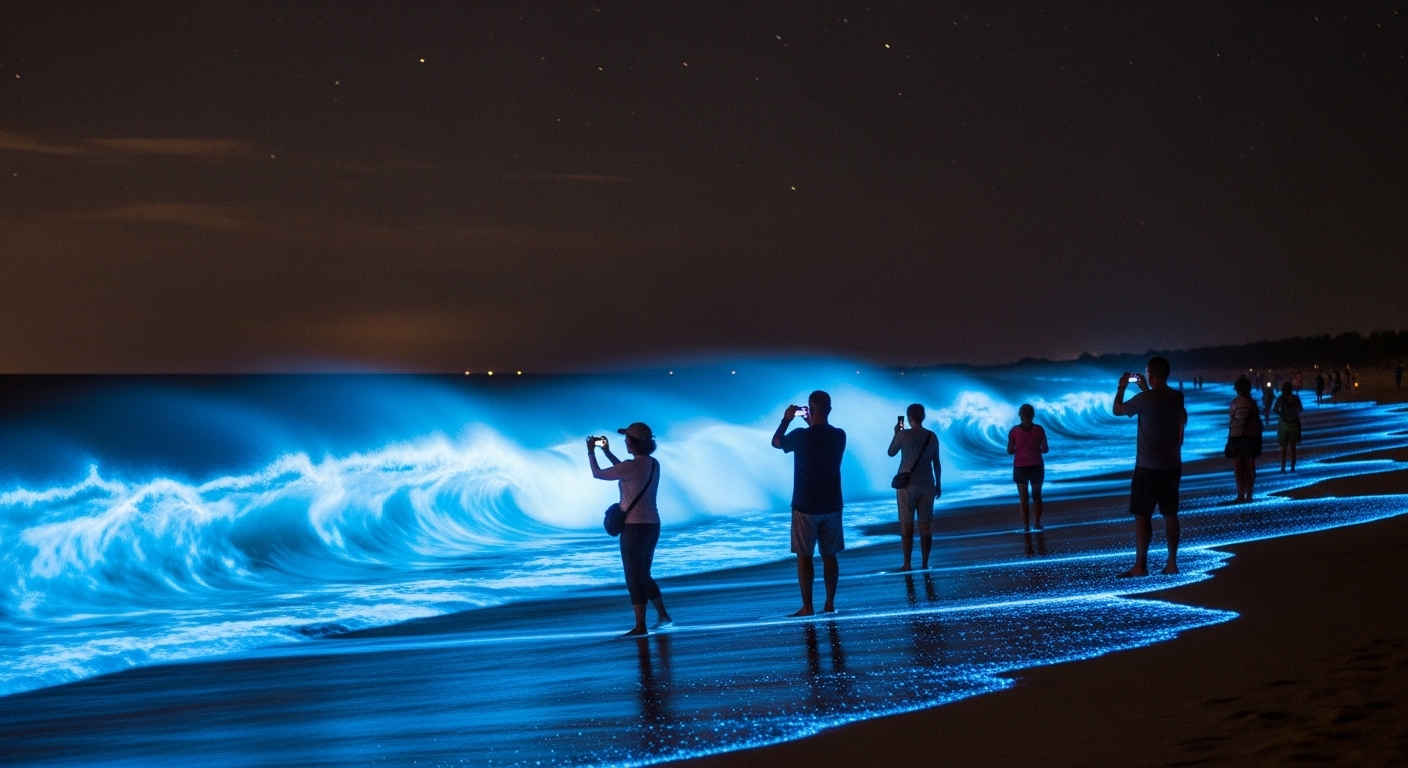
Imagine walking along a coastline or an urban bay and seeing the water or streets glow a mysterious blue at night. Cities that glow blue at night, thanks to bioluminescent phenomena, are transforming ordinary cityscapes into magical experiences. Bioluminescence, produced by microorganisms, algae, or engineered lighting in some urban environments, creates a surreal effect that attracts tourists, photographers, and scientists alike. Whether in natural coastal settings or artificially illuminated rivers, the blue glow sparks curiosity and awe. Have you ever wondered what it feels like to stroll through a city illuminated by glowing water or glowing streets? This adventure takes travelers into a world where science, art, and urban life intersect in the most stunning ways.
These urban wonders are more than a tourist attraction — they are a fusion of environmental awareness, city planning, and natural phenomena. They inspire creativity, photography, and appreciation for ecosystems that often go unnoticed in modern city life. From coastal towns where glowing algae light up the night, to urban rivers reflecting artificial blue lights in sync with public events, cities that glow blue at night are unforgettable destinations.
Why Bioluminescence Captivates Urban Travelers
Bioluminescence in cities offers an escape from the ordinary. Unlike typical nighttime city lights, the blue glow seems alive, organic, and mesmerizing. Scientists explain that bioluminescence is caused by chemical reactions in certain microorganisms or algae, often triggered by movement in the water. In some cities, artists and engineers replicate this natural effect with innovative LED installations, creating visually stunning urban art that mimics natural bioluminescence.
Urban bioluminescent attractions are becoming increasingly popular for several reasons:
- Unique Nighttime Experience: Streets, rivers, and coastlines take on a magical glow.
- Eco-Tourism Appeal: Natural bioluminescence encourages sustainable travel and environmental awareness.
- Interactive and Photogenic: Travelers can capture photos, take boat rides, or participate in guided tours.
- Cultural and Artistic Integration: Some cities combine light festivals with bioluminescence-inspired art installations.
Experts suggest that these blue glows, whether natural or engineered, offer a calming and almost meditative effect. Unlike regular city lights, the soft and fluctuating blue glow reduces visual stress and allows for a more immersive nighttime experience.
Top Cities That Glow Blue at Night
1. San Juan Islands, USA – Glowing Coastal Waters
Although not a city in the traditional sense, the San Juan Islands in Washington State feature small towns with access to glowing waters caused by bioluminescent plankton. During summer nights, visitors kayaking along the shores witness a magical blue glow surrounding their paddles and boat trails. Local tourism boards highlight these experiences for eco-conscious travelers. You can find detailed information on Visit San Juan Islands.
The effect is especially striking in calm bays and during moonless nights, creating a surreal experience for photographers and nature enthusiasts.
2. Toyama Bay, Japan – Firefly Squid Glow
Toyama Bay is famous for its firefly squid (Watasenia scintillans), which emit bright blue light in spring. While the city itself is modest, the bay lights up spectacularly at night when these tiny creatures rise to the surface. Tourists can watch from observation decks, boats, or shoreline walks, making it a must-see destination for marine bioluminescence lovers. For travel tips, check Japan Travel.
The glow is natural and fleeting, making timing critical. Guided tours provide the best chances to see this mesmerizing phenomenon while learning about the life cycle of the firefly squid and its ecological significance.

3. Mosquito Bay, Puerto Rico – The Brightest Bioluminescent Bay
Also known as Bahía Bioluminiscente, Mosquito Bay on Vieques Island is often cited as the brightest bioluminescent bay in the world. The bay contains microscopic organisms called dinoflagellates that emit blue-green light when disturbed. Kayaking through Mosquito Bay at night is like moving through a galaxy of stars reflected on water. Visitors can also take guided boat tours or swimming experiences to fully enjoy the magical glow.
This bioluminescent urban wonder is carefully managed by local authorities to protect the fragile ecosystem. Tourists are encouraged to respect guidelines to prevent contamination of the waters. More information is available at Puerto Rico Day Trips.
4. Malampaya Sound, Philippines – Hidden Blue Waterways
In Palawan, the Malampaya Sound features sections where naturally bioluminescent waters create glowing reflections at night. Small towns along the coastline leverage this phenomenon for nighttime kayaking and river walks. This adds both a tourism dimension and an educational element, as visitors learn about the organisms responsible for the glow and the importance of preserving coastal ecosystems.
The best time to witness these glowing waters is during warm, calm nights with minimal moonlight. Tour operators provide safety equipment and guided experiences to ensure visitors can enjoy the glow responsibly.
5. Maldives – Blue Beaches and Bioluminescent Shores
While the Maldives is famous for turquoise waters and luxury resorts, certain islands also feature bioluminescent beaches. Tiny plankton emit blue light, especially after waves disturb the water at night. The effect is amplified by the pristine beaches and clear skies, creating one of the most magical nighttime experiences possible. Travelers often take evening walks along the shore, capturing the glow in photographs that look like something out of a dream. Visit Visit Maldives for more details.
6. San Diego, California, USA – Controlled Urban Glow
Some cities like San Diego have experimented with urban installations inspired by bioluminescence. LED-lit urban rivers, waterfront parks, and art installations mimic the natural glow of bioluminescent organisms. While not naturally occurring, these projects highlight the creative potential of bioluminescence in urban planning and public spaces. Details about city lighting and public art initiatives can be found at City of San Diego.
These installations offer urban dwellers and tourists alike a chance to experience the calming, awe-inspiring qualities of blue light in city settings, while also encouraging environmental awareness.

How to Experience Bioluminescent Cities Safely
- Research seasonal timing and natural cycles, as many phenomena are temporary.
- Use guided tours or local operators for safety and ecological awareness.
- Bring low-light cameras for photos without disturbing wildlife.
- Follow local rules to protect delicate ecosystems, including avoiding sunscreen or lotions in the water.
- Choose eco-conscious operators for kayaking or boating tours.
Why These Urban Wonders Matter
Cities that glow blue at night are more than just a tourist attraction—they foster appreciation for natural and artificial beauty, encourage ecological awareness, and inspire creativity. Bioluminescence demonstrates the intersection of biology, art, and urban life, reminding us of nature’s hidden wonders even in city environments. Scientists and environmentalists often use these locations to study marine health, water quality, and the impact of urban development on ecosystems.
Photography Tips for Bioluminescent Experiences
Capturing the blue glow can be challenging due to low-light conditions. Here are some helpful tips:
- Use long-exposure photography to capture the glow effectively.
- Stabilize your camera on a tripod or solid surface.
- Avoid flash, which can ruin the natural beauty.
- Experiment with reflections on wet sand or calm water surfaces.
- Capture people interacting with the glow for scale and impact.
Environmental Awareness and Sustainable Tourism
Bioluminescent organisms are fragile and sensitive to pollution, temperature changes, and chemical interference. Eco-tourism initiatives are essential to preserve these urban and natural phenomena. Tourists are encouraged to respect the environment, avoid disturbing organisms, and follow local guidelines. Cities and operators increasingly provide educational tours to inform visitors about the biological processes that create these magical blue glows.
Whether it’s natural bioluminescence in bays and rivers or artistic urban installations inspired by this phenomenon, cities that glow blue at night offer a once-in-a-lifetime experience. From Puerto Rico to Japan, the Maldives, the Philippines, and California, these destinations showcase how science, art, and urban life can combine to create unforgettable nighttime spectacles. Have you ever walked along glowing waters or streets? Which city would you visit first to experience this magic? Share your thoughts and follow WentWorld on social media for more unique global adventures and travel inspiration.
Catch up on the top stories and travel deals by subscribing to our newsletter!