In the modern era of aviation, some countries have taken airport design to an entirely new level. Imagine landing not on concrete, but on water—a floating runway that glides across a lagoon, river, or man-made platform. Countries with floating airports built on water offer travelers a unique blend of engineering marvels, logistical solutions, and scenic approaches to aviation. These airports redefine the travel experience and often become iconic landmarks in their own right.
Have you ever dreamed of watching a plane land or take off over shimmering water, with the city skyline or tropical landscape in the background? For many travelers, airports are usually functional spaces, but floating airports turn arrivals and departures into awe-inspiring experiences. Let’s dive into the fascinating world of these unique airports and explore where and why they exist.
Why Floating Airports Exist
Floating airports are more than just engineering experiments; they serve practical and environmental purposes. In countries with limited land, dense urban development, or challenging geography, constructing traditional airports can be difficult. By building runways on water, cities can expand aviation infrastructure without consuming scarce land. For example, in Japan, the famous Kansai International Airport was built on an artificial island in Osaka Bay to address land scarcity and noise concerns.
Additionally, floating airports can help protect sensitive ecosystems by concentrating development on a contained water surface instead of spreading into natural habitats. They also offer stunning scenic views for passengers, turning routine landings into memorable experiences.
Examples of Floating Airports Around the World
Several countries have implemented floating or water-based airports, combining innovation with necessity. Here are some notable examples:
- Kansai International Airport, Japan: Built on an artificial island in Osaka Bay, this airport required extensive engineering to withstand earthquakes and typhoons. Learn more at Kansai Airport.
- Hong Kong International Airport, China: Located on reclaimed land on Lantau Island, this airport uses advanced water engineering techniques to ensure stability and safety. See details at Hong Kong Airport.
- Malé International Airport, Maldives: Officially known as Velana International Airport, it sits on reclaimed land close to the capital city and offers breathtaking views of the surrounding Indian Ocean. Visit Maldives Airport.
- Princess Juliana International Airport, Sint Maarten: Though not fully floating, the runway extends almost to the waterline, allowing planes to approach directly over Maho Beach, creating an iconic and thrilling experience.
- Funchal Airport, Madeira, Portugal: An innovative airport with a partially elevated runway extending over the ocean, supported by columns and platforms to manage hilly terrain.

Have you ever seen a plane land just meters above a beach or water? The excitement is unlike any standard airport approach. These airports often turn into tourist attractions, with people gathering nearby to witness landings and takeoffs from unique vantage points.
Engineering Challenges of Floating Airports
Building airports on water comes with significant technical hurdles. Engineers must account for tidal movements, wave action, and potential erosion. Runways must remain stable under the weight of large aircraft, often requiring deep pilings and reinforced platforms. Moreover, floating airports must address safety concerns like storm surges, earthquakes, or hurricanes.
For instance, Kansai International Airport faced challenges with land subsidence. Engineers had to continually monitor and adjust the artificial island to ensure long-term stability. Similarly, airports in tropical regions like the Maldives and Hong Kong must implement advanced drainage systems and storm defenses to handle extreme weather.
Travel Experience at Floating Airports
Passengers often find that airports built on water offer unforgettable travel moments. Imagine sipping coffee while gazing at turquoise waters, watching ferries or boats pass nearby, or experiencing takeoffs with the sensation of gliding over the ocean. Unlike traditional airports, the approach to a floating runway often provides panoramic views, ideal for photography enthusiasts or anyone who appreciates scenic travel.
Additionally, many floating airports are integrated with luxury amenities, fine dining, and cultural showcases. For example, Velana International Airport in the Maldives combines sleek modern facilities with local art displays, giving travelers a sense of place right from arrival.

Environmental Considerations
Despite their benefits, floating airports can impact marine ecosystems if not carefully planned. Reclamation or construction may disrupt coral reefs, fish habitats, and tidal flows. That’s why modern airports prioritize environmental assessment and mitigation measures. In some locations, artificial islands are designed to include marine sanctuaries or sustainable shoreline management techniques.
As travelers, it’s fascinating to think about how engineering can both challenge and respect nature. Floating airports are perfect examples of human ingenuity harmonizing with the environment, allowing efficient travel while preserving natural beauty whenever possible.
Future of Floating Airports
With urban populations growing and land scarcity becoming a global challenge, floating airports are likely to gain popularity. Future designs may incorporate fully sustainable technologies, including solar power, tidal energy systems, and floating terminals with minimal environmental footprint. Some proposals even explore modular floating runways that can expand or relocate depending on demand and environmental factors.
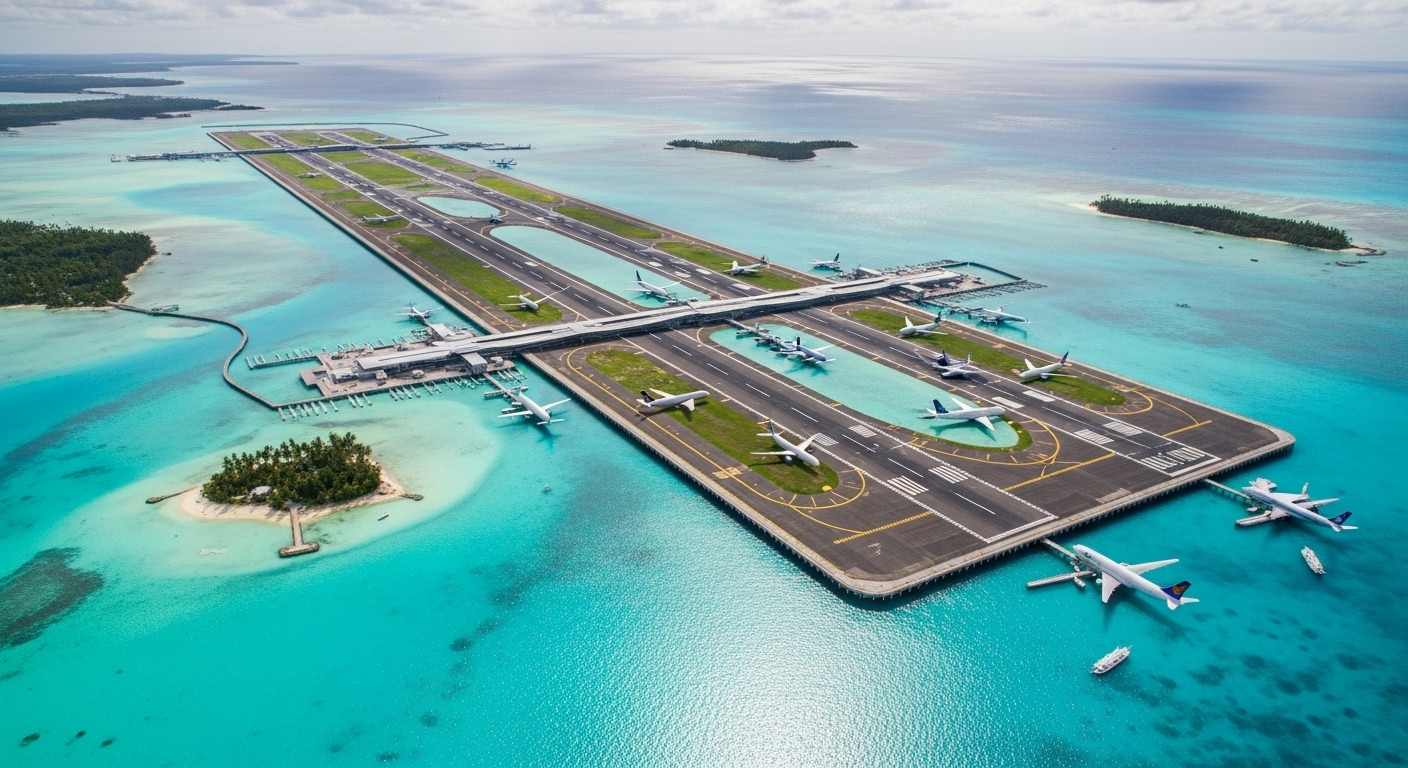
Imagine boarding a plane from a floating platform in a lagoon, with crystal-clear water below and lush islands nearby. It might seem futuristic, yet this concept is already shaping travel in countries with challenging terrain or limited land availability.
Exploring countries with floating airports built on water allows travelers to appreciate the intersection of engineering, nature, and modern aviation. Whether landing in Japan, the Maldives, or Portugal, the experience is both practical and awe-inspiring. These airports highlight how innovation can overcome geographic limitations while creating unforgettable travel moments.
Have you ever landed at or seen a floating airport? Would you love to experience one of these scenic approaches on your next trip? Share your thoughts and travel dreams with us. And don’t forget to follow WentWorld on social media for more travel guides, hidden wonders, and unique travel experiences.
Catch up on the top stories and travel deals by subscribing to our newsletter!