
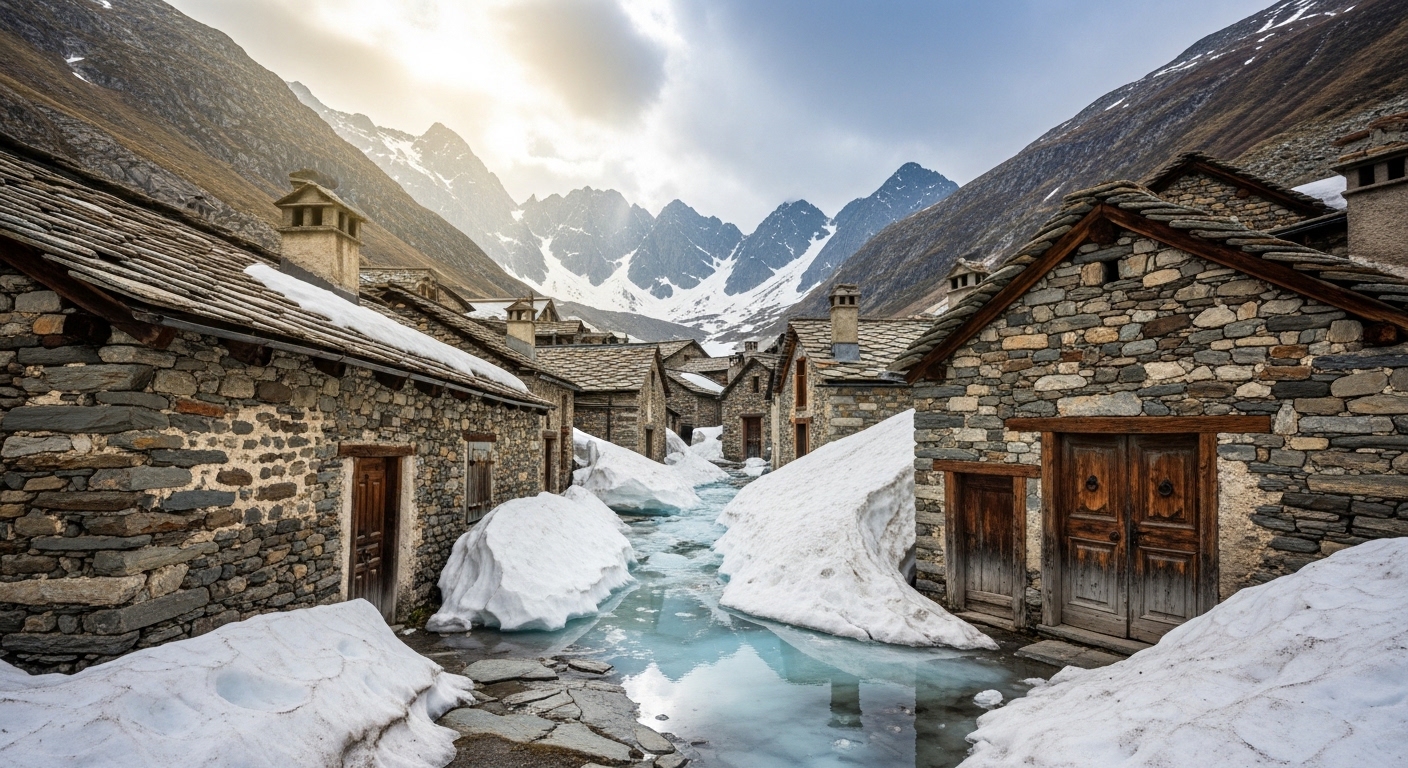
High in the mountains, where winter dominates most of the year and ice shapes the landscape, something remarkable happens each summer. As glaciers retreat, glacier door villages emerging each summer return to life. These seasonal alpine settlements reveal doors once buried under snow, stone homes long hidden beneath ice, and communities that thrive only for a few precious months.
Across Switzerland, Iceland, Norway, and parts of the Himalayas, villages blocked by winter reopen when glacier ice melts enough to allow safe access. Front doors reappear. Pathways reemerge. Livestock returns to high pastures. Families reopen ancestral homes. These villages are not tourist attractions designed for spectacle; they represent human resilience and harmony with extreme environments.
Have you ever imagined living somewhere that exists only seasonally? A place where your front door disappears under snow for half the year? These rare settlements challenge everything we assume about permanent communities.
The Meaning Behind Glacier Door Villages
The term glacier door villages emerging each summer refers to settlements located in high-altitude glacial regions where heavy winter snowfall makes year-round habitation nearly impossible. During winter, snow and ice block roads, seal entrances, and isolate structures. When summer warmth arrives, people can safely access the villages again.
In the Swiss Alps, seasonal villages above Zermatt reopen once mountain passes become safe. Visitors exploring the region through Switzerland Tourism often discover historic chalets perched above retreating glaciers. These homes function seasonally rather than remaining empty ruins.
Similarly, in Iceland, areas near Vatnajökull Glacier become accessible only during warmer months. According to Visit Iceland, certain highland settlements and mountain huts welcome hikers only in summer, revealing landscapes hidden under snow most of the year.
How Glacial Movement Shapes These Villages
Glaciers constantly move, carving valleys, reshaping terrain, and influencing settlement patterns. In some cases, advancing ice forced villages to relocate. Retreating glaciers exposed land suitable for seasonal grazing and habitation.
Norway’s glacial valleys offer clear examples. Areas near Jostedalsbreen Glacier reopen every summer, allowing farmers to return livestock to alpine meadows. The official site of Visit Norway highlights seasonal mountain farms that operate only during snow-free months.
These villages rely on precise knowledge of ice cycles. Residents track snowpack levels, glacial melt rates, and avalanche risks. They plan their lives around environmental awareness instead of modern convenience.

Life Inside a Seasonal Village
What does daily life look like in a glacier door village?
Mornings start early. Farmers guide sheep or cattle grazing in nutrient-rich alpine grasslands. Families repair wooden shutters and stone pathways damaged by winter freeze. Children experience a different kind of schooling, learning directly from nature.
These villages lack supermarkets or shopping malls. Supplies arrive before snow blocks roads again. In Himalayan glacier regions, goods travel by mule or small vehicles once paths reopen.
Electricity often comes from solar panels, and water flows from glacial melt streams. Residents manage waste carefully to avoid contaminating fragile ecosystems.
Could you adapt to a lifestyle that requires months of preparation before winter seals everything shut again?
Tourism and Responsible Access
As awareness grows about glacier door villages emerging each summer, tourism increases. Visitors want to witness homes reappear from beneath ice. However, attention brings responsibility.
Overtourism can damage fragile alpine ecosystems. Trampling vegetation, disturbing livestock, and adding waste threaten sustainability. Many regions now enforce visitor limits and guided access.
For example, alpine areas near Mont Blanc regulate hiking access through coordinated policies described on Chamonix Tourism. These measures protect both residents and natural surroundings.
If you visit one of these villages, would you prioritize eco-conscious travel practices?
Climate Change and the Future of These Villages
Climate change complicates the story of glacier door villages emerging each summer. Faster glacier retreats expose land earlier, but unstable terrain creates landslide and flooding risks.
According to National Geographic Environment, alpine glacier loss has accelerated over the past decades. This affects water supply, seasonal access, and long-term village viability.
Some settlements may remain accessible longer. Others could face structural risks from thawing permafrost. Foundations built on frozen ground weaken as temperatures rise.
Will these villages eventually transform into permanent communities, or will environmental instability make seasonal life harder to maintain?
Cultural Traditions Rooted in Ice
Many glacier door villages preserve traditions that date back centuries. Seasonal reopening ceremonies mark safe access days. Bells ring when mountain passes open. Communal meals celebrate successful winter survival.
In Austria and Switzerland, transhumance festivals accompany livestock movement to alpine pastures. These traditions strengthen identity despite geographic isolation.
The seasonal rhythm fosters community bonds. Everyone participates in preparing homes before winter returns. Doors are reinforced, roofs secured, and food stored carefully.
Would modern urban communities benefit from similar collective preparation cycles?
Architecture Designed for Seasonal Living
Architecture in glacier door villages adapts to extreme conditions. Homes feature steep roofs to shed snow and thick stone walls for insulation. Wooden shutters protect windows from ice damage.
Some homes are embedded into mountainsides to shield against wind. Doors withstand months under snow pressure, and secondary upper-level entrances serve as winter exits if lower doors are blocked.
When summer arrives, snow is cleared from entryways. Wooden balconies reappear, flower boxes return beneath windows, and the transformation from frozen silence to vibrant habitation feels almost theatrical.

Why Travelers Are Fascinated
Travelers increasingly seek experiences beyond conventional destinations. Glacier door villages emerging each summer offer rarity, authenticity, and emotional resonance. They represent impermanence in a world obsessed with permanence.
Photographers capture doors half-emerging from snowbanks. Hikers document narrow paths carved between melting ice walls. Writers describe the eerie stillness of villages waiting for life to return.
Unlike theme parks or constructed attractions, these villages exist because people choose to live in harmony with challenging environments. That authenticity draws global interest.
Would you plan a trip around the precise weeks when a hidden village reopens?
Visiting Responsibly
If you plan to visit glacier door villages emerging each summer, timing is crucial. Access windows are short and depend on snow conditions.
Travelers should:
- Check official regional tourism updates
- Hire local guides familiar with terrain
- Respect private property boundaries
- Minimize waste and environmental impact
- Support local businesses directly
Flights to alpine regions can be booked via major carriers serving Zurich, Oslo, or Reykjavik. Ground travel often requires vehicles suited for mountain roads.
Careful planning ensures safety and sustainability.
The Future of Glacier Door Villages
The phenomenon of glacier door villages emerging each summer may evolve dramatically in coming decades. As glaciers recede, new land may appear, but unstable slopes and changing water flows could complicate habitation.
Technology, including climate monitoring and improved infrastructure, may allow safer seasonal occupation. At the same time, environmental unpredictability may reduce accessibility.
These villages symbolize adaptation. They demonstrate that human settlement can align with natural cycles rather than override them.
Have you ever visited a place that felt temporary, fleeting, and deeply connected to seasonal change? Share your thoughts in the comments below.
Follow WentWorld.com on social media for more rare destination stories, emerging travel trends, and hidden communities shaped by nature.
Catch up on the top stories and travel deals by subscribing to our newsletter!









Leave a Reply
You must be logged in to post a comment.