What did travelers carry decades ago compared to today? The story of travel gear evolution is one of innovation, convenience, and style reimagined over time. From heavy steamer trunks to smart carry-ons with built-in chargers, the tools we bring on trips tell the story of how wanderlust has changed and grown. Join us on a journey through time, examining how gear has adapted to modern travel needs.
Understanding travel gear evolution helps travelers appreciate how much easier, smarter, and more sustainable packing has become. Along the way, we’ll explore vintage suitcases, classic travel tools, modern tech-enhanced gear, and what’s next on the horizon. By the end, you’ll not only see how gear has transformed—but you might rethink your own packing rituals.
1. Early Travel Gear: Trunks, Satchels & Leather Cases
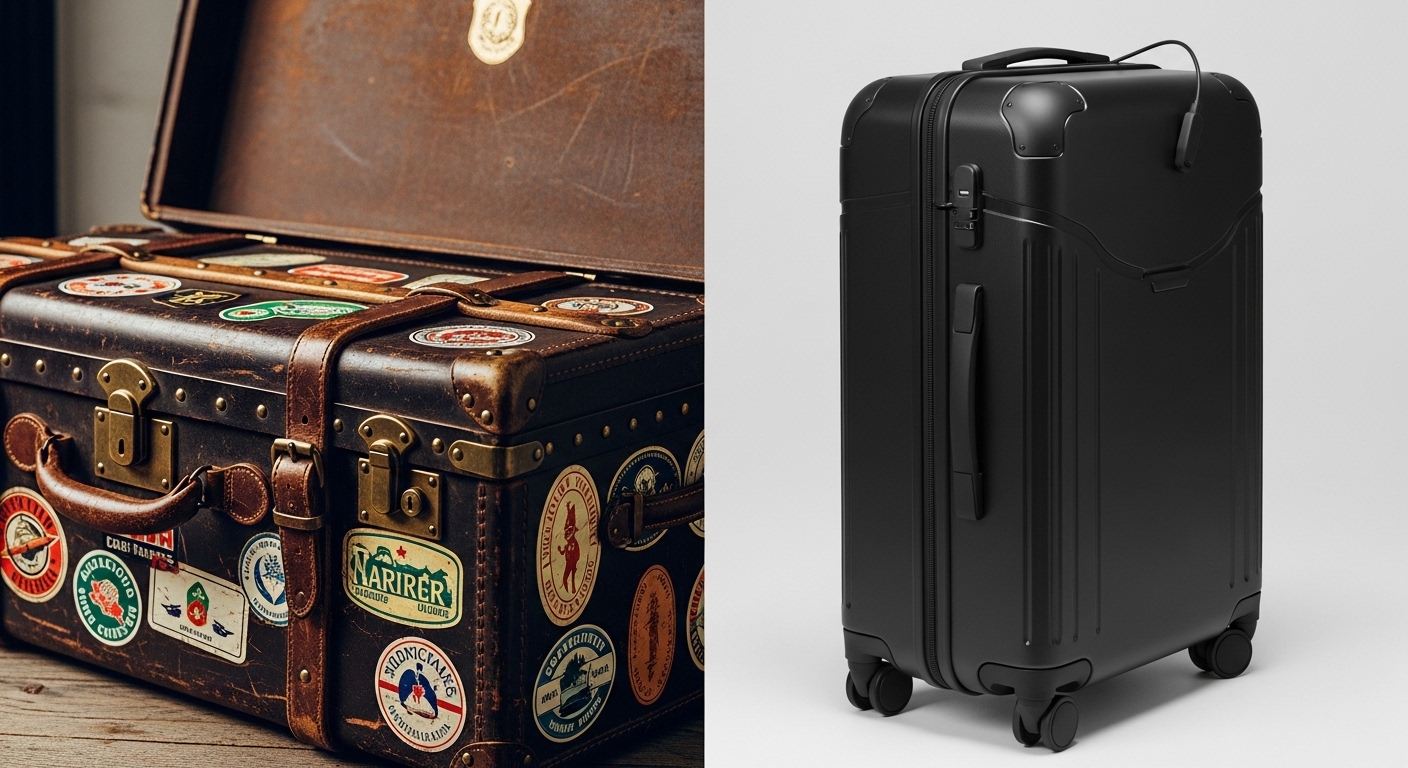
In the early 20th century, sea travel and long rail journeys meant sturdy trunks and leather satchels. These items were heavy—often requiring porters—but built to last. Travel gear evolution started here, with solid brass buckles, reinforced corners, and monogrammed initials. People didn’t worry about weight limits; they cared about durability. Each trunk told a tale of family trips, world tours, and multi-month voyages.
This was gear designed for permanence. It was common to see a trove of stickers from far-flung ports and railway stops decorating trunks—visual proof of miles traveled and experiences had.
2. Mid-Century Shift to Roll-On Luggage & Lightweight Materials
By the 1970s, airlines began imposing weight restrictions, and the roll-on suitcase was born. Wheels and retractable handles revolutionized travel gear evolution. Suddenly, solo travelers could manage a suitcase without help. Materials shifted from leather to plastics like ABS and polycarbonate—lighter, cheaper, and easier to clean.
Expandable suitcases emerged, offering flexibility for souvenir-filled returns. Keyless locks and zippered compartments became standard, balancing security with convenience.
3. Backpack Popularity & Adventure Travel Gear
As adventure travel gained popularity in the 1980s and ’90s, backpacks became travel essentials. High-performance gear—nylon, water-resistant fabric, ergonomic straps—allowed travelers to hike and traverse diverse terrain. Trekking backpacks included hip belts, hydration-pocket sleeves, and daisy chains for carabiners.

This stage in travel gear evolution emphasized mobility and rugged utility. Travelers could go anywhere with their entire home on their back.
4. Tech Integration: Charging, Tracking & Smart Fabrics
Fast forward to the 2000s—travel gear evolution leaps into tech. Carry-ons now integrate TSA-approved battery pockets for power banks. Smart luggage includes GPS trackers and Bluetooth locking systems. Some backpacks use RFID-blocking pockets to protect your digital identity. Zip-close clothing uses antimicrobial fabrics to reduce odor. You can now travel light and smart.
Brands like Away, Peak Design, and RIMOWA led this charge, blending minimalist aesthetics with powerful features.
5. Sustainability & Modular Packing Systems
Today’s travelers are eco-conscious. Travel gear evolution now includes recycled materials—PET bottles into packable jackets, fishnet waste into phone cases, and cork yoga mats. Modular systems—packing cubes, compression bags, detachable daypacks—help maximize space and reduce laundry needs.
Vegan leather briefcases, solar-charging backpacks, and collapsible water bottles speak to purpose-built ethics and efficiency without compromising comfort.
6. Personal Stories of Gear Evolution
Consider Jane, who once carried a 70-pound trunk posing as checked luggage. She’s proud of the vintage stickers, but now tours with a 22-inch carry-on that charges her phone on the go. Then there’s Marco, who backpacked through the Andes with a heavy canvas bag, switches to a 5-pound modular pack with GPS locator enabled.

The travel gear evolution isn’t just about items—it’s about how people travel smarter, lighter, and more meaningfully.
7. What’s Next: AI, Biometric-Friendly Accessories & Beyond
The future of travel gear evolution points to AI-enabled smart bags that alert you if you forget your laptop, biometric locks that open to your fingerprint, and fabrics that self-clean via integrated nano-coatings. We may soon see luggage that adjusts dimensions at check-in or backpacks that convert into office desks. Tech and sustainability will co-create the next wave of travel essentials.
8. Choosing Your Own Gear in Today’s Market
- Define Journey Style: Adventure, business, urban exploration—choose gear accordingly.
- Prioritize Features: Wheels vs backpack; built-in charger; modular packing; hardware quality.
- Review Sustainability: Look for recycled fabrics, repair programs, and brand ethics.
- Test Comfort: Ergonomic straps? TSA-friendly zipper pockets? Test in-store if possible.
- Think Longevity: A quality piece today might outlast three cheaper versions.
9. Travel Gear Evolution and Packing Rituals
Part of the evolution is mindset: from suitcase stacking to mindful packing. Today’s ritual may mean layout outfits across cubes, charge power banks, run a luggage scan app. The process becomes part of the vacation mindset—smart, intentional, organized—and prepared for anything.
The travel gear evolution from bulky trunks to smart, sustainable packs mirrors travel itself: from slow expanse to rapid, rich experiences. As you get ready for your next trip, consider what era your gear represents—and how much more grounded, efficient, and purposeful your gear can become.
What’s the oldest travel item in your collection, and how has your gear changed? Share below—and follow us for more insights into gear, travel habits, and intentional journeys.
Catch up on the top stories and travel deals by subscribing to our newsletter!