Imagine stepping onto a bridge that is never in the exact same place twice. The water beneath it shifts, the currents guide it, and yet it remains safe, functional, and beautiful. Floating footbridges that drift with currents are one of the most fascinating examples of how engineering, design, and nature can coexist in urban spaces. These bridges are not fixed monuments; they are living structures that move, breathe, and respond to their environment.
Across the world, architects and city planners are experimenting with floating footbridges to solve real problems. Rising sea levels, unstable riverbanks, seasonal flooding, and the need for flexible infrastructure have forced cities to rethink how people move across water. Instead of building rigid bridges that fight against nature, these floating structures adapt to it. Have you ever wondered what it feels like to walk across a bridge that gently sways with the rhythm of the river?
What Are Floating Footbridges and How Do They Work?
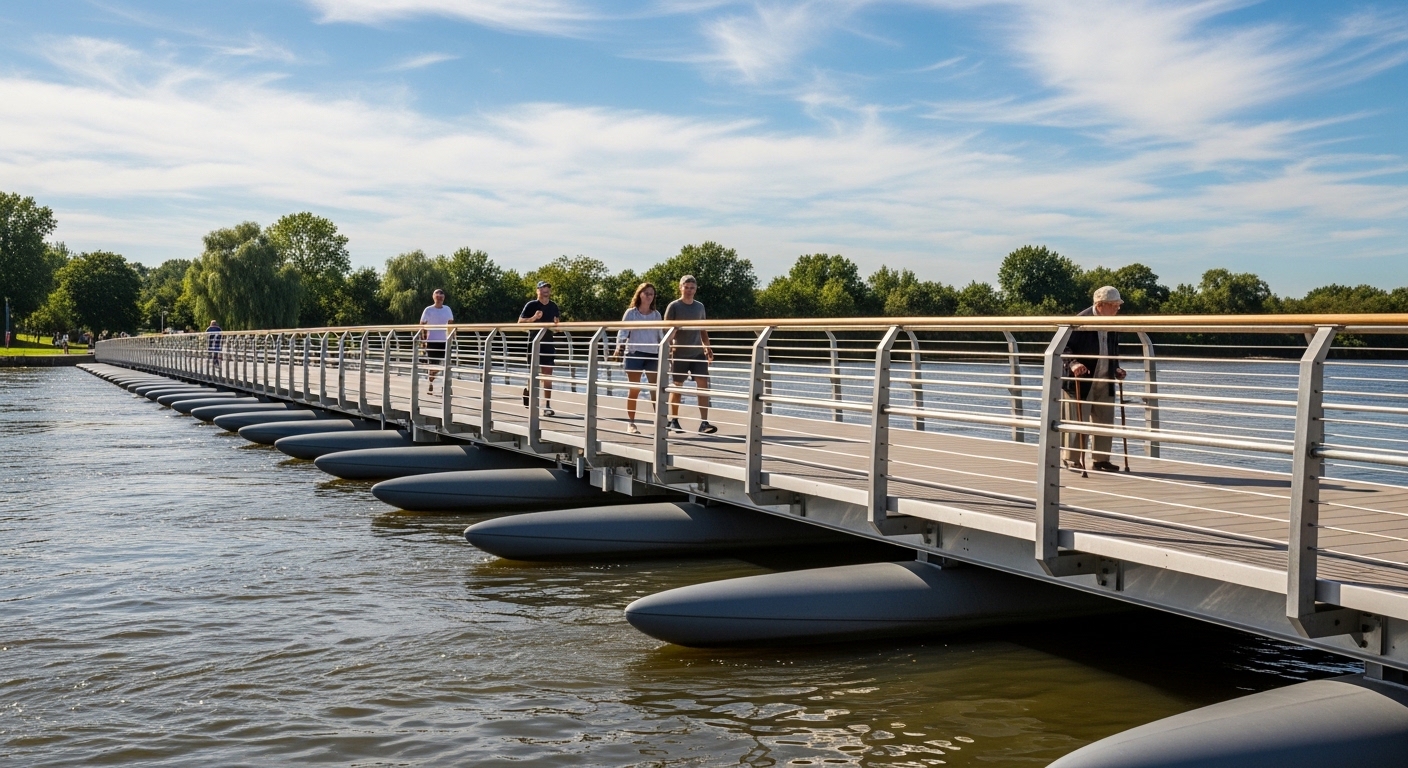
Floating footbridges are pedestrian bridges supported by buoyant platforms rather than permanent pillars embedded in the ground. They rest on pontoons, modular floats, or specially engineered floating bases that allow the bridge to rise, fall, and sometimes drift slightly with water movement.
Some floating footbridges are anchored tightly and only move vertically with tides. Others are designed to drift subtly with currents while remaining connected to both shores through flexible joints or guiding cables. The result is a structure that feels alive, reacting to water instead of resisting it.
Engineers often use materials like reinforced concrete pontoons, lightweight steel frames, and composite plastics to balance strength with buoyancy. Modern designs also incorporate sensors to monitor stress, movement, and water conditions in real time.
Why Cities Are Choosing Floating Bridges Over Fixed Ones
Cities are increasingly turning to floating footbridges that drift with currents because traditional bridges are not always practical or sustainable. In flood-prone areas, fixed bridges can become submerged or structurally compromised. Floating bridges, however, rise with the water and remain usable.
In environmentally sensitive zones, permanent foundations can damage ecosystems, disturb riverbeds, and disrupt marine life. Floating bridges minimize ground intrusion and allow natural water flow to continue uninterrupted.
They also offer economic advantages. Floating footbridges are often faster and cheaper to install than conventional bridges. They can be relocated, extended, or reconfigured as city needs change. Would you prefer infrastructure that adapts to the future instead of becoming obsolete?
Famous Floating Footbridges Around the World
Several cities have already embraced floating footbridges as part of their urban identity.
In Amsterdam, temporary floating bridges appear during festivals and public events, connecting canal islands and creating dynamic pedestrian routes. The city’s relationship with water makes floating infrastructure a natural extension of daily life. Visitors exploring through official Amsterdam tourism often encounter these bridges as part of cultural installations.
London has experimented with floating crossings along the Thames for art exhibitions and seasonal events. These bridges are not just functional but also artistic, inviting people to experience the river from a new perspective. The city’s long-term waterfront plans highlighted by Visit London increasingly include flexible water-based infrastructure.
In China, floating footbridges have been built in national parks and scenic lakes, allowing visitors to walk across water without disturbing natural landscapes. These bridges often drift slightly, creating a calm and immersive experience for tourists.
Norway uses floating bridge technology on a massive scale for both vehicles and pedestrians, especially in fjord regions where deep waters make traditional construction difficult. Although many are fixed in position, newer pedestrian designs allow limited movement with currents and tides.

The Experience of Walking on a Moving Bridge
Walking across a floating footbridge feels different from any other urban experience. There is a subtle sense of motion beneath your feet, a gentle response to waves, wind, and passing boats. The movement is rarely dramatic, but it is enough to remind you that you are standing on water, not solid ground.
Many visitors describe the sensation as calming rather than unsettling. The slight drift creates a deeper awareness of surroundings. You notice reflections, ripples, sounds, and even changes in temperature more vividly.
Would you find this experience thrilling or uncomfortable? Or would it change how you feel about urban spaces altogether?
Environmental Benefits of Floating Footbridges
One of the strongest arguments for floating footbridges that drift with currents is their environmental impact. These structures are often far less invasive than traditional bridges.
They allow aquatic ecosystems to function normally, preserving fish migration routes and water flow. They also reduce the need for heavy construction machinery, deep foundations, and large-scale land modification.
Some floating bridges are even designed to support floating gardens, algae systems, or solar panels, turning them into multi-functional environmental assets rather than just walkways.
Floating Bridges as Public Art
Beyond engineering, floating footbridges are increasingly used as artistic installations. Cities use them to host exhibitions, performances, and cultural events.
Artists design bridges that glow at night, change color with tides, or respond to foot traffic with sound and light. In this way, the bridge becomes both infrastructure and interactive art.
Platforms like Designboom regularly showcase experimental floating bridges that blur the line between architecture and performance.

Challenges and Safety Considerations
Despite their advantages, floating footbridges face technical challenges. Strong currents, extreme weather, and heavy pedestrian loads require precise engineering.
Safety systems must account for movement, anchoring, and emergency access. Regular maintenance is essential to prevent wear on joints, cables, and flotation systems.
Public perception is another challenge. Some people feel uneasy about walking on water-based structures, even when they are completely safe. Education and thoughtful design help overcome these fears.
The Future of Floating Footbridges
As cities face climate change, rising sea levels, and unpredictable weather patterns, floating infrastructure will become increasingly valuable. Floating footbridges offer a glimpse into a future where cities no longer fight water but learn to live with it.
Urban designers are now experimenting with entire floating neighborhoods, parks, and transport systems. Footbridges are often the first step in this transformation, acting as connectors between land and floating spaces.
Imagine a city where streets, parks, and bridges drift gently with tides, creating a constantly evolving urban landscape. Would that feel chaotic or liberating?
Floating footbridges that drift with currents are more than clever engineering. They represent a philosophical shift in how humans interact with nature, choosing adaptation over domination.
We would love to hear from you. Would you walk across a moving bridge? Have you ever experienced floating infrastructure before? Share your thoughts and stories in the comments.
Follow WentWorld.com on our social media platforms for more stories about futuristic cities, hidden architecture, and innovative travel experiences.
Catch up on the top stories and travel deals by subscribing to our newsletter!