
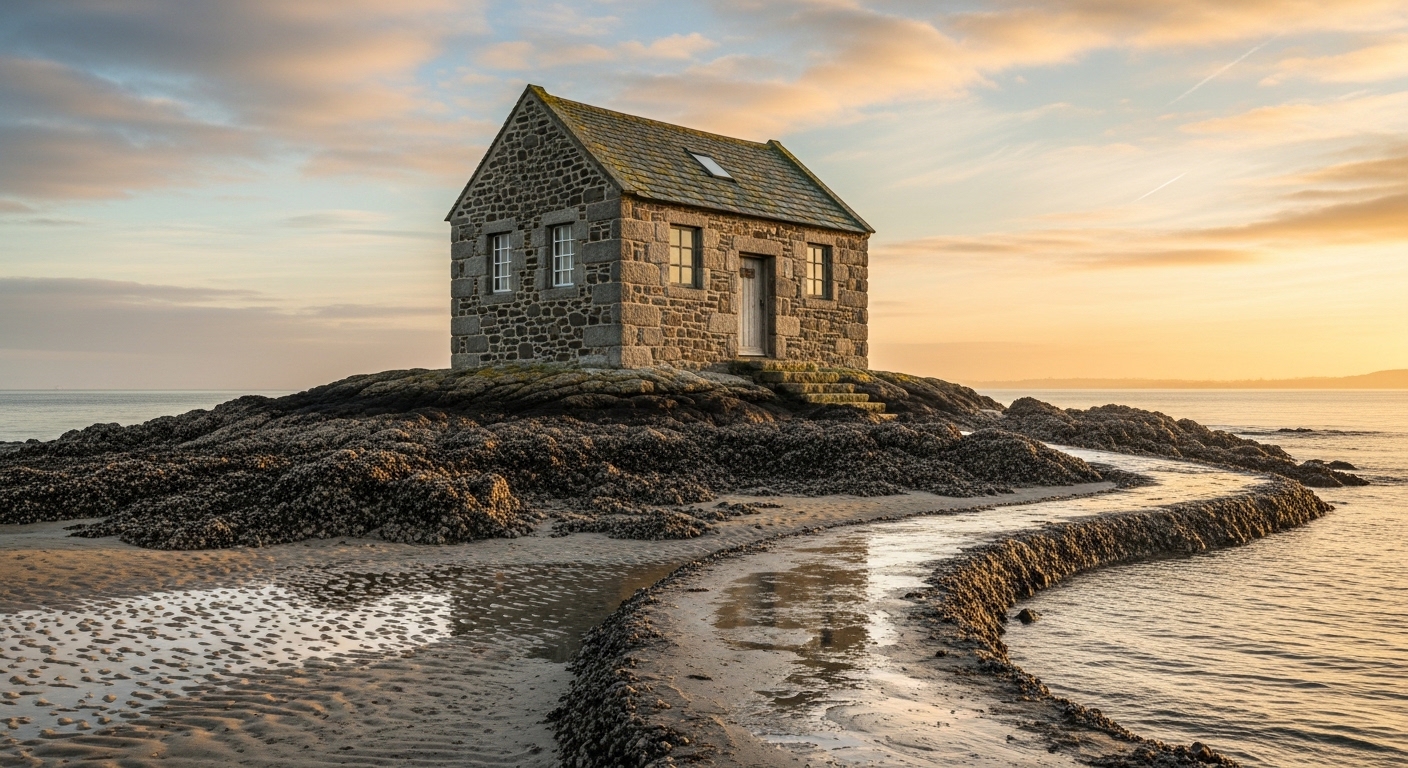
Tidal libraries reached only at low sea are among the most extraordinary travel concepts imaginable. These coastal sanctuaries exist in a delicate balance between land and water, appearing when the ocean retreats and disappearing when it returns. In essence, access to knowledge becomes tied to the rhythm of the moon. Unlike traditional buildings that remain permanently open, tidal libraries reached only at low sea demand patience, timing, and intention. As a result, the experience feels profoundly different from visiting any ordinary library.
At first glance, the idea may sound fictional. However, throughout history, humans have built monasteries, chapels, and fortresses accessible only during low tide. Therefore, transforming that concept into a literary sanctuary feels like a natural evolution. Instead of bells or battlements, imagine shelves of books waiting quietly beyond a tidal causeway. Would you plan your visit around the ocean’s schedule?
In this exploration by WentWorld.com, we journey into the poetic and practical dimensions of tidal libraries reached only at low sea. Along the way, we examine the science of tides, architectural possibilities, real-world inspirations, and the emotional impact of arriving just before the sea returns. More importantly, we reflect on why these places resonate so deeply in an age of instant access.
The Magnetic Appeal of Tidal Libraries Reached Only at Low Sea
What makes tidal libraries reached only at low sea so compelling is the tension between permanence and change. Books symbolize preservation. The ocean represents movement. When these two forces meet, something powerful happens. Instead of passively entering a building, visitors must engage with nature’s timing.
Because access is temporary, anticipation builds long before arrival. Travelers consult tide tables, often provided by institutions such as NOAA. After checking the schedule, they plan carefully. Arrive too early, and the water still blocks the path. Arrive too late, and waves have already reclaimed it. Consequently, every visit feels deliberate.
This sense of limitation transforms the experience. Rather than rushing through aisles, you become present. Instead of skimming pages, you read with intention. In contrast to digital platforms that remain endlessly available, tidal libraries encourage mindful engagement. Doesn’t that shift alone make them intriguing?
Real Coastal Inspirations Behind the Concept
Although purpose-built tidal libraries are rare, several real landmarks demonstrate how structures can coexist with powerful tides. For example, Mont-Saint-Michel in France stands dramatically in tidal waters. During low tide, a causeway connects it to the mainland. During high tide, the sea isolates it completely. Official visitor information is available at montsaintmichel.gouv.fr.
Similarly, St. Michael’s Mount in Cornwall follows the same rhythm. At low sea, visitors walk across a stone pathway. When the tide rises, boats replace footsteps. Details can be found at stmichaelsmount.co.uk.
Now imagine replacing the abbey or castle with a coastal library. Instead of climbing toward a chapel, you approach shelves of literature. In that scenario, knowledge itself becomes something earned through timing and awareness. Would that make reading feel more sacred?

Understanding the Science That Makes It Possible
Tidal libraries reached only at low sea rely entirely on predictable lunar cycles. The gravitational pull of the moon and sun creates rising and falling sea levels across the globe. As Earth rotates, coastal regions experience two high tides and two low tides each day.
In some areas, tidal ranges are modest. However, in places like the Bay of Fundy in Canada, tidal differences can exceed 10 meters. According to bayoffundy.com, this region experiences some of the highest tides on Earth. Therefore, any structure placed within such zones must account for dramatic water movement.
Engineers designing tidal architecture consider erosion patterns, wave impact, salt corrosion, and structural anchoring. Marine-grade materials are essential. Elevated foundations prevent flooding damage. Drainage systems redirect retreating water. As a result, successful tidal construction represents both artistry and precision engineering.
Architecture That Respects the Ocean
Modern design increasingly embraces water rather than resisting it. In cities like Amsterdam, floating neighborhoods demonstrate how buildings can adapt to shifting levels. Consequently, a tidal library would likely combine elevated platforms with resilient materials.
Picture a circular reading hall perched on coastal rock. Floor-to-ceiling windows frame the horizon. Shelves curve along the interior walls. During low tide, visitors cross exposed sand illuminated by dawn light. Later, as water returns, waves gently surround the structure, transforming it into an island of quiet thought.
Such a design would not fight the tide. Instead, it would celebrate it. Moreover, by aligning operating hours with natural cycles, the library would reinforce environmental awareness. Would architecture like this change how we think about coastal development?
The Emotional Journey Across the Tidal Path
The approach to tidal libraries reached only at low sea carries emotional weight. First, you observe the shoreline carefully. Gradually, water pulls back. Slowly, rocks and sand emerge. Eventually, a narrow path becomes visible.
Walking across that exposed ground feels ceremonial. Every step reminds you that time is limited. Because the tide will return, lingering too long is not an option. Therefore, the experience encourages focus.
Inside the library, atmosphere matters deeply. Salt air drifts faintly through open windows. Sunlight reflects off wet surfaces outside. In the distance, waves gather strength. Meanwhile, you read quietly, aware that nature controls the schedule.
Have you ever read in a place where the environment dictated your departure?
Water, Knowledge, and Cultural Meaning
Throughout history, water has symbolized transformation and renewal. Meanwhile, libraries represent memory and continuity. Tidal libraries reached only at low sea unite these two ideas seamlessly.
Coastal communities already structure daily routines around tides. Fishermen adjust departures accordingly. Explorers time cave visits carefully. Airlines such as British Airways and Air France transport visitors globally, yet once travelers arrive, nature sets the pace.
This contrast between global connectivity and local rhythm feels striking. Although modern life moves quickly, the ocean continues its ancient cycle. Consequently, tidal libraries become reminders that not everything should be instant.
Environmental Responsibility and Sustainability
Any real tidal library must prioritize ecological protection. Coastal ecosystems are fragile. Rising sea levels introduce additional complexity. Therefore, sustainable planning would be essential.
Organizations like the World Wildlife Fund emphasize responsible marine development. Limited visitor numbers, eco-friendly materials, and careful waste management would reduce environmental impact. Furthermore, educational programming inside the library could focus on ocean conservation.
By aligning architecture with environmental stewardship, tidal libraries reached only at low sea could become symbols of coexistence rather than intrusion.

Why This Concept Resonates Today
In an era dominated by constant notifications, the idea of limited access feels refreshing. Because entry depends on the tide, visitors must disconnect from digital urgency and reconnect with natural timing.
Experiential travel continues to grow worldwide. Travelers increasingly seek meaning rather than volume. Consequently, destinations that combine storytelling, science, and environment hold special appeal.
Tidal libraries reached only at low sea embody this shift perfectly. They transform reading into a pilgrimage. They replace convenience with anticipation. Most importantly, they encourage reflection.
Imagine planning a trip not just to relax, but to synchronize your visit with the moon’s pull. You check tide charts instead of opening hours. You arrive early and wait patiently. Gradually, the sea recedes. Finally, the path appears.
Inside, silence surrounds you. Outside, the tide slowly turns. Eventually, water begins its return. That gentle reminder of impermanence adds depth to every page you read.
Would such a place change your relationship with books? Would it inspire deeper focus? Or perhaps it would simply remind you to slow down.
At WentWorld.com, we believe travel should awaken curiosity and reflection. Tidal libraries reached only at low sea represent that philosophy beautifully. They demonstrate how landscape, science, and storytelling can merge into one unforgettable experience.
We would genuinely love to hear your perspective. Do you think tidal libraries should become real architectural projects? Have you visited tidal landmarks that felt transformative? Share your thoughts and ideas with us.
If thoughtful travel concepts inspire you, follow WentWorld.com on our social media platforms and continue exploring rare destinations shaped by nature’s rhythm.
Catch up on the top stories and travel deals by subscribing to our newsletter!








Leave a Reply
You must be logged in to post a comment.