
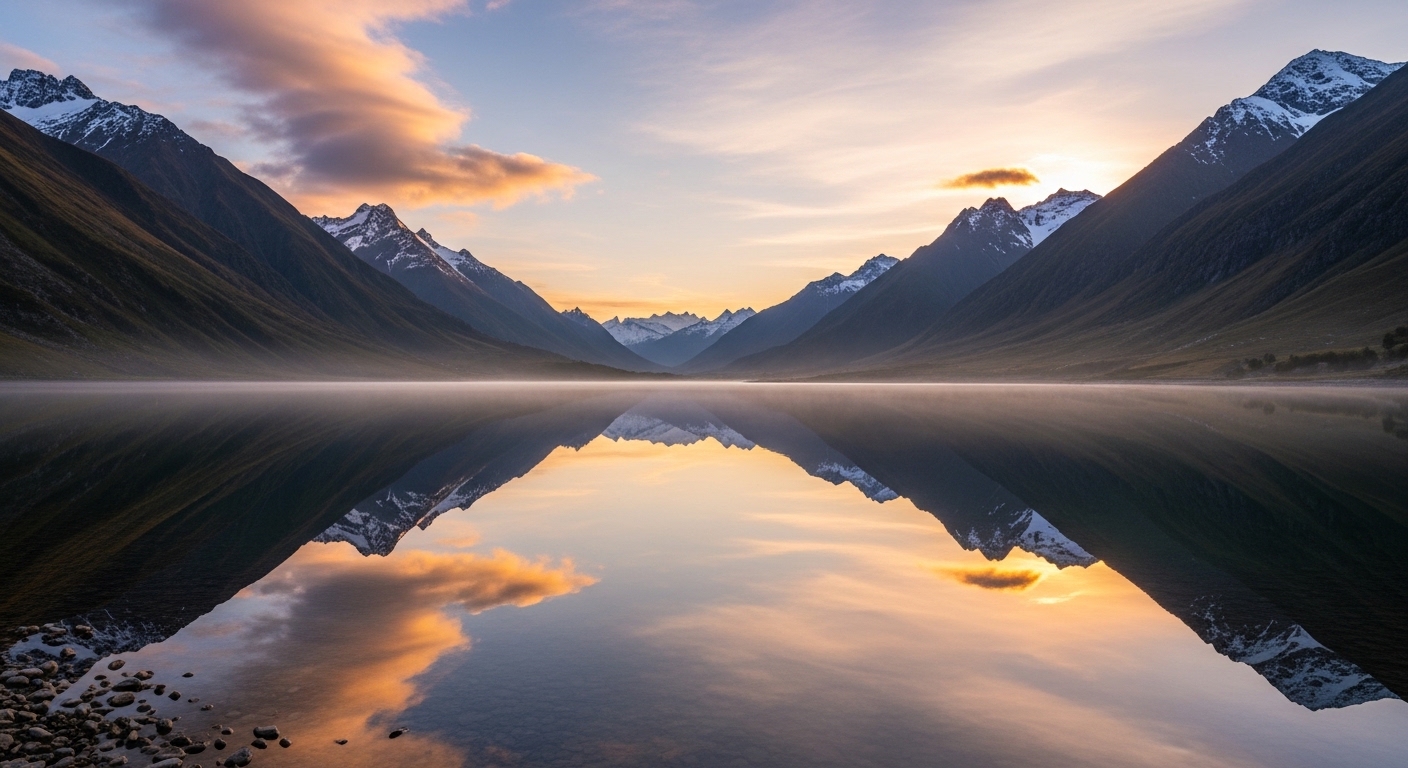
Mirror dams that turn valleys into sky reflections are among the most surreal human-made landscapes on Earth. Instead of looking like ordinary reservoirs, these places appear to bend reality. Mountains seem to float. Clouds appear anchored to invisible surfaces. Valleys feel doubled, as if nature created a parallel world beneath our feet.
At first, most people assume these images are edited. However, they are real. In fact, they are created by the perfect alignment of engineering, geography, and silence. Under the right conditions, water becomes glass. Consequently, entire landscapes transform into reflections of themselves.
Have you ever stood beside water so still that you felt disoriented? In that moment, it becomes difficult to tell what is solid and what is illusion. Mirror dams amplify that feeling on a massive scale. Instead of a pond or lake, you face kilometers of visual symmetry.
In this guide, we explore how mirror dams that turn valleys into sky reflections are formed, why they affect people so deeply, and how they are shaping a new kind of travel focused on stillness rather than speed.
What Are Mirror Dams That Turn Valleys Into Sky Reflections?
A mirror dam is not a special type of dam by structure. Rather, it is a visual phenomenon created by where and how a dam is built.
Typically, these dams sit inside narrow valleys with steep mountain walls. When the reservoir fills, the water surface becomes long, calm, and sheltered from wind. As a result, the water acts like a natural mirror.
Instead of ripples, the surface remains smooth. Instead of distortion, reflections become precise. Over time, these reflections grow so strong that visitors often struggle to separate sky from earth.
In other words, these are not just reservoirs. They are visual illusions shaped by real geography.
Why Mirror Dams Feel So Emotionally Powerful
Human brains respond strongly to symmetry. Psychologically, balance creates comfort. Visually, reflections suggest order and calm.
Mirror dams exaggerate this effect. Entire mountains become symmetrical. Clouds form perfect doubles. Even your own body appears suspended between two worlds.
Because of this, people often describe emotional reactions rather than physical ones. Many feel a deep sense of peace. Others report heightened awareness or introspection.
Interestingly, this reaction is not about excitement. Instead, it is about stillness. The landscape feels paused, as if time has slowed down just for you.
That raises important questions:
Why does silence feel louder near water?
Why does reflection make us more aware of ourselves?
And why do we crave places that feel unreal yet natural?

How Mirror Dams Are Created
Not every dam becomes a mirror dam. In fact, most reservoirs never achieve this level of reflection.
First, the valley must be narrow and deep. This shape protects the water from strong winds.
Second, the shoreline must be stable. If the edges are chaotic or muddy, reflections lose clarity.
Third, water levels must remain consistent. Sudden changes expose rocks and debris, which break the visual illusion.
Therefore, when all these factors align, the reservoir behaves like glass. Over time, planners may even design scenic platforms and observation decks to enhance the effect.
In some locations, boating is restricted during sunrise and sunset. This ensures the surface remains untouched during peak reflection hours.
Famous Mirror Dams Around the World
One of the most dramatic examples is the Verzasca Dam in Switzerland. Surrounded by alpine cliffs, its reservoir often reflects the sky so perfectly that the valley feels inverted.
Similarly, Japan’s Kurobe Dam mirrors snow-covered peaks with breathtaking precision. During spring, melting snow creates surreal layers of white, blue, and silver.
Meanwhile, in the United States, the Hoover Dam forms Lake Mead. On calm desert mornings, the water reflects canyon walls like polished stone.
In New Zealand, Lake Pukaki reflects Mount Cook with glacial clarity. Photographers often describe it as “liquid sky.”
Each of these places turns engineering into visual poetry.
Mirror Dams and Modern Travel Psychology
Travel today is shifting. People are no longer chasing only landmarks. Instead, they seek emotional experiences.
Mirror dams fit perfectly into this trend. Rather than offering thrill, they offer calm. Rather than entertainment, they offer contemplation.
As a result, these destinations attract travelers interested in slow tourism, mindfulness, and nature-based experiences.
Instead of rushing through, visitors tend to linger. They sit quietly. They observe. They wait for the right light.
Consequently, mirror dams are becoming symbols of a new travel philosophy: less consumption, more connection.
Photography and the Rise of Sky Reflection Tourism
Social media has played a major role in popularizing mirror dams.
Images of perfect reflections go viral because they feel impossible. The mind struggles to accept what the eyes see.
However, capturing these images requires patience. Wind ruins everything. A single ripple destroys symmetry.
Therefore, photographers learn to wait. They wake before sunrise. They stay silent. They move slowly.
Interestingly, this process changes how people interact with landscapes. Instead of controlling the scene, they adapt to it.
In that sense, mirror dams teach a valuable lesson: beauty cannot be forced.
Symbolic Meaning of Reflections
Across cultures, reflection has deep meaning.
In philosophy, it represents self-awareness. In art, it symbolizes perception. In spirituality, it often stands for truth.
Mirror dams physically embody these ideas. You see the world reflected, but also slightly altered.
Colors shift. Depth changes. Distance feels different.
As a result, many people feel more introspective near these places. Some meditate. Others journal. Some simply sit in silence.
Few landscapes invite inner reflection as strongly as outer reflection.
Environmental Cost and Ethical Questions
Despite their beauty, mirror dams raise serious concerns.
Dams flood ecosystems. They displace communities. They alter river flows.
Therefore, the question becomes unavoidable:
Is aesthetic beauty worth ecological disruption?
Can emotional value justify environmental change?
How do we balance inspiration with responsibility?
Modern projects attempt to address these issues. Many now include fish passages, habitat restoration, and controlled water releases.
Nevertheless, no dam is entirely harmless. The beauty comes at a price.
Mirror Dams as Emotional Infrastructure
Traditionally, infrastructure focuses on function. Roads move people. Dams store water. Bridges connect cities.
Mirror dams introduce a new idea: emotional infrastructure.
They still serve practical roles like energy and water storage. However, they also serve psychological roles.
They calm the mind. They inspire creativity. They shape cultural identity.
In many regions, these reservoirs become symbols rather than utilities.
People remember how they felt there, not how it worked.

The Future of Mirror Dams and Landscape Design
As urban design evolves, emotional impact is becoming a serious factor.
Architects now ask how spaces make people feel, not just how they function.
Future mirror dams may include floating meditation platforms, silent boating zones, and reflection-focused trails.
Some designers even propose seasonal water management to maximize reflections during peak tourism periods.
Water becomes a canvas. Light becomes a tool.
Personal Experience of Standing at a Mirror Dam
Most visitors remember the first moment clearly.
Suddenly, walking slows down. Breathing becomes softer. The mind feels quieter.
Reality seems to hesitate. The world feels suspended.
It is not excitement. It is awareness.
A rare, quiet awe.
Why Mirror Dams Matter More Than We Think
Mirror dams that turn valleys into sky reflections are not just scenic destinations.
They represent a deeper human need.
The need to pause.
The need to reflect.
The need to feel small inside something vast.
In a hyper-connected world, stillness feels revolutionary.
Mirror dams quietly offer it.
Final Thoughts on Mirror Dams That Turn Valleys Into Sky Reflections
These landscapes show that infrastructure does not have to be ugly.
It can be emotional. It can be poetic. It can be meaningful.
Mirror dams that turn valleys into sky reflections blur the line between engineering and art.
They remind us that even human-made environments can feel sacred.
So next time you stand beside still water, ask yourself:
Am I looking at the world?
Or am I looking at myself?
We would love to hear your thoughts. Have you ever visited a place where reflection changed how you felt? Did it make you slow down or see differently? Share your experience with us.
And if you enjoy discovering unusual travel landscapes like this, make sure to follow WentWorld on social media for more stories that explore how places shape emotions.
Catch up on the top stories and travel deals by subscribing to our newsletter!







Leave a Reply
You must be logged in to post a comment.