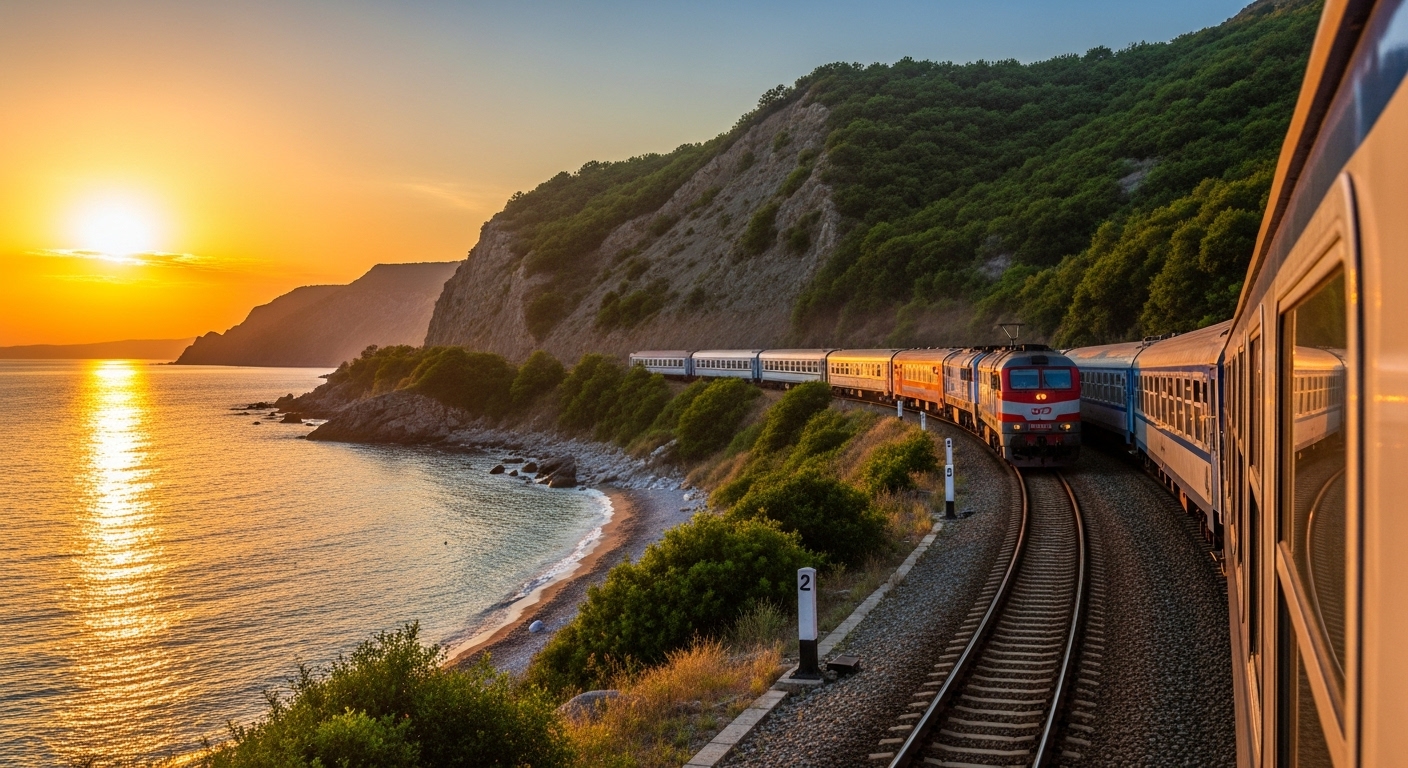
Ever dreamed of tracing a journey that feels like a forgotten adventure — where trains rumble along the coast, ferries glide across dark waters, and every port opens to another world? The Black Sea Circuit might be your next great escape. It’s a travel experience that connects Bulgaria, Romania, and Georgia — three countries bound by history, sea winds, and stories that cross borders as easily as the tides themselves.
In a world obsessed with quick flights and tourist-packed itineraries, the Black Sea Circuit is a reminder that the journey can still be the destination. Traveling by rail and boat here isn’t just scenic; it’s symbolic. You’re following centuries of trade, migration, and mythology — across the same waters where Greek heroes once sailed and empires once collided.
The Magic of the Black Sea Circuit
Let’s be honest — when was the last time a journey felt truly unexpected? The Black Sea Circuit isn’t a mainstream route. Most travelers fly into one country and skip the sea entirely. But for those who crave something richer — a mix of trains, ferries, and coastal detours — this route is pure gold.
You’ll start in the Balkans, move through Eastern Europe, and end in the Caucasus — experiencing three different languages, alphabets, cuisines, and cultures in one unforgettable sweep. The best part? It’s all connected by the deep, dark heart of the Black Sea itself.
So, grab your backpack and your sense of wonder. Let’s chart the ultimate slow-travel route: the Black Sea Circuit.
Stop 1: Bulgaria – Rail Lines, Coastal Towns, and Ancient Shores
Bulgaria’s Black Sea coast is a tapestry of sunlit beaches, historic cities, and Soviet-era trains that seem frozen in time — yet still run with comforting regularity. Begin your circuit in Varna or Burgas, two cities that hum with a unique blend of modern life and old-world rhythm.
From Sofia, hop on a direct train to Burgas. It’s a journey of rolling hills, small villages, and window-seat daydreams. The railways here might not be the fastest, but they’re soulful — each carriage carrying stories of decades past. Once you arrive, stroll along Burgas’ Sea Garden promenade, where the scent of salt and coffee mingles in the air.
Then there’s Nesebar, a UNESCO World Heritage town perched on a rocky peninsula. It’s part open-air museum, part living village. Cobbled lanes wind between Byzantine churches and seaside cafés. Spend a night here before heading north toward Varna, known as the “Sea Capital” of Bulgaria. Trains connect the two cities daily, and the journey is short but spectacular — a preview of the maritime horizon that defines this circuit.
And here’s where things get interesting: from Varna, you can take a ferry across the Black Sea to Georgia. But before we get there, let’s talk about the next leg of your trip — Romania, Bulgaria’s northern neighbor, just across the Danube.
Stop 2: Romania – Rails Through History and Seaside Charm
Crossing into Romania feels like stepping into a different rhythm altogether. You can do this overland via the Ruse–Giurgiu Bridge, which spans the Danube and connects Bulgaria’s Burgas line to Romania’s vast rail network. The trains here are surprisingly efficient and, more importantly, deeply atmospheric.
Make your way toward Constanța, Romania’s main port on the Black Sea. Once known as Tomis, this ancient city was a Roman settlement where the poet Ovid was famously exiled. Today, it’s a fascinating mix of grand boulevards, Orthodox churches, and faded seaside glamour from the 1920s. The waterfront still carries whispers of the Belle Époque — perfect for travelers who enjoy nostalgia with a view.
For a slower pace, hop on a local train north toward Mangalia, a resort town near the Bulgarian border. Or travel inland to explore Bucharest’s urban pulse before looping back to the coast. The Romanian rail system is extensive and scenic, with comfortable night trains linking cities across the region.
From Constanța, ferry services sometimes run across the Black Sea to Georgia’s Batumi or Poti — depending on the season and schedule. This leg transforms your journey from land to sea, connecting Eastern Europe to the Caucasus in a way few modern travelers experience.
Stop 3: The Crossing – Sailing the Black Sea
This is where the romance of the Black Sea Circuit truly unfolds. The ferry journey between Constanța (Romania) or Varna (Bulgaria) and Batumi (Georgia) takes roughly 48–60 hours — depending on weather and vessel. It’s slow travel at its purest. You’re not flying over the world; you’re gliding through it.
Life onboard is simple. Cargo ships and passenger ferries share the same routes, carrying everything from trucks to travelers. There’s a dining area, modest cabins, and long decks where you can watch the sea change color with every hour — from steel gray to sapphire blue.
It’s during this crossing that you realize how vast and underappreciated the Black Sea really is. It’s not “black” at all but shimmering and mysterious, ringed by mountains and myth. You might meet fellow travelers — maybe a Bulgarian truck driver, a Georgian student, or an artist sketching waves. By the time you see the coast of Batumi appear on the horizon, it feels like you’ve entered another world.
Stop 4: Georgia – Rail Journeys and Seaside Soul
Welcome to Georgia — where hospitality is a national art form, and every journey ends with a toast. The port city of Batumi is your gateway. Part resort town, part architectural experiment, Batumi combines old Ottoman streets with futuristic glass towers and neon-lit beaches. It’s lively, walkable, and full of surprises.
From here, Georgia’s rail network can take you east toward Tbilisi. The Batumi–Tbilisi train is one of the most scenic in the Caucasus, passing vineyards, rivers, and mountains along the way. You can book first-class seats for a comfortable six-hour journey or hop on a night train to watch the stars flicker outside your window.
Georgia’s charm lies in its contrasts. Spend your mornings in ancient monasteries like Gelati near Kutaisi, and your evenings sipping local wine by the Black Sea. Every meal here feels like a celebration — homemade bread, cheese, and khachapuri (cheese-filled bread) shared among new friends.
For travelers completing the Black Sea Circuit, Georgia feels like both an ending and a beginning. You’ve crossed continents, languages, and time zones — yet everything feels connected by the shared rhythm of the sea.
When to Go and How to Plan
The best time to tackle the Black Sea Circuit is between late spring and early autumn (May to October). The weather is mild, the ferries run more reliably, and coastal towns are alive with music and markets. Winters can be harsh and unpredictable — especially at sea — but even then, the landscapes carry a moody kind of beauty.
As for logistics, keep in mind that ferry schedules change frequently. It’s best to check local operators like Navbul (Bulgaria–Georgia) or Ukrferry (Romania–Georgia) before finalizing your itinerary. Train tickets in Bulgaria, Romania, and Georgia can be booked easily online or at major stations.
Why Travelers Love the Black Sea Circuit
What makes the Black Sea Circuit so special? It’s the kind of trip that invites curiosity. You’re not just passing through places — you’re moving between worlds that rarely meet in modern travel. Each border crossing feels like a page turn in a historical novel.
It’s for travelers who crave authenticity, unpredictability, and connection. You might not find luxury at every stop, but you’ll find texture, story, and humanity. Whether you’re chatting with locals in a Romanian train café or watching Georgian fishermen mend their nets, it’s these small moments that define the journey.
And then there’s the sheer visual variety: golden beaches in Bulgaria, neoclassical seafronts in Romania, and lush subtropical hills in Georgia. It’s one coastline — but three completely different worlds.
Sample Itinerary: The Perfect Black Sea Loop
- Day 1–2: Arrive in Sofia, Bulgaria. Train to Burgas. Overnight near the coast.
- Day 3–4: Visit Nesebar and Varna. Explore the seaside ruins and beaches.
- Day 5–6: Cross to Romania. Train to Constanța, explore Old Town and port.
- Day 7–9: Ferry from Constanța or Varna to Batumi, Georgia (2–3 days at sea).
- Day 10–12: Enjoy Batumi, then train to Tbilisi via Kutaisi.
- Day 13–14: Explore Tbilisi’s old quarter, sulfur baths, and local markets.
This two-week loop captures the essence of the Black Sea Circuit — a journey that moves at the rhythm of waves and rails, blending land and sea into one unforgettable adventure. So, what do you think — would you take the long way around the Black Sea? Have you ever traveled by both boat and train across multiple countries? Or does this kind of slow, old-world adventure sound like the trip you’ve been waiting for?
We’d love to hear your thoughts! Share your travel dreams or past experiences in the comments. And if this journey sparked your wanderlust, follow us on social media for more travel stories that connect places, people, and perspectives across the world.
Catch up on the top stories and travel deals by subscribing to our newsletter!