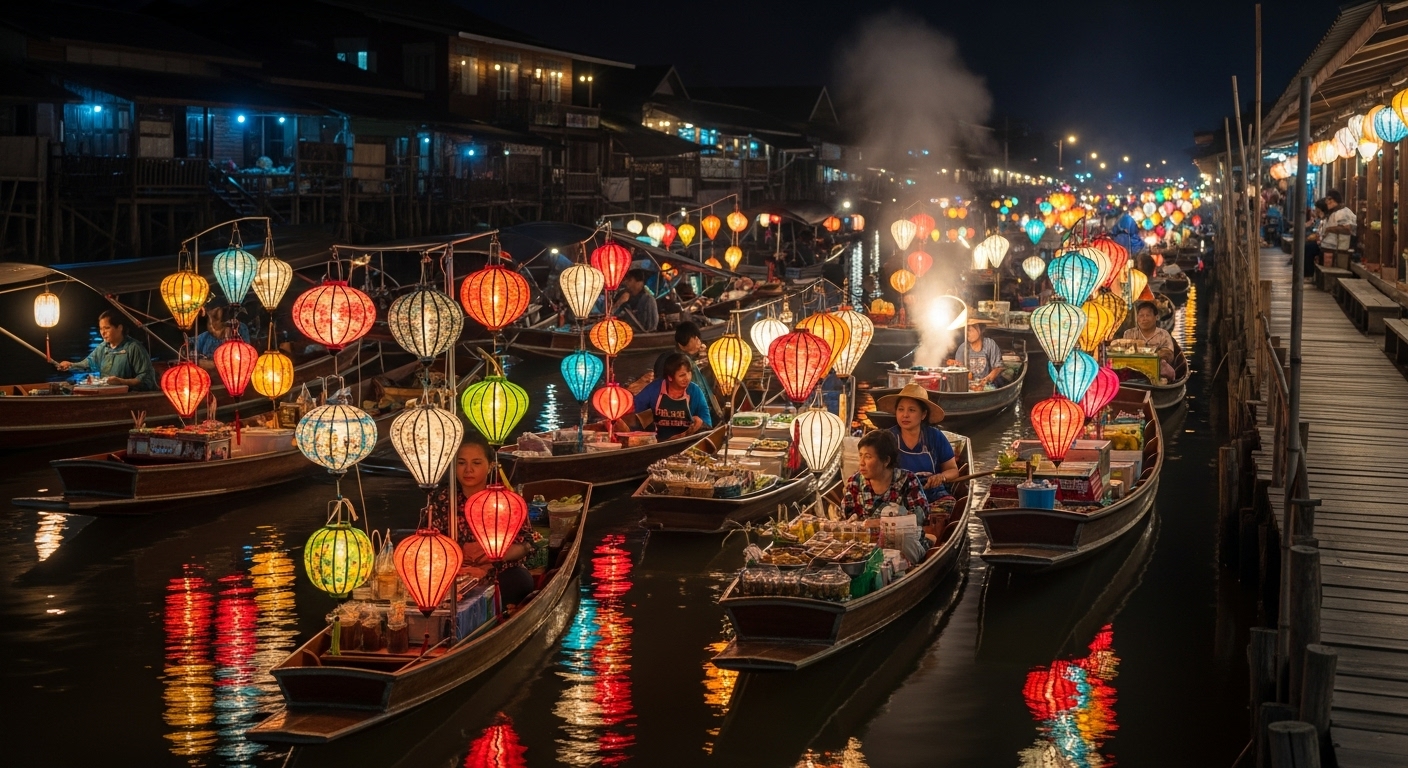
When most markets close and cities begin to quiet down, a different world awakens on the water. Across parts of Asia and beyond, there are floating markets that operate entirely at night, glowing with lanterns, echoing with voices, and drifting gently under moonlit skies.
At first, the idea feels magical. Boats replace stalls, rivers replace streets, and lantern light replaces neon signs. However, these markets aren’t just about beauty. They exist because of climate, culture, and practicality. In many warm regions, nighttime trade offers relief from heat while creating a uniquely atmospheric experience.
So why do some floating markets come alive only after sunset? And what makes them so unforgettable for travelers? Let’s drift into these nocturnal marketplaces and discover why night changes everything.
Why Some Floating Markets Operate at Night
Historically, floating markets formed around rivers that served as trade routes. Over time, certain communities shifted activity to nighttime for practical reasons. First, cooler temperatures made work easier. Second, nighttime reduced food spoilage. Third, lantern-lit markets attracted locals after long workdays.
As a result, trading after dark became tradition rather than exception. Even today, night floating markets reflect local rhythms of life rather than tourist schedules.
Floating Markets That Operate Entirely at Night
Although many floating markets open during the day, a select few truly shine after sunset. These markets transform waterways into glowing corridors of commerce and culture.
1. Amphawa Floating Market (Night Section), Thailand
Located southwest of Bangkok, Amphawa is one of Thailand’s most famous floating markets. While daytime activity exists, the market truly thrives after sunset. As darkness falls, wooden boats line the canal, illuminated by hanging lamps and lanterns.
Vendors grill seafood directly on boats, filling the air with smoke and aroma. Meanwhile, locals gather along the canal banks to eat, socialize, and shop. The relaxed nighttime energy makes Amphawa unforgettable. Learn more via Tourism Thailand.
2. Cai Rang Night Trade Routes, Vietnam
Cai Rang Floating Market in Vietnam is best known for early mornings. However, lesser-known nighttime trading routes operate nearby. After sunset, boats exchange goods quietly under low light, focusing on wholesale trade rather than tourism.
These night operations support morning markets, allowing vendors to prepare before dawn. Although tourists rarely witness this side, it remains essential to river-based commerce. Vietnam travel info: Vietnam Tourism.
3. Lok Baintan Floating Market, Indonesia (Evening Sessions)
In South Kalimantan, Lok Baintan Floating Market traditionally opens early. However, some villages operate evening floating exchanges, especially during festivals and busy seasons. Lantern-lit boats gather to sell fruits, snacks, and handmade goods.
Nighttime trading here feels communal rather than commercial. Families paddle together, children help sell goods, and the river becomes a shared social space.
4. Songkhla Lake Night Markets, Thailand
In southern Thailand, parts of Songkhla Lake host night floating markets serving local fishing communities. After sunset, boats loaded with fresh catches meet buyers directly on the water.

Instead of loud crowds, the atmosphere remains calm and rhythmic. Lantern reflections ripple across the lake, creating a quiet yet active marketplace.
5. Tonlé Sap Night Floating Villages, Cambodia
On Tonlé Sap Lake, floating villages operate informal night markets. Residents trade fish, produce, and essentials after dark, using boat-mounted lamps for visibility.
Because water defines daily life here, nighttime trading feels natural. Cambodia tourism info: Tourism Cambodia.
What Makes Night Floating Markets So Different
Floating markets that operate entirely at night feel fundamentally different from daytime markets. First, lighting shapes the experience. Lanterns and boat lights create intimacy instead of chaos. Second, sounds travel differently over water at night, making conversations softer.
Moreover, night markets encourage slower movement. Boats drift rather than rush. Buyers linger longer. The market becomes as much about atmosphere as commerce.
Food Culture After Dark on the Water
Night floating markets often focus heavily on food. Grilled fish, noodles, sweets, and soups dominate offerings. Vendors cook fresh meals directly on boats, allowing customers to eat immediately.
Because temperatures drop at night, people enjoy hot dishes more comfortably. Consequently, food becomes the heart of nighttime water markets.
Photography Tips for Night Floating Markets
Photographing these markets requires patience. Use low-light settings to capture reflections without losing detail. Focus on lanterns, smoke from grills, and faces illuminated by warm light.

Most importantly, respect vendors. Always ask before photographing people, especially in local-only markets.
Planning a Visit to Night Floating Markets
Travelers can reach many of these destinations via airlines like Emirates and Qatar Airways. From major cities, local transport connects to river towns.
Accommodation platforms such as Airbnb offer stays near canals and lakes, allowing easy evening access.
Despite modernization, these markets persist because they fit local lifestyles. They offer efficiency, community connection, and cultural continuity. Rather than adapting to tourists, many night floating markets remain rooted in everyday life.
Would you rather shop under fluorescent lights or lantern reflections on water? Experiences like these challenge how we define markets altogether.
Follow us on our social media platforms for more hidden travel cultures, unusual marketplaces, and unforgettable destinations from around the world.
Catch up on the top stories and travel deals by subscribing to our newsletter!