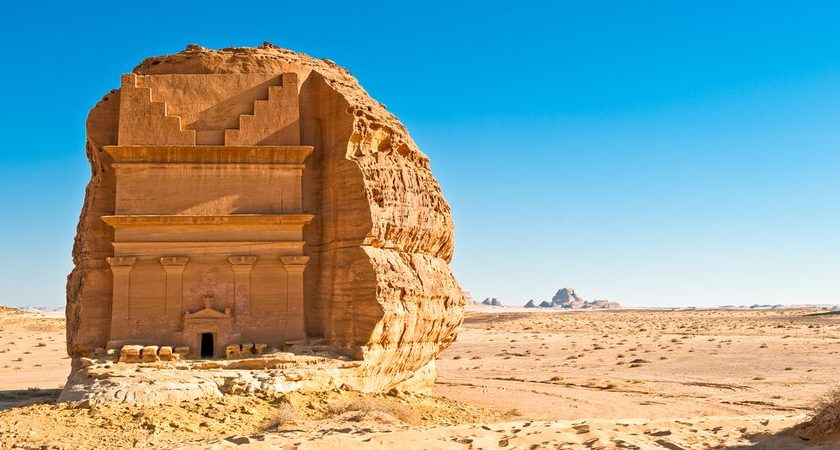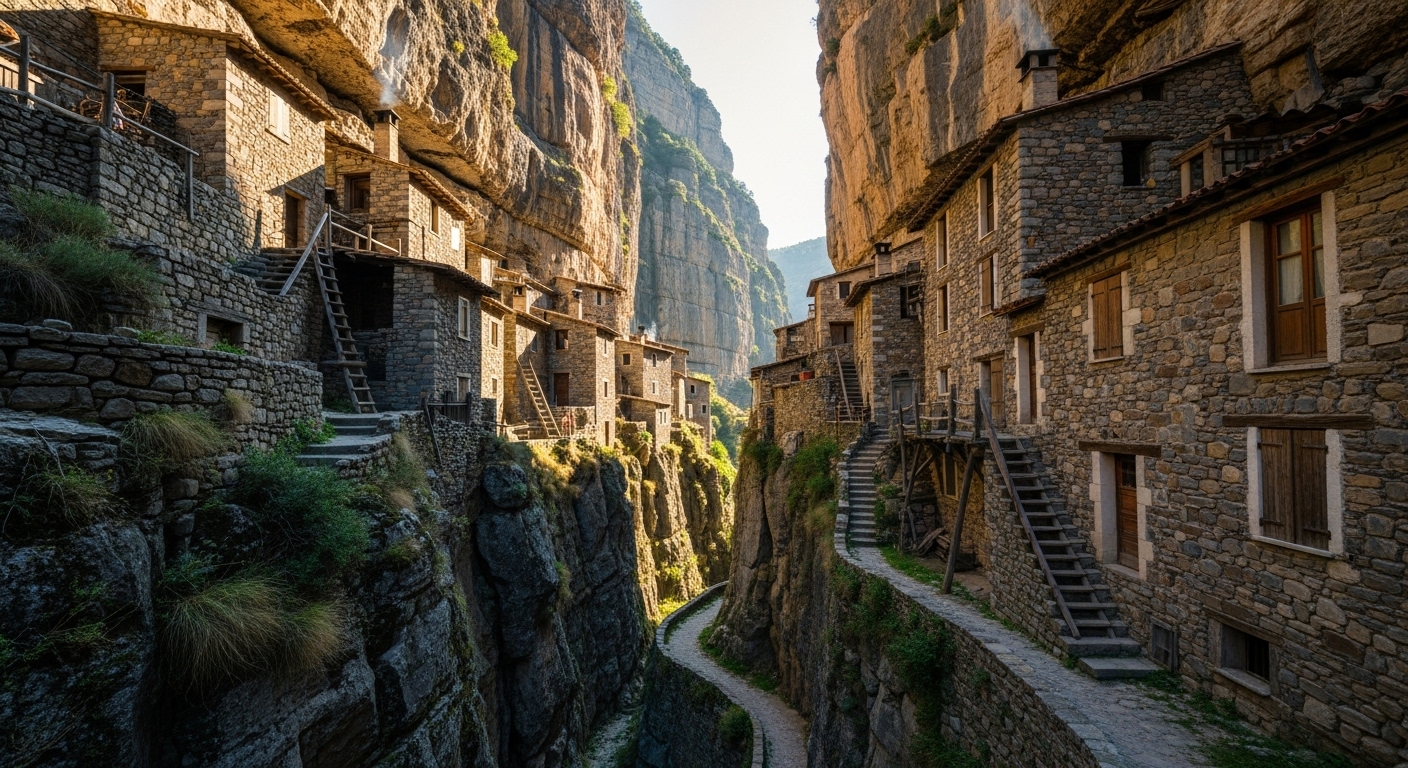
Some villages require roads and vehicles to reach them. Others demand something far more personal. Canyon villages with ladder walks (guided) sit deep inside towering rock corridors, where access depends on careful footing, steady hands, and trust in local knowledge.
Instead of streets, these villages rely on ladders carved into stone walls. Instead of fences, sheer canyon drops define daily movement. Because of this, canyon villages with ladder walks (guided) feel less like destinations and more like journeys in themselves.
As you imagine descending into a village hidden between vertical cliffs, do you feel excitement or hesitation?
Why people built villages inside canyons
Long before modern infrastructure existed, people selected canyon locations for practical reasons. Canyons offered protection from harsh winds, extreme heat, and invading forces. As a result, many early communities viewed deep gorges as natural fortresses.
Moreover, water sources often flowed along canyon floors. Because survival depended on reliable water, settling inside canyons made long-term sense despite difficult access.
Over time, isolation strengthened these communities rather than weakening them.
How guided ladder walks protect visitors and villages
Today, canyon villages with ladder walks (guided) rely heavily on local guides. Guides actively manage safety while preserving fragile paths and cultural boundaries.
Because canyon conditions change quickly after rain or erosion, guides constantly inspect ladders and routes. They also adjust walking pace to match terrain difficulty.
Without guided access, both visitors and villages would face unnecessary risk.
Generational ladder systems carved into stone
Unlike modern staircases, ladder systems in canyon villages follow natural rock lines. Builders place ladders where the stone allows secure anchoring.
Over generations, residents replace older ladders in the same positions. Therefore, the route itself becomes part of the village’s history.
Each ladder reflects centuries of adaptation rather than temporary construction.

Southwestern canyon settlements and cliff traditions
In the American Southwest, canyon villages echo ancient cliff-dwelling traditions. Communities once used ladders as defensive tools, pulling them up at night to secure their homes.
Today, guided routes allow visitors to follow similar paths while protecting archaeological remains.
Detailed preservation efforts can be explored through Mesa Verde National Park.
North African canyon villages and trade routes
Across North Africa, canyon villages with ladder walks (guided) developed along historic trade corridors. Instead of roads, traders relied on narrow ladders and ledges to move goods.
Because stone homes blended into canyon walls, outsiders often passed without noticing entire settlements.
Many of these areas now fall under cultural protection programs supported by UNESCO World Heritage.
How guides actively manage vertical safety
Guides begin each tour by explaining ladder technique and movement rules. For example, they instruct visitors to maintain three points of contact at all times.
Meanwhile, guides monitor group spacing to prevent crowding on narrow ladders.
Through these practices, ladder walks remain controlled and calm rather than rushed.
Daily life shaped by ladders and cliffs
For residents, ladders form part of daily routine. Children climb confidently, elders move steadily, and supplies travel carefully from level to level.
Because movement requires effort, villagers plan activities deliberately. As a result, life flows at a slower, more intentional pace.
The canyon shapes not only movement, but mindset.

Why these villages still exist today
Canyon villages with ladder walks (guided) survived because they resisted rapid change. Isolation delayed road construction and mass development.
Therefore, traditions, architecture, and social structures remained intact.
In contrast to modern towns, these villages evolved slowly and deliberately.
Environmental balance inside canyon ecosystems
Canyons create sensitive microclimates. Even small changes in foot traffic can affect erosion and water flow.
For this reason, guides limit group sizes and restrict off-route exploration.
Such management helps protect both natural systems and village foundations.
Emotional impact on visitors
Visitors often experience heightened awareness inside canyons. Narrow passages focus attention on each step.
Meanwhile, canyon silence amplifies simple sounds like footsteps and breathing.
Ultimately, the experience feels immersive rather than overwhelming.
Photography challenges along ladder routes
Because light shifts quickly in deep canyons, photography requires patience. Early mornings and late afternoons offer softer contrast.
However, safety remains the priority. Guides often restrict camera use on ladders.
This limitation encourages visitors to observe rather than document every moment.
Respecting customs and guided boundaries
Visitors must respect village privacy. Guides explain when photography is appropriate and when it is not.
Additionally, voices should remain low, as sound echoes easily between stone walls.
Respect allows tourism to coexist with daily life.
Why WentWorld features canyon villages with ladder walks (guided)
WentWorld highlights destinations that reward awareness over convenience. Canyon villages with ladder walks (guided) demand attention, patience, and respect.
Instead of passive sightseeing, they invite active participation.
Would you trust a ladder carved into stone to reach a hidden village? Share your thoughts with WentWorld.
Follow WentWorld on social media to explore more places where geography continues to shape human life.
Catch up on the top stories and travel deals by subscribing to our newsletter!