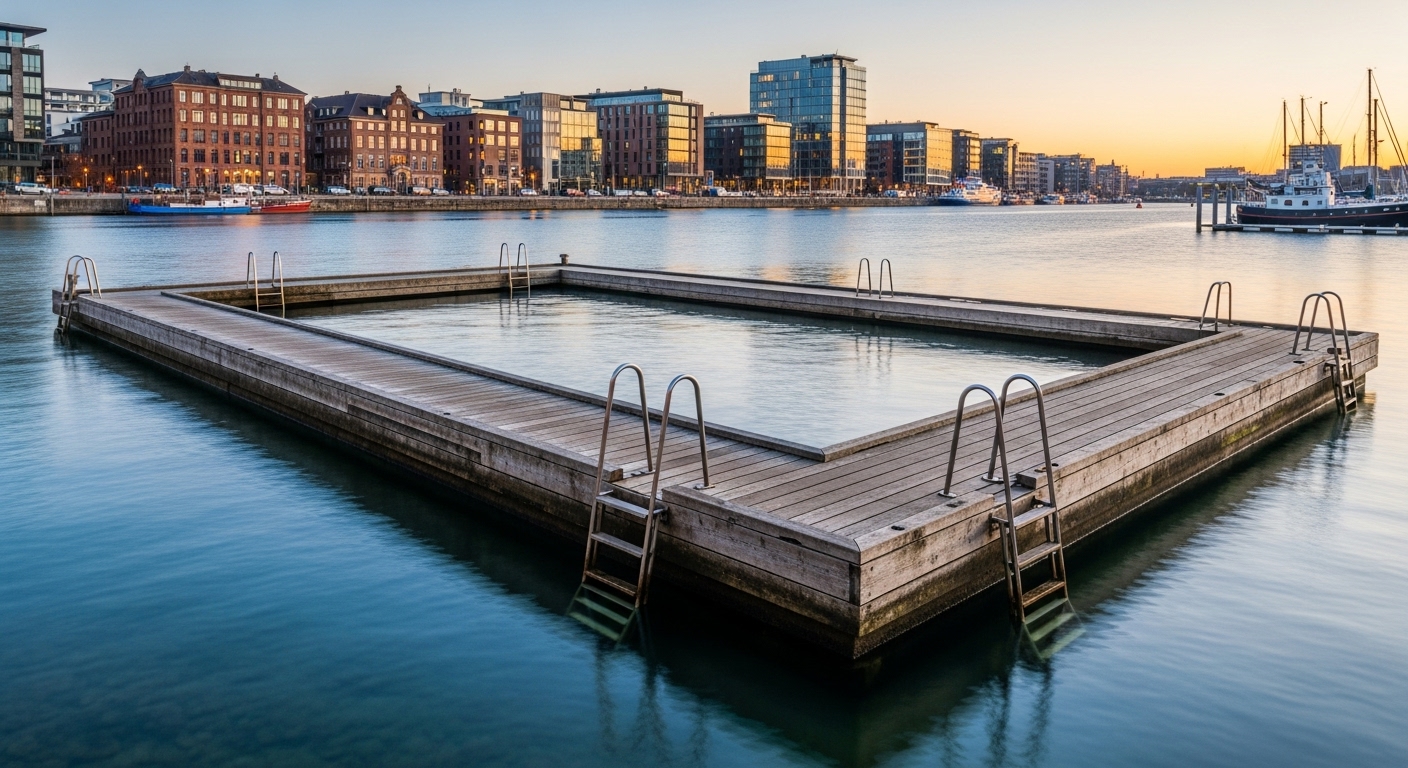
Cities with free public bathing platforms are quietly redefining what urban life near water can feel like. Instead of fenced-off shorelines, private beach clubs, or expensive pools, these cities invite everyone to step directly into rivers, lakes, and harbors—no ticket required. The experience is simple, democratic, and surprisingly powerful.
Imagine finishing a workday, walking a few blocks, and diving into clean open water while city life continues around you. Trams pass, cafés hum, and swimmers float just meters from historic buildings. Would that change how you feel about your city?
What Are Public Bathing Platforms?
Public bathing platforms are purpose-built swimming areas installed directly in natural water bodies. They can be wooden decks, floating pontoons, stone steps, or steel-framed structures with ladders and railings.
Unlike traditional beaches, these platforms often sit within dense urban environments. They provide safe access points, clear entry and exit routes, and designated swimming zones protected from boat traffic.
Most importantly, they are free and open to everyone.
Why Cities Are Bringing Swimming Back to Urban Waters
For much of the 20th century, urban rivers and harbors were treated as industrial zones rather than public spaces. Pollution, shipping traffic, and poor water quality pushed people away.
Over the past few decades, many cities invested heavily in water cleanup and environmental restoration. Once water quality improved, the question shifted from “Can we swim here?” to “Why shouldn’t we?”
Cities with free public bathing platforms answer that question by turning restored waterways into everyday leisure spaces.
The Social Impact of Free Urban Swimming
These platforms create rare spaces where social boundaries fade. Office workers, families, tourists, and retirees share the same ladders and decks.
Because there is no entrance fee, swimming becomes part of daily life rather than a planned luxury. A spontaneous dip after work feels as normal as sitting in a park.
This accessibility strengthens community bonds and changes how residents relate to their city.
Copenhagen: A Global Reference Point
Copenhagen is often cited as the gold standard for urban swimming. Its harbor baths are strategically placed across the city, allowing residents to swim in clean seawater minutes from home.
Platforms include diving boards, shallow areas for children, and clear signage about water conditions. Lifeguards monitor popular locations during peak season.
What makes Copenhagen stand out is how normal swimming feels. It is not an attraction. It is infrastructure.
Zurich and the Culture of River Bathing
In Zurich, swimming in the Limmat River is a long-standing tradition. Public bathing platforms and river access points line the waterway through the city.
Locals often swim downstream with the current, using floating bags to carry clothes. Platforms serve as entry and exit points, turning the river into a natural swimming lane.
This culture shows how cities with free public bathing platforms can support both tradition and modern urban life.
Berlin’s Renewed Relationship With Water
Berlin is exploring new ways to reconnect residents with its waterways. Projects around the Spree River aim to reintroduce safe public swimming in areas once considered unsuitable.
Temporary and permanent bathing platforms are part of broader discussions on water quality, climate adaptation, and public space.
As these projects evolve, Berlin demonstrates how cities can reclaim water access step by step.

Scandinavian Cities and Seasonal Swimming
Across Scandinavia, free bathing platforms appear not only in summer but year-round. In cities like Stockholm and Helsinki, residents swim even in cold months.
Platforms are designed for durability and safety, often paired with saunas nearby. The contrast between cold water and warm air becomes part of daily wellness routines.
This approach reframes swimming as a seasonal habit rather than a limited summer activity.
Safety Without Barriers
A common concern is safety. Cities address this through smart design rather than exclusion.
Clear depth markings, ladders, railings, and designated swimming zones help reduce risk. Water quality is tested regularly, and swimming is restricted when conditions are unsafe.
By providing official access points, cities actually reduce unsafe, informal swimming elsewhere.
Environmental Awareness Through Access
When people swim in their city’s water, pollution becomes personal. Residents notice changes in clarity, temperature, and smell.
This direct connection often increases public support for environmental protection. Clean water stops being an abstract goal and becomes something people physically experience.
Cities with free public bathing platforms often see stronger community engagement around water stewardship.
Tourism Without Commercialization
For travelers, discovering a free bathing platform feels like being invited into local life rather than sold an experience.
Tourists swim alongside residents, learning unwritten rules and rhythms of the city. There are no wristbands, no ticket booths, no separation.
This type of tourism feels lighter, more respectful, and more memorable.

Design That Blends Into the City
Modern bathing platforms are designed to complement urban landscapes. Materials are often minimal and natural, allowing water and skyline to remain the focus.
Some platforms double as sun decks or social spaces even when swimming is not possible.
This flexibility ensures year-round value for residents.
Challenges and Limitations
Not every city can immediately support free public bathing. Water quality, currents, and shipping traffic all require careful planning.
Maintenance and monitoring demand long-term investment. Cities must balance openness with responsibility.
However, successful examples show that these challenges are manageable with commitment and transparency.
The Future of Urban Swimming
As cities adapt to warmer climates, access to water becomes increasingly important. Free public bathing platforms offer natural cooling without heavy infrastructure.
They also encourage slower, healthier lifestyles centered around public space rather than private consumption.
More cities are now studying existing models and adapting them to local conditions.
Why These Platforms Matter
Cities with free public bathing platforms challenge the idea that nature and urban life must be separate.
They show that trust, access, and good design can transform waterways into shared assets.
Would you feel more connected to your city if you could swim in it? Have you ever taken a spontaneous dip in an urban river or harbor?
If stories like this inspire you to see cities differently, follow WentWorld on social media and keep exploring how urban spaces can reconnect us with water, nature, and each other.
Catch up on the top stories and travel deals by subscribing to our newsletter!