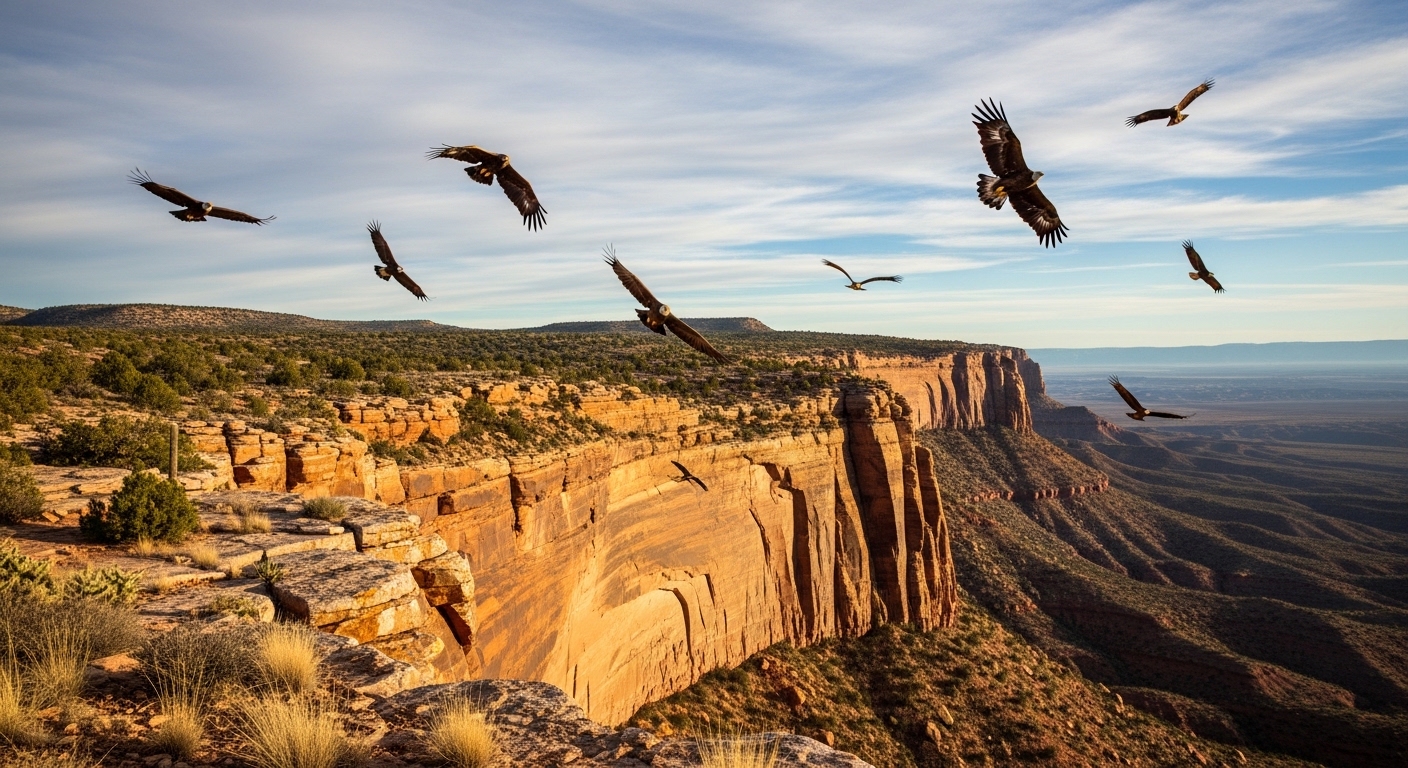
There is something quietly powerful about watching a bird of prey glide without flapping its wings. It feels effortless, almost supernatural. Now imagine standing on the edge of a towering cliff, feeling warm air rise around you, while eagles, vultures, and hawks circle above in slow, graceful spirals. These places exist, and they are known as raptor cliffs with scheduled thermals, natural gliding spots where geography and atmosphere work together like clockwork.
In these rare locations, thermals form at predictable times of day, creating invisible elevators of warm air that raptors use to soar for hours without expending much energy. For travelers, photographers, and bird enthusiasts, these cliffs offer front-row seats to one of nature’s most mesmerizing performances. Have you ever watched a bird fly and wondered how it seems to float rather than move?
WentWorld.com takes you into this lesser-known world where cliffs become aerial highways and the sky becomes a living stage. These are not just scenic viewpoints. They are dynamic ecosystems shaped by wind patterns, solar heating, and ancient landforms. And once you experience one, you begin to see landscapes differently.
What Makes Raptor Cliffs So Special
Raptor cliffs with scheduled thermals are special because they are predictable in a way most natural phenomena are not. Unlike random bird sightings, these locations consistently host soaring activity at specific times, usually late morning to early afternoon when the sun heats the land enough to generate rising air.
The cliffs themselves play a crucial role. They face open valleys, deserts, or large bodies of land that absorb heat quickly. As the ground warms, air rises in columns called thermals. Raptors, with their broad wings and keen instincts, detect these invisible currents and use them to gain altitude with minimal effort.
From a human perspective, it feels almost like attending a scheduled show. You arrive, wait quietly, and suddenly the sky fills with wings. It is subtle, silent, and deeply humbling. Have you ever felt like a guest in nature’s private theater?
The Science Behind Scheduled Thermals
Thermals form due to uneven heating of the Earth’s surface. Dark rocks, dry soil, and open terrain heat faster than shaded or moist areas. Warm air becomes lighter and begins to rise, forming a column that can extend hundreds or even thousands of meters into the sky.
Raptor cliffs with scheduled thermals exist in places where this process repeats daily under similar conditions. Clear skies, consistent sunlight, and stable wind patterns allow thermals to develop almost like a routine. Raptors quickly learn these patterns and return year after year, sometimes generation after generation.
Biologists often study these sites to track migration routes and population health. Organizations like Audubon and BirdLife International monitor raptor movements at major cliffs around the world.

Snake River Canyon, Idaho
One of the most famous raptor cliffs with scheduled thermals is Snake River Canyon in Idaho, USA. This deep volcanic gorge hosts one of the largest concentrations of nesting birds of prey in North America.
From March to October, visitors can watch golden eagles, prairie falcons, red-tailed hawks, and even peregrine falcons using thermals to patrol the canyon walls. Late mornings are especially active, as the sun heats the dark basalt cliffs and creates steady rising air.
The U.S. Bureau of Land Management provides detailed information through blm.gov, but nothing compares to standing on the rim and watching dozens of raptors glide in near silence.
Tarifa Cliffs, Spain
At the southern tip of Spain, where Europe nearly touches Africa, the cliffs of Tarifa form one of the world’s most important raptor migration corridors. Every spring and autumn, thousands of birds cross the Strait of Gibraltar.
Here, thermals rise from the sun-heated hills of Andalusia, allowing storks, vultures, and eagles to gain altitude before crossing the sea. Observers can literally watch streams of birds forming aerial highways across the sky.
Tarifa has become a pilgrimage site for birdwatchers, supported by research groups and conservation programs. Resources from SEO BirdLife Spain help protect these crucial habitats.
Hell’s Gate, Kenya
In Kenya’s Great Rift Valley lies Hell’s Gate National Park, a dramatic landscape of cliffs, gorges, and geothermal vents. Despite its intimidating name, it is one of the best places in Africa to observe raptors soaring on thermals.
Verreaux’s eagles, lammergeiers, and augur buzzards dominate the skies here. The dry terrain heats rapidly, producing strong, reliable thermals by mid-morning.
Hell’s Gate is also famous for inspiring landscapes in animated films, but in reality, it feels more raw and ancient. Safari operators often combine wildlife viewing with guided cliff hikes, offering a rare blend of aerial and terrestrial exploration.
Masai Mara Escarpment, Kenya
Another remarkable example of raptor cliffs with scheduled thermals is the Masai Mara escarpment. While the plains below are known for migrating wildebeest, the skies above host an equally impressive movement of birds.
Vultures and eagles ride the rising air along the escarpment, scanning the grasslands for prey. The contrast between grounded herds and airborne hunters creates a layered ecosystem that feels like a living documentary.
Conservation data from National Geographic highlights how these vertical landscapes are essential for maintaining raptor populations.
The Emotional Experience of Watching Raptors Soar
Watching raptors glide on thermals triggers something deeply emotional. Their flight feels effortless, yet it is the result of millions of years of evolution and precise environmental conditions.
Unlike birds that flap constantly, raptors seem to trust the air itself. They surrender to invisible forces and allow physics to carry them. This creates a strange sense of calm in the observer, as if the world itself is breathing slowly.
Many travelers report feeling grounded and inspired at the same time. Have you ever watched something so simple that it made your problems feel smaller?

Why These Cliffs Matter Ecologically
Raptor cliffs with scheduled thermals are more than scenic attractions. They are critical ecological nodes. Raptors regulate prey populations, prevent overgrazing, and help maintain balanced ecosystems.
Because raptors sit at the top of the food chain, their presence is also a sign of environmental health. Declines in soaring activity often signal pollution, habitat loss, or climate instability.
Climate change poses a particular threat. Altered wind patterns and unpredictable temperatures can disrupt thermal formation, making traditional gliding routes unreliable.
Visiting Without Disrupting the Skies
If you plan to visit these gliding spots, restraint is essential. Loud noises, drones, and careless movement can disturb birds during crucial hunting or migration periods.
Guidelines from organizations like World Wildlife Fund emphasize responsible wildlife tourism. Observing from a distance and following local regulations ensures these sites remain functional for both birds and humans.
Why Raptor Cliffs Feel Almost Spiritual
There is a quiet spirituality in watching creatures that have mastered air itself. No engines, no noise, no struggle. Just wings and wind.
Raptor cliffs with scheduled thermals remind us that the world still runs on invisible systems far more complex and beautiful than anything we design. These places do not ask for attention. They simply exist, waiting for those willing to pause and look up.
As travelers, we often chase movement, speed, and excitement. But perhaps the most powerful journeys are the ones that teach us stillness.
We would love to hear your thoughts. Have you ever watched raptors soaring from a cliff or mountain ridge? Did it change how you perceive nature or flight?
Follow WentWorld.com on our social media platforms for more stories that explore rare landscapes, quiet wonders, and the hidden rhythms of our planet.
Catch up on the top stories and travel deals by subscribing to our newsletter!