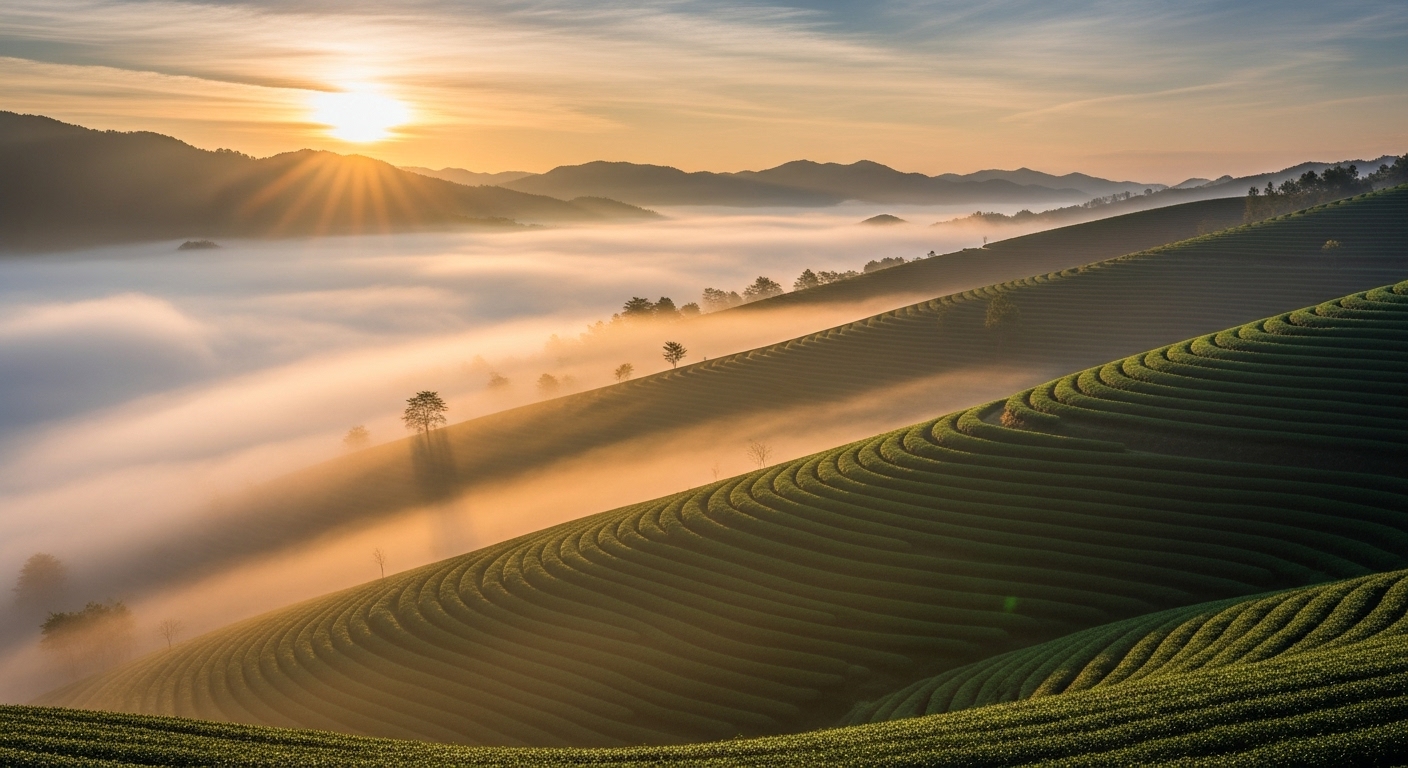
Tea-steam villages with foggy terraces at dawn feel like places caught between sleep and wakefulness. Before the sun fully rises, warm mist lifts from endless rows of tea plants, wrapping hills in soft layers of steam. Houses appear and disappear through the fog, and the entire village seems to breathe with the land.
These moments do not last long. Within an hour, sunlight breaks through, the mist thins, and daily life begins. Have you ever watched a landscape change completely in the time it takes to drink a cup of tea?
What Creates the Steam Over Tea Terraces
The steam seen in tea-growing regions is a natural result of temperature contrast. Cool night air settles into valleys while the soil retains warmth from the previous day.
At dawn, rising temperatures cause moisture to evaporate gently from leaves and earth. When this warm air meets the cooler atmosphere, fog forms.
In regions with layered terraces, the effect multiplies. Steam moves slowly along contours, creating the illusion that the hills themselves are exhaling.
Why Tea Villages Are Built on Hills
Tea thrives on slopes. Hills provide excellent drainage, preventing water from stagnating around roots.
Elevation also improves airflow, reducing disease and supporting steady leaf growth. Terraced farming allows villagers to maximize space while managing erosion.
Over generations, communities shaped entire mountainsides into flowing green steps that follow the land’s natural curves.
The Dawn Routine in Tea-Steam Villages
Before tourists wake, tea villages are already active. Farmers begin work early, moving quietly through the mist with baskets and tools.
Plucking often happens in the early morning, when leaves are cool and flexible. The fog keeps moisture balanced, preserving leaf quality.
From a distance, human movement blends into the steam, making the scene feel timeless rather than busy.
Famous Tea-Steam Villages Around the World
In China, regions such as Longjing near Hangzhou are known for dramatic fog-covered tea terraces. Dawn reveals layers of hills fading into pale blue distance.
Japan offers misty tea villages in Shizuoka, where Mount Fuji often appears briefly through the steam before disappearing again.
In India, areas like Munnar and Darjeeling showcase tea gardens where morning fog rolls across slopes in slow, deliberate waves.
Other notable regions include Sri Lanka’s central highlands and parts of northern Vietnam, where tea farming defines both economy and identity.
How Fog Shapes the Experience of Place
Fog softens sound and blurs edges. Villages feel quieter, even when work has already begun.
Distances appear shorter, then longer, as hills emerge and retreat. This shifting visibility encourages slower movement and closer attention.
Many visitors say these moments feel meditative, even without intention.

Tea, Climate, and the Role of Mist
Fog is not just visual. It plays an important role in tea cultivation.
Mist filters sunlight, protecting tender leaves from harsh exposure. It also maintains humidity, allowing leaves to develop complex flavors.
This is why teas grown in foggy regions are often described as smoother and more aromatic.
Architecture That Adapts to Steam
Homes in tea-steam villages are built to manage moisture. Elevated foundations, wide eaves, and breathable materials reduce dampness.
Windows are positioned to catch early light once fog lifts, warming interiors naturally.
Villages grow in harmony with climate rather than resisting it.
Why Travelers Are Drawn to Foggy Terraces
Modern travel often focuses on clarity and visibility. Tea-steam villages offer the opposite.
Here, uncertainty becomes part of beauty. You do not see everything at once. The landscape reveals itself slowly.
This unpredictability creates moments that feel personal rather than staged.
Best Ways to Experience Tea-Steam Villages
Staying overnight is essential. Day trips rarely capture dawn conditions.
Wake early and step outside before sunrise. Even five minutes can make the difference between clear views and layered mist.
Respect working routines. Tea villages are living communities, not open-air museums.
Photography in Foggy Tea Landscapes
Fog reduces contrast, so soft lighting works best. Avoid harsh editing that removes natural atmosphere.
Including human figures adds scale and life to wide shots.
Sometimes the best image is not the clearest one.

Seasonal Changes in Tea-Steam Villages
Steam appears most frequently during cooler months or transitional seasons.
Monsoon periods increase moisture but may limit visibility. Dry seasons offer clearer mornings with lighter mist.
Each season changes how terraces interact with light and air.
The Emotional Impact of Dawn in the Hills
Tea-steam villages slow perception. Time feels stretched.
The quiet repetition of terraces, combined with drifting fog, invites reflection.
Many travelers describe feeling grounded after witnessing dawn in these places.
Why These Villages Matter
Tea-steam villages with foggy terraces at dawn represent a balance between agriculture, climate, and culture.
They remind us that productivity does not have to erase beauty, and that work can coexist with wonder.
Have you ever experienced a place that felt different simply because of how the day began? Would you wake before sunrise to walk through steaming tea hills?
If landscapes like these spark your curiosity, follow WentWorld on social media and keep discovering places where nature sets the rhythm and people quietly follow.
Catch up on the top stories and travel deals by subscribing to our newsletter!