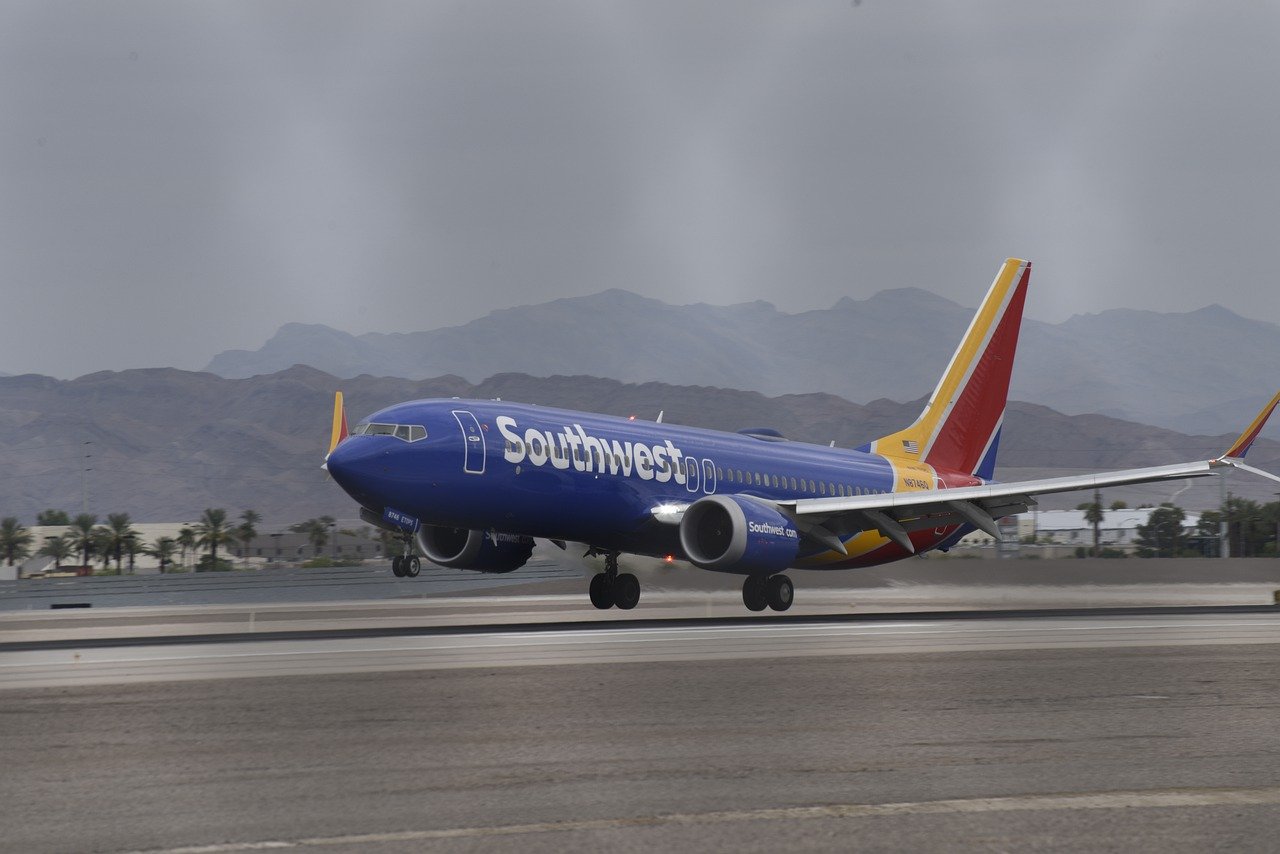
Heading out with your little one for the first time can feel overwhelming—but traveling with a baby doesn’t have to be a nightmare. With proper planning and the right mindset, your trip can be smooth, joyful, and even restorative. Whether you’re flying across the country or taking a short road trip, understanding how to handle everything from diaper changes to sleep schedules is key. In this guide, we’ll walk you through essential steps—from packing lists and safety considerations to travel hacks and emotional readiness—to make your experience less stressful and more enjoyable.
When Is the Right Time to Start Traveling with a Baby?
There’s no universal answer, but most pediatricians suggest waiting until your baby is at least 2–3 months old, especially for air travel. This gives your baby time to build some immunity and receive initial vaccinations. Their sleep and feeding patterns also become more predictable at this age, which can help you plan more effectively.
Road trips are often easier to manage earlier, especially if your baby enjoys the motion of the car. Just ensure you’re using a properly installed, rear-facing car seat and taking breaks every 1–2 hours for feeding, changing, and cuddling. If you’re traveling internationally, also check travel advisories and any required vaccinations well in advance.
What to Pack: Smart Essentials for Baby on the Go
Packing for a baby is an art—and less is more when done right. Create a baby-specific travel checklist to avoid missing critical items. Start with a day’s worth of diapers and wipes, plus extras for unexpected delays. Bring pre-measured formula, sterilized bottles, breast pump (if needed), baby snacks, and bibs. Don’t forget several changes of clothing for both baby and you, in case of spills or blowouts.
Also useful: a portable changing pad, baby-friendly sunscreen (if 6+ months), hand sanitizer, a teething toy, and a mini first-aid kit. For sleep, pack your baby’s favorite blanket, sound machine, or pacifier to maintain comfort in new environments. If you’re flying, keep all of these in a well-organized diaper bag for quick access.
Airline Seating Tips and Safety Info
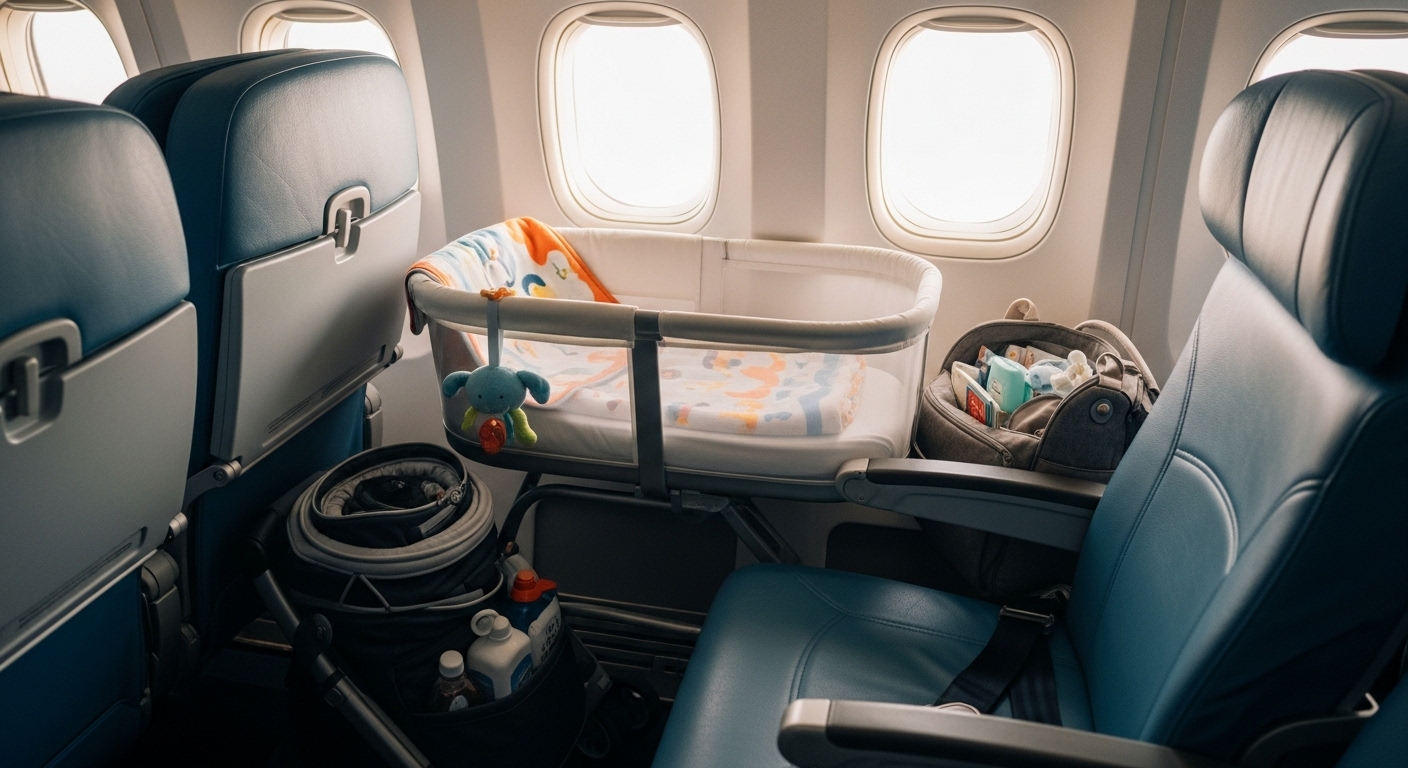
Airlines allow infants under 2 to fly as lap children, but this option offers limited safety in turbulence. If budget allows, book a separate seat and bring your FAA-approved car seat for maximum safety. On long-haul flights, ask for a bulkhead seat and request a baby bassinet in advance—these are lifesavers for letting your arms rest during the flight.
Some airlines prioritize families during check-in and boarding. Take advantage of early boarding so you can get settled before the plane fills up. Carry extra layers and snacks in case of delays, and always confirm baggage rules for strollers and car seats with your airline before arriving at the airport.
Get Through Airport and Security With Ease
Airports can be hectic, so arrive early to avoid rushing. Use a baby carrier to move hands-free and breeze through security. TSA permits baby formula, breast milk, and baby food in quantities above the standard liquid limit—just declare them separately at the checkpoint.
Family lanes and priority assistance are available at many airports, so don’t hesitate to ask. Bring a zippered pouch for important documents like birth certificates, passports, or boarding passes. Look out for airport nursing rooms and family lounges—they offer a calm place to feed or change your baby without stress.
Feeding, Comfort, Sleep Strategies
Feeding during takeoff and landing helps reduce pressure in your baby’s ears. Offer a bottle or breast, or give a pacifier if your baby isn’t hungry. Make sure to hydrate yourself, especially if you’re breastfeeding, as travel can dehydrate both mom and baby.
Stick to your baby’s home sleep cues and patterns as much as possible. Use white noise to drown out unfamiliar sounds and mimic home conditions. Layer your baby’s clothing so you can adjust for different temperatures in airports, planes, or hotel rooms. A calm, well-fed, and well-rested baby makes everything easier for everyone.
Staying Overnight: Hotels, Rentals, and Napping Plans
Choose accommodations that cater to families. Many hotels provide travel cribs or pack-and-plays upon request. Short-term rentals like Airbnb often give you more space, a kitchen, and laundry access—all of which are incredibly helpful when traveling with a baby.
Reserve rooms on quieter floors and ask for early check-in or late checkout if needed. Bring familiar bedtime items to signal sleep time—such as a favorite lullaby playlist or their regular bedtime book. If your baby naps multiple times a day, schedule sightseeing around their sleep windows, and be prepared to pivot if they need rest.
Health Precautions and Baby Medications
Health should be a top priority when traveling with a baby. Talk to your pediatrician about your itinerary and ask about specific risks related to the destination. Carry infant paracetamol or ibuprofen (as age-appropriate), fever medication, saline spray, nasal aspirator, thermometer, and rash cream.

If your baby has allergies or chronic conditions, ensure you carry extra supplies. Keep important health documents or prescriptions in your diaper bag. Always use safe, filtered, or bottled water for mixing formula or washing bottles in areas with questionable tap water. Basic health planning prevents stress and potential emergencies.
Car Seats, Strollers, and Mobility Gear
A travel-friendly stroller that folds quickly is a must for navigating airports or city sidewalks. For destinations with uneven terrain, opt for a baby carrier. Strollers with a fully reclining seat are also useful for naps on the go. Consider travel systems that combine car seat and stroller for easy transitions.
Always bring your own car seat if you’re renting a car—rental ones may not meet safety standards or be available. Use gate check bags to protect gear during flights, and label everything clearly. Whether you’re navigating a metro station or a jungle path, your mobility setup should be tailored to your destination.
Staying Flexible and Keeping Expectations Realistic
One of the most important aspects of traveling with a baby is letting go of rigid plans. Build in downtime, and don’t overschedule. Allow room for naps, playtime, diaper changes, and delays. Instead of cramming your itinerary, focus on a few enjoyable experiences each day.
Be kind to yourself if things go off track. Some days might be harder than others, but each one is a step toward building confidence. Celebrate small victories like a quiet nap in a park or a successful restaurant meal. Traveling with a baby is more about the experience than the destination.
Despite the challenges, traveling with a baby brings unique rewards. These early trips create memories, offer bonding moments, and expose your little one to new sounds, sights, and cultures. Parents also gain a sense of accomplishment and confidence with each successful journey.
More importantly, you begin to see the world through your baby’s eyes—everything becomes new and exciting again. With patience and flexibility, travel becomes not just possible but genuinely fulfilling for new parents. It’s not about perfect plans, but about creating shared experiences as a growing family.
Catch up on the top stories and travel deals by subscribing to our newsletter!