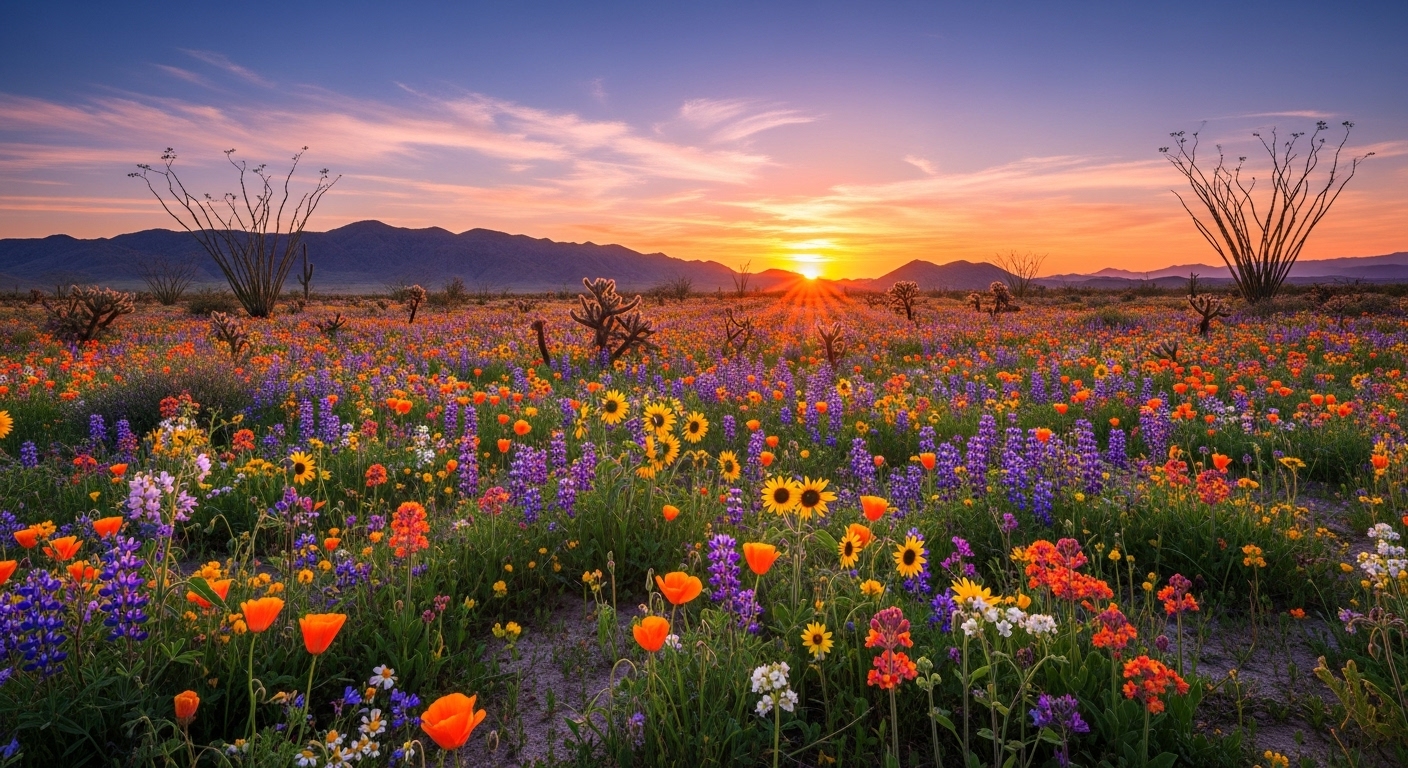
Every few years, deserts transform into vibrant, colorful landscapes during the rare desert bloom season. For photographers, this is a magical event — an opportunity to capture delicate wildflowers carpeting arid terrain, dramatic skies, and the subtle contrasts of sand and flora. If you’re new to desert photography, knowing the best desert bloom photography routes can make your trip both easier and more rewarding. From planning your route to understanding lighting and timing, these tips will help you create stunning images while exploring one of nature’s most fleeting spectacles.
Have you ever wanted to photograph carpets of desert flowers stretching across seemingly endless dunes? Or capture a bloom silhouetted against a glowing sunset? Desert blooms are ephemeral, lasting only weeks or months depending on rainfall and temperature. That makes planning your photography trip crucial, and knowing where to go, when to go, and how to capture the best images is essential — especially if you’re a beginner. Let’s explore the top routes, practical advice, and creative tips for making your desert bloom photography adventure unforgettable.
Why Desert Blooms Are Unique for Photographers
Desert bloom photography routes offer unique opportunities because deserts are usually stark and monochrome, so sudden bursts of color create dramatic visual interest. The contrast between the sand, rocks, and bright flowers enhances composition and makes your photos pop. Moreover, deserts often feature interesting textures — dunes, rocky outcrops, and dry riverbeds — which provide natural framing and layers for your shots.
Unlike other photography subjects, desert blooms are highly seasonal and unpredictable. Rainfall patterns largely determine when and where flowers will bloom, adding an element of anticipation and adventure to your photography trip. Each desert bloom is unique, meaning no two trips will produce identical images — perfect for creative experimentation.
Top Desert Bloom Photography Routes for Beginners
Whether you’re in North America, Africa, or Australia, several regions are famous for spectacular desert blooms. Here’s a curated list of beginner-friendly routes:
- Anza-Borrego Desert, California, USA: This Southern California desert transforms during the bloom season, usually from late February to April. Key routes include Borrego Springs, Font’s Point, and the Borrego Palm Canyon trail. Wide open roads, easily accessible viewpoints, and paved trails make it beginner-friendly.
- Namaqualand, South Africa: Famous for its bright carpets of daisies, Namaqualand blooms from August to September. Routes along the N7 highway and surrounding reserves offer accessible stops with minimal hiking, making it ideal for novice photographers.
- Atacama Desert, Chile: Known as the driest desert on Earth, it blooms after rare rainfall events, typically between September and November. Routes near the town of Vallenar or the Llanos de Challe National Park are manageable for beginners and provide stunning backdrops with mountains and salt flats.
- Western Australia’s Wildflower Trails: From September to November, the wildflower routes along the Coral Coast or around Kalbarri National Park offer short drives with multiple stops. Signage, parking areas, and visitor centers make it beginner-friendly.
- Sonoran Desert, Arizona, USA: Around late February to March, saguaro forests bloom alongside desert wildflowers. Routes near Tucson, Saguaro National Park, and Organ Pipe Cactus National Monument offer accessible trails and scenic drives.

Planning Your Desert Bloom Photography Trip
For beginners, preparation is key. Consider the following:
- Timing: Research bloom forecasts and historical rainfall patterns. Blooms are short-lived and can vary year to year.
- Route Selection: Choose routes with multiple stops, accessible roads, and points of interest to maximize your photographic opportunities.
- Gear: A basic DSLR or mirrorless camera with a zoom lens is ideal. Tripods, polarizing filters, and macro lenses can enhance your shots.
- Clothing & Supplies: Bring sun protection, water, and layered clothing. Temperatures can fluctuate dramatically in desert environments.
- Local Guidance: Visitor centers, local photography clubs, and ranger stations often provide valuable information about bloom hotspots and accessibility.
Techniques for Capturing Desert Blooms
Even as a beginner, you can achieve striking images with some basic techniques:
- Use the golden hours: Early morning and late afternoon provide soft, warm light that enhances colors and textures.
- Foreground Interest: Place flowers or rocks in the foreground to create depth and dimension.
- Wide-Angle Shots: Capture the vastness of the bloom carpets by using wide-angle lenses and including the sky.
- Macro Photography: Focus on individual flowers to highlight patterns, textures, and details.
- Experiment with Perspective: Shoot from low angles to emphasize foreground flowers or high viewpoints for expansive landscapes.
- Incorporate Natural Frames: Use dunes, shrubs, or rock formations to frame your shots and guide the viewer’s eye.
Photography Ethics and Respect for Nature
While photographing desert blooms, it’s important to minimize impact:
- Stay on marked trails to avoid trampling delicate flowers.
- Do not pick flowers — leave them for others to enjoy and for the ecosystem to thrive.
- Follow local regulations and respect protected areas.
- Leave no trace: carry out all trash and gear responsibly.
- Be mindful of wildlife and avoid disturbing habitats.

Tips for Making the Most of Your Desert Bloom Photography Adventure
- Scout locations before peak bloom to find composition opportunities.
- Use burst or bracketing modes to capture movement from wind or varying light.
- Combine drone photography if allowed — aerial perspectives can showcase patterns and scale.
- Keep an eye on weather forecasts, as clouds, rain, or storms can dramatically alter lighting and mood.
- Pack snacks, hydration, and sunscreen — photography in deserts can be physically demanding.
- Bring friends or guides — they can help spot photographic opportunities and ensure safety.
Beginner-Friendly Photography Routes: Example Itineraries
Here’s how a simple itinerary could look for beginners:
- California’s Anza-Borrego Route (2 days): Day 1: Borrego Springs and Font’s Point. Day 2: Palm Canyon Trail and Hellhole Canyon viewpoints. Sunrise and sunset shots each day.
- South Africa’s Namaqualand Route (3 days): Day 1: N7 Highway stops. Day 2: Namaqua National Park. Day 3: Local farms and villages for intimate flower shots.
- Western Australia Wildflower Trail (3 days): Day 1: Kalbarri National Park. Day 2: Coral Coast drive with multiple pull-offs. Day 3: Coastal viewpoints and small reserves.
Desert blooms are fleeting, breathtaking, and perfect for beginner photographers seeking a balance of adventure and artistry. Have you ever photographed a desert bloom, or is it on your bucket list? Exploring desert bloom photography routes allows you to see nature’s rare spectacles, practice your photography skills, and capture moments few others witness. Share your favorite bloom spots or experiences in the comments, and follow us on our social media platforms for more travel inspiration and photography tips!
Catch up on the top stories and travel deals by subscribing to our newsletter!