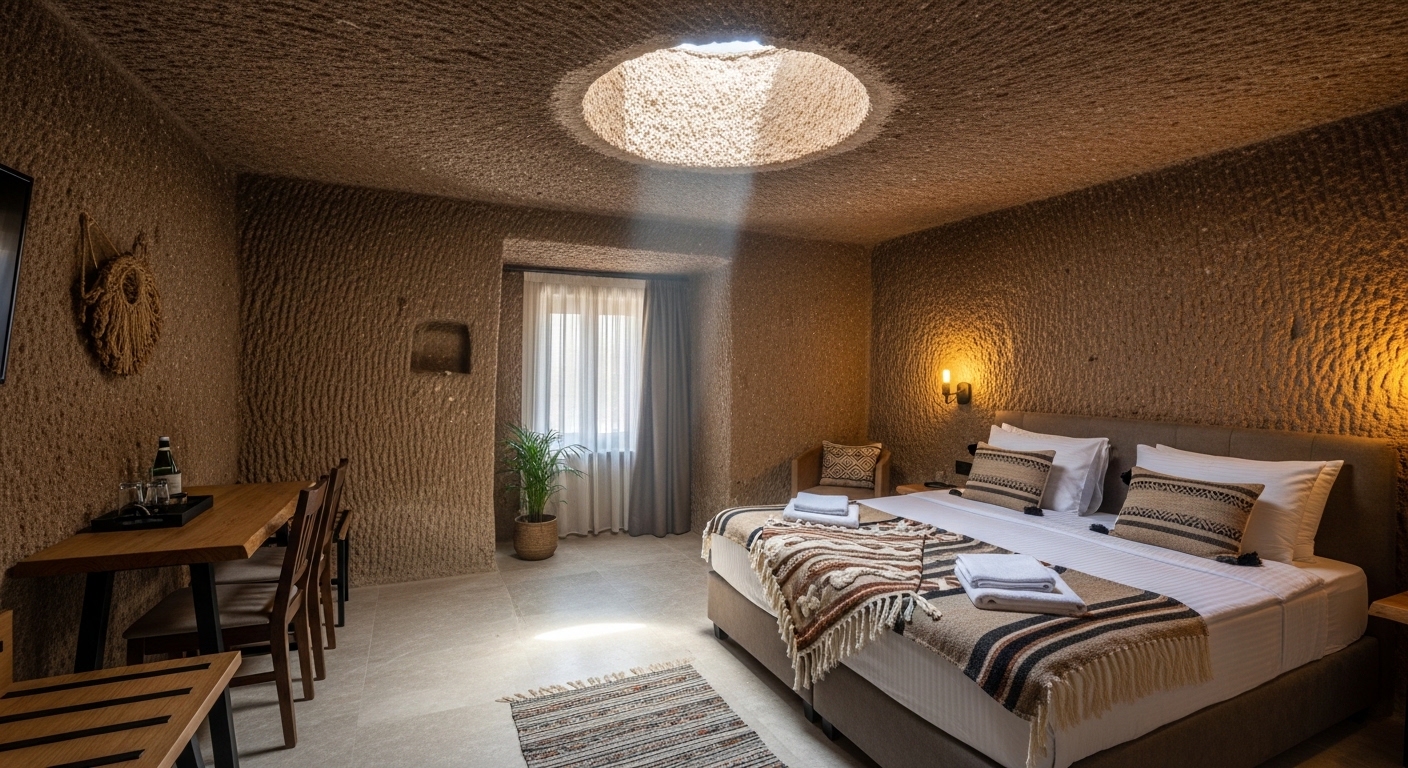
There is something deeply fascinating about cave hotels with skylight chimneys. They flip our idea of luxury upside down. Instead of glass towers and city views, you sleep inside stone walls carved by time, with natural light pouring in from above. The morning sun doesn’t enter through curtains. It arrives quietly through a circular opening in the ceiling, illuminating textures shaped over thousands of years.
These spaces are not dark or claustrophobic, as many imagine. In fact, they feel warm, grounded, and surprisingly calming. Skylight chimneys bring daylight, fresh air, and a gentle connection to the outside world, without breaking the feeling of shelter. Have you ever stayed somewhere that made you feel protected and open at the same time?
In this WentWorld.com guide, we explore cave hotels with skylight chimneys around the world. We look at how they are built, why skylights matter so much, and what it feels like to wake up underground with sunlight filtering in from above. More importantly, we explore why travelers are increasingly drawn to these quiet, earth-connected stays.
Why Cave Hotels Feel Different From Any Other Stay
Cave hotels are not designed to impress with height or extravagance. They impress through atmosphere. Thick stone walls regulate temperature naturally, keeping rooms cool in summer and warm in winter. Sounds are muted. Time feels slower.
The skylight chimney is what transforms the experience completely. Without it, a cave room might feel enclosed. With it, the space breathes. Light changes throughout the day, casting soft shadows that move across stone surfaces. At night, some skylights even reveal stars.
Travelers often describe an emotional shift when staying in cave hotels with skylight chimneys. There is a sense of returning to something ancient and human, while still enjoying modern comfort. Does travel, for you, feel better when it reconnects you with something primal?
The Ancient Origins of Skylight Chimneys
Skylight chimneys are not a modern invention. Ancient civilizations used vertical shafts in underground homes for ventilation, light, and smoke release. These designs were practical responses to harsh climates.
In regions with extreme heat or cold, underground living offered stability. Skylight chimneys allowed air circulation while preventing exposure to strong winds or temperature swings. Over time, these functional structures became architectural features.
Modern cave hotels borrow heavily from these ancient techniques, refining them with contemporary design. The result is a blend of heritage and comfort that feels both timeless and intentional.

Cappadocia, Turkey: The Icon of Cave Hotels
No discussion of cave hotels with skylight chimneys is complete without Cappadocia. This region of central Turkey is famous for its fairy chimneys, volcanic rock formations carved into homes, churches, and hotels.
Many cave hotels here feature vertical skylight shafts carved directly through soft volcanic stone. Morning light filters down gently, revealing warm beige and rose-colored textures. The experience feels intimate, especially when paired with silence broken only by distant footsteps or birds.
Cappadocia is well-connected via Turkish Airlines, making it accessible while still feeling remote. Information from GoTürkiye highlights the region’s cultural depth, but nothing prepares you for waking up underground with sunlight from above.
Matera, Italy: Stone History Turned Luxury
Matera, in southern Italy, is one of the oldest continuously inhabited settlements in the world. Its cave dwellings, known as the Sassi, were once symbols of poverty. Today, many have been transformed into elegant cave hotels.
Skylight chimneys play a central role in these renovations. Light wells are carefully restored or added, ensuring rooms feel open while preserving historical authenticity. The stone walls carry centuries of history, and the light reveals every detail.
Matera’s transformation has been documented by organizations like UNESCO, recognizing it as a World Heritage Site. Staying here feels less like a hotel stay and more like inhabiting history.
Guadix, Spain: Underground Living in Andalusia
In the town of Guadix, near Granada, thousands of people still live in cave homes. Many of these have been converted into cave hotels with skylight chimneys, offering an authentic glimpse into underground living.
Unlike tourist-heavy destinations, Guadix feels lived-in. Chimneys dot the hillsides, marking where light enters underground rooms. Inside, the atmosphere is peaceful and surprisingly spacious.
Visitors often remark on how quickly they adjust to the underground setting. Have you ever expected discomfort, only to find deep relaxation instead?
How Skylight Chimneys Shape the Guest Experience
Light changes everything. In cave hotels with skylight chimneys, guests often wake naturally as daylight slowly enters the room. There is no abrupt brightness, only a gradual glow.
This natural rhythm can improve sleep quality and mood. Many travelers report feeling more rested after cave stays. The absence of artificial lighting during the day encourages mindfulness and presence.
Skylights also frame moments. A beam of sunlight across a stone wall. Rain echoing softly down the chimney. Stars visible at night. These small details become memories.
Modern Comfort Beneath Ancient Stone
One common misconception is that cave hotels lack modern amenities. In reality, many offer luxury-level comfort. Heated floors, rainfall showers, high-quality bedding, and Wi-Fi coexist with stone walls and ancient layouts.
The challenge for designers is integration. Skylight chimneys must allow light without compromising insulation or privacy. When done well, the result feels seamless.
This balance between old and new is what makes cave hotels with skylight chimneys so appealing to modern travelers seeking something meaningful, not just comfortable.

Environmental Benefits of Cave Hotels
Cave hotels are often more sustainable than conventional buildings. The earth provides natural insulation, reducing the need for heating and cooling. Skylight chimneys reduce dependence on artificial lighting.
In an era where sustainable travel matters more than ever, these hotels offer lessons in low-impact living. Organizations like World Wildlife Fund promote energy-efficient design principles similar to those used in cave architecture.
Would you choose a stay that naturally consumes less energy, even if it looks different from traditional luxury?
Who Are Cave Hotels Really For?
Cave hotels with skylight chimneys are ideal for travelers who value atmosphere over excess. They attract couples seeking romance, solo travelers craving quiet, and culture-focused explorers.
They may not suit everyone. Those uncomfortable with enclosed spaces might need time to adjust. But for many, that adjustment is part of the journey.
Have you ever surprised yourself by enjoying something you once avoided?
Planning Your First Cave Hotel Stay
Choosing the right cave hotel matters. Look for properties that emphasize natural light, ventilation, and thoughtful design. Reviews often mention how rooms feel rather than how they look.
Arriving during daylight helps with orientation. Once inside, give yourself time to settle. Let your senses adapt. The experience improves with patience.
As WentWorld.com continues exploring rare and immersive stays, cave hotels remind us that travel does not always mean going higher or faster. Sometimes, it means going deeper.
We would love to hear from you. Would you stay in a cave hotel with a skylight chimney? What excites or concerns you about sleeping underground? Share your thoughts and experiences.
If stories about unique stays and thoughtful travel inspire you, follow WentWorld.com on our social media platforms and stay connected with journeys that celebrate depth, history, and quiet beauty.
Catch up on the top stories and travel deals by subscribing to our newsletter!