
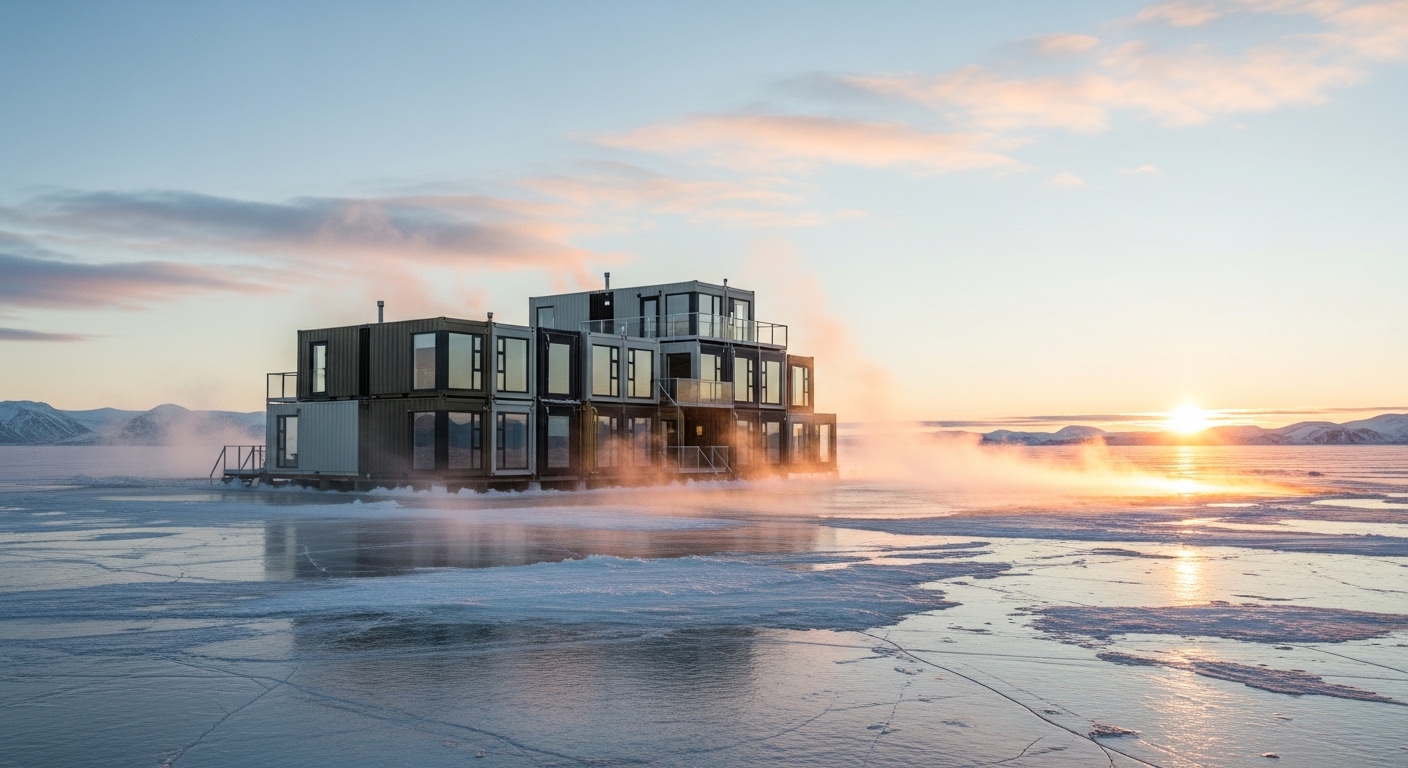
Imagine waking up in a warm sleeping bag, stepping outside your hostel door, and realizing you are literally floating on a frozen lake. The air is crisp, the horizon stretches endlessly in pale blues and silvers, and beneath your feet lies a thick sheet of ice carrying your temporary home. Welcome to the fascinating world of Ice Drift Hostels on Frozen Lakes, one of the most daring and unforgettable travel experiences emerging in cold-climate tourism.
These drifting ice accommodations combine Arctic survival aesthetics with cozy communal living. Built on naturally frozen lakes during the deep winter months, they offer travelers a rare opportunity to sleep, dine, and connect while surrounded by endless snowfields and shimmering ice landscapes. Have you ever wondered what it feels like to stay somewhere that may gently shift overnight as the ice beneath it subtly moves?
Ice Drift Hostels on Frozen Lakes are not luxury hotels. They are experiential escapes designed for curious adventurers, photographers, and slow travelers seeking something extraordinary. From Scandinavia to northern Canada, these floating winter hubs are redefining what immersive travel truly means.
The Concept Behind Ice Drift Hostels on Frozen Lakes
The idea behind Ice Drift Hostels on Frozen Lakes stems from traditional ice fishing huts and Arctic research shelters. Communities in northern regions have long used temporary ice structures during winter months. Modern designers and adventure entrepreneurs simply reimagined this concept into shared accommodations that prioritize sustainability, safety, and community spirit.
Unlike permanent structures, these hostels are seasonal. They are carefully assembled once the ice reaches safe thickness, often exceeding 30 to 50 centimeters depending on local regulations. The hostels are modular, insulated, and engineered to distribute weight evenly across the frozen surface.
In places like Finland and Sweden, winter tourism already thrives through attractions such as the famous Icehotel in Jukkasjärvi. However, Ice Drift Hostels on Frozen Lakes add a dynamic element. Instead of being built on land, they rest directly on frozen water, sometimes even gently drifting within a controlled perimeter.
Where You Can Experience Ice Drift Hostels
Several regions are experimenting with this concept, particularly in northern Europe and Canada. Finnish Lapland, near destinations like Lapland, Finland, provides ideal conditions. Frozen lakes stretch for kilometers, and winter temperatures remain stable for months.
In Sweden, areas near Swedish Lapland offer similar settings. Travelers arriving via airlines such as Finnair often combine northern lights viewing with experimental accommodations like ice-based stays.
Canada’s Northwest Territories and parts of northern Quebec are also exploring floating winter lodges. Tourism boards such as Spectacular Northwest Territories promote cold-climate experiences including frozen lake adventures.
Would you travel to sub-zero temperatures just to experience something this unique?

What It Feels Like to Stay Overnight
Despite the extreme setting, Ice Drift Hostels on Frozen Lakes are surprisingly comfortable. Interiors are insulated with eco-friendly materials, heated through safe portable systems, and designed to minimize heat loss. Shared sleeping pods or compact bunk areas create a communal atmosphere similar to traditional hostels.
At night, silence dominates. Snow absorbs sound, and the frozen lake beneath creates an almost surreal stillness. Occasionally, you may hear subtle cracking noises — not signs of danger, but natural ice adjustments responding to temperature shifts. These sounds remind you that you are living on a living surface.
Morning is when the real magic happens. As sunlight stretches across the ice, it reflects in shimmering waves of silver and gold. Steam from hot drinks rises against the cold air. Photographers often wake before dawn to capture frost patterns glowing under early light.
Safety and Engineering Behind the Experience
One of the first questions people ask about Ice Drift Hostels on Frozen Lakes is simple: is it safe? The answer lies in careful planning. Ice thickness is measured consistently throughout the season. Structures are lightweight and modular, allowing quick disassembly if weather conditions change.
Local authorities regulate safe ice travel standards. In Finland and Sweden, winter tourism operators follow strict safety frameworks. Many hostels also use GPS anchors to monitor slight movements, ensuring guests remain within safe zones.
Have you ever trusted nature enough to sleep directly on it?
Activities Around Ice Drift Hostels
Staying at an Ice Drift Hostel is not just about sleeping on ice. It is about fully embracing Arctic living. Popular activities include:
Ice fishing workshops guided by local experts.
Snowshoe treks across frozen landscapes.
Northern lights observation sessions far from light pollution.
Cold-water dipping experiences for the brave.
Photography walks focusing on frost textures and winter minimalism.
Organizations such as Visit Norway often highlight similar winter experiences across Nordic regions.

Environmental Responsibility
Because these hostels are temporary and seasonal, they often leave minimal impact. Structures are removed before thaw season, ensuring no debris enters the water ecosystem. Operators emphasize sustainability, renewable heating sources, and strict waste management practices.
Environmental groups including World Wildlife Fund continue to advocate responsible Arctic tourism, encouraging travelers to respect fragile cold-climate ecosystems.
Why Ice Drift Hostels Represent the Future of Experiential Travel
Travel trends increasingly favor immersive, story-worthy experiences over standard hotel stays. Ice Drift Hostels on Frozen Lakes perfectly align with this shift. They are temporary, rare, and weather-dependent. That exclusivity creates urgency and excitement.
Unlike city hotels, no two stays are identical. Ice conditions, light, snowfall, and temperature create constantly changing backdrops. The unpredictability becomes part of the charm.
In a world saturated with predictable accommodations, would you choose something that floats on frozen water?
Preparing for an Ice Drift Stay
Travelers considering Ice Drift Hostels on Frozen Lakes should prepare carefully. Layered clothing, thermal boots, insulated gloves, and moisture-wicking fabrics are essential. Many operators provide detailed packing lists to ensure safety and comfort.
It is also important to mentally prepare. This is not a conventional stay. There may be limited connectivity, shared facilities, and extreme temperatures. But that is precisely what makes the experience powerful.
The Emotional Side of Frozen Adventures
There is something deeply humbling about spending the night on a frozen lake. The environment strips away distractions. Conversations feel deeper. Silence feels heavier. Stars appear brighter in the absence of urban glow.
Ice Drift Hostels on Frozen Lakes are more than a novelty. They are reminders of how adaptable humans can be and how beautiful winter landscapes truly are.
Would you try this experience? Or does the idea of drifting on ice make you nervous? We would genuinely love to hear your thoughts. Share your opinion and let us know whether this Arctic concept belongs on your travel bucket list.
If stories like this ignite your curiosity, follow WentWorld.com on our social media platforms for more rare and extraordinary global discoveries.
Catch up on the top stories and travel deals by subscribing to our newsletter!










Leave a Reply
You must be logged in to post a comment.