When we think of city skylines and panoramic vistas, our minds often jump to towering skyscrapers, iconic towers, and glass observation decks. But what about cities where the skyline is low, where tall buildings are rare or nonexistent? Surprisingly, some of the most breathtaking views can be found in these urban landscapes, thanks to rooftop observatories in cities without skyscrapers. From historic rooftops to hidden terraces, these elevated spots offer unique perspectives that let you experience the city from above without the crowd, the elevators, or the glass walls.
Have you ever wondered how it feels to gaze across a cityscape where the horizon stretches uninterrupted, or to watch the sunset over rooftops that date back centuries? Cities without skyscrapers often provide a sense of intimacy and charm, and rooftop observatories turn that charm into a living, breathing panorama. Whether it’s a café terrace, a museum rooftop, or a specially designed observatory, these spots reveal the city’s rhythm, its streets, and the flow of daily life from a perspective many travelers miss.
Why Rooftop Observatories in Low-Rise Cities Are Special
Rooftop observatories in cities without skyscrapers offer something skyscrapers rarely can: context. When you look out from a 10-story terrace in a city without high rises, you see the architectural patterns, the courtyard gardens, and the natural features that define the city. Every rooftop becomes a vantage point for storytelling — you can observe daily routines, notice the textures of historic buildings, and even glimpse distant landscapes that frame the urban environment.
Unlike skyscrapers, which can feel impersonal and crowded, these observatories often encourage quiet contemplation. You might find yourself alone with a coffee, the wind brushing your hair, while the city unfolds below in a soft mosaic of colors and life. There’s a sense of discovery — each step onto a terrace or rooftop is like unlocking a secret viewpoint.
Europe’s Hidden Rooftop Gems
Europe is full of historic cities with strict building height regulations, making rooftop observatories essential for panoramic views.
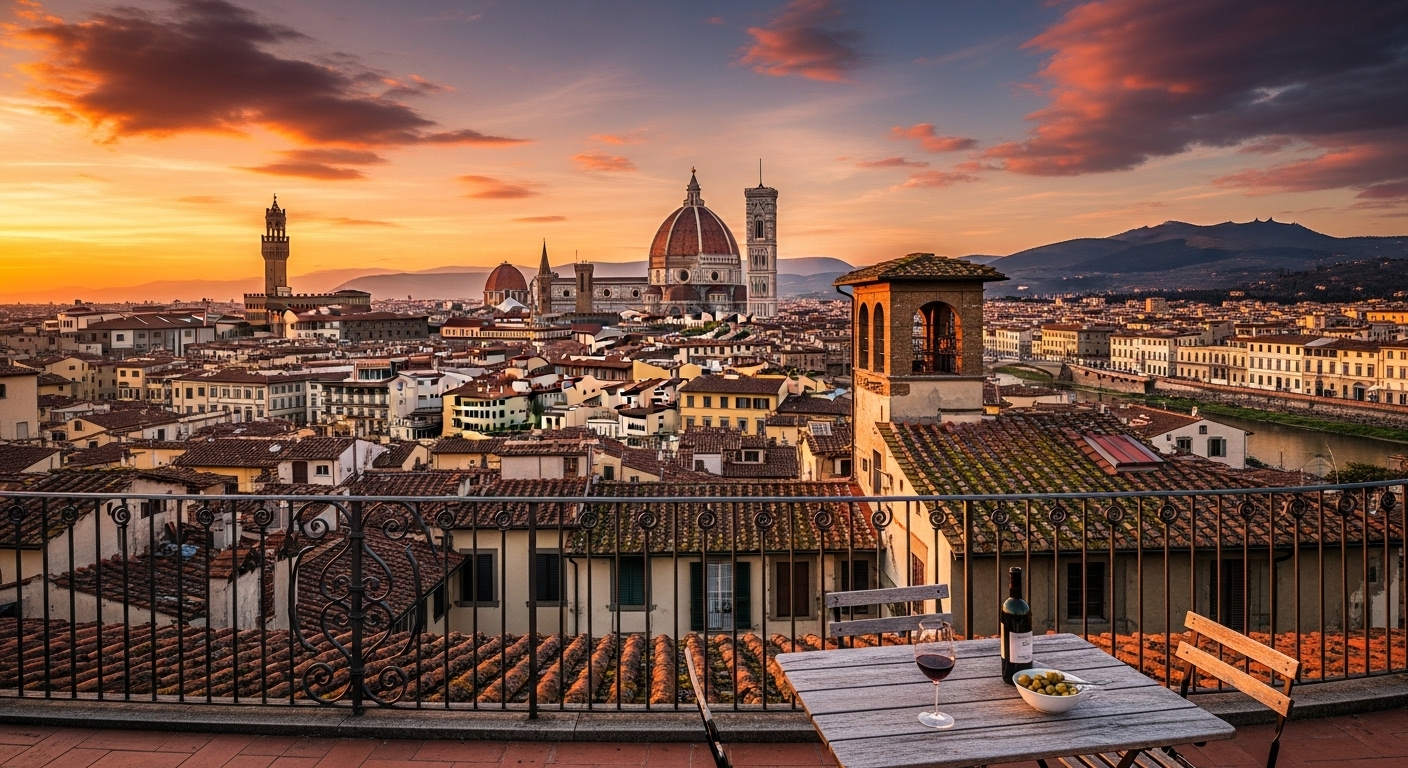
- Florence, Italy: The city is famous for its low skyline, dominated by the Duomo. Climbing the terraces of the Florence Cathedral or visiting the rooftop of Palazzo Vecchio offers sweeping views over terracotta roofs and the Arno River. You get the city’s true Renaissance charm, framed by the Tuscan hills beyond.
- Seville, Spain: The Giralda Tower is technically part of a historic cathedral rather than a skyscraper, but it functions as a rooftop observatory. From here, you can admire Seville’s orange-tiled roofs and winding streets while feeling the pulse of Andalusian life below.
- Lisbon, Portugal: Alfama and Bairro Alto are neighborhoods where rooftops dominate the skyline. Various rooftop cafés double as observatories, letting you watch the Tagus River glisten while listening to faint Fado music drifting from below.
- Bruges, Belgium: Bruges’ medieval charm is best appreciated from elevated terraces. Belfry Tower’s top provides a classic example, but smaller rooftop platforms around canals and squares also offer quiet observation points with stunning angles.
Asia’s Rooftop Perspectives
Even in sprawling Asian cities, some historic or culturally preserved areas maintain low-rise landscapes.
- Kyoto, Japan: Many temples and traditional machiya houses are only two or three stories high. Rooftop observatories at temples or ryokan inns provide unobstructed views of pagodas, cherry trees, and the distant mountains. Watching the city during cherry blossom season from these heights is truly magical.
- Hội An, Vietnam: The old town’s rooftop cafés provide elevated perspectives of lantern-lit streets, riverside markets, and historic wooden houses. This unobtrusive elevation preserves the city’s historic integrity while giving visitors a unique vantage point.
- Bhaktapur, Nepal: Ancient squares and low-rise architecture make rooftop views spectacular. Climbing traditional rooftop terraces lets you see terracotta rooftops, pagoda-style temples, and local daily life — often accompanied by the Himalayan backdrop.
North America and Rooftop Observatories Without Skyscrapers
Even in North America, there are cities where rooftops provide the best views despite the absence of towering buildings.
- Charleston, South Carolina, USA: The historic district is low-rise, but rooftop bars and observatories atop boutique hotels provide panoramic views of pastel-colored houses, cobblestone streets, and the waterfront.
- Santa Fe, New Mexico, USA: The adobe architecture keeps the skyline intentionally low. Rooftop restaurants and terraces offer vistas of the Sangre de Cristo Mountains, as well as sun-drenched cityscapes with earthy tones.
- Quebec City, Canada: Old Quebec’s historic district is largely low-rise, but observatories along the city walls or hotel terraces provide enchanting views of the St. Lawrence River, old stone buildings, and distant forests.
How to Find the Best Rooftop Observatories
Finding the perfect rooftop observatories in cities without skyscrapers often requires a mix of planning, curiosity, and local knowledge:
- Ask locals: Residents often know the best terraces or private rooftops that tourists rarely visit.
- Check cultural or historic buildings: Cathedrals, museums, or town halls frequently offer rooftop access.
- Look for rooftop cafés or bars: Many low-rise cities use elevated spaces for dining or relaxation, offering unobstructed views.
- Stay at boutique hotels or guesthouses: Some accommodations feature rooftop terraces exclusively for guests, often overlooked by large tour operators.
- Explore online forums or social media: Travel communities often share hidden rooftop gems and photo tips.

Benefits of Rooftop Observatories in Low-Rise Cities
While towering skyscrapers may dominate city views elsewhere, rooftop observatories in low-rise cities provide:
- Intimacy: Less crowded and more personal experiences.
- Authenticity: Views are often of real life — streets, markets, gardens — not commercial districts or corporate buildings.
- Historical context: Observatories often complement cultural or heritage sites.
- Photogenic angles: The continuity of rooftops, rivers, and landmarks creates endless photography opportunities.
- Relaxed atmosphere: Without the bustling skyline, the pace feels slower and more reflective.
Rooftop Observatories and Photography
For photography enthusiasts, low-rise city rooftops offer creative freedom. You can capture:
- Sunrise and sunset across uninterrupted horizons.
- Patterns of terracotta or slate roofs.
- Rivers, hills, or mountains in the background.
- Street life from above, capturing markets, parades, or daily routines.
- Architectural details in historic buildings from angles not visible from the street.
Tips for Visiting Rooftop Observatories
- Arrive early for sunrise views or to avoid crowds.
- Check access hours — some observatories close during off-peak seasons.
- Bring binoculars for distant views, especially in cities surrounded by natural landscapes.
- Respect private spaces — not all rooftops are open to the public.
- Take your time — low-rise cities reward slow observation and reflection.
Have you ever stood atop a city that doesn’t tower into the clouds? Rooftop observatories in cities without skyscrapers remind us that the beauty of a city isn’t always in its height — sometimes it’s in its patterns, textures, and the rhythm of life unfolding beneath our feet. From the historic streets of Europe to the temples of Asia and the charming neighborhoods of the Americas, these rooftop escapes give travelers a fresh perspective on urban exploration.
Which low-rise city would you love to see from above? Have you discovered any hidden rooftop gems in your travels? Share your thoughts in the comments — we’d love to hear about the vistas that have taken your breath away. And don’t forget to follow us on our social media platforms for more inspiring travel perspectives!
Catch up on the top stories and travel deals by subscribing to our newsletter!