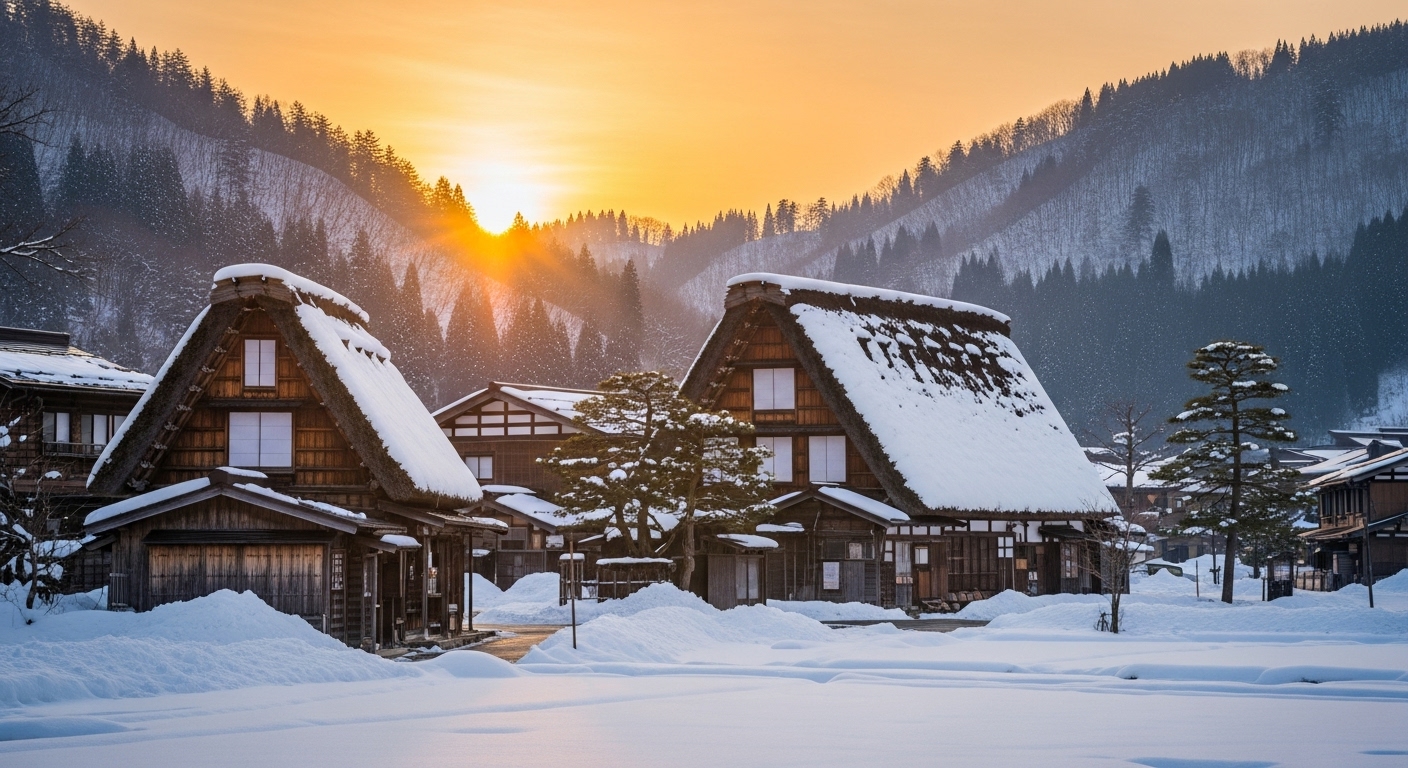
Beyond the major cities and popular tourist routes lies a world of sublime charm and cultural richness. These beautiful villages in Asia offer immersive landscapes, centuries-old traditions, and heartfelt hospitality. While they might not appear on standard itineraries, these hidden havens deliver unforgettable experiences. In this guide, we explore five lesser-known villages that capture Asia’s spirit and promise authentic travel, without tour crowds.
1. Shirakawa-go, Japan
Nestled in the mountains of Gifu Prefecture, Shirakawa-go looks like something out of a fairy tale. Famous for its thatched-roof Gassho-zukuri farmhouses, this village seems straight from a period drama. Though UNESCO-listed, Shirakawa-go remains quiet in all but winter—and even then, it retains deep atmosphere. You can:
- Stay overnight: Guesthouses in old farmhouses let you sip tea by irori hearths and sleep under heavy tatami mats.
- Experience traditions: Local workshops teach hand weaving, washi (Japanese paper), and silk farming.
- Explore trails: Walking paths through rice terraces and gurgling streams connect to hilltop vantage points.
Visiting outside December light-up season reveals the real village rhythm. Shirakawa-go is one of the most enchanting beautiful villages in Asia, combining rustic architecture with meaningful rituals.
2. Bhujodi, India
In Gujarat’s Kutch District, Bhujodi is a community of expert weavers whose skills have produced exotic rugs and shawls for centuries. While Bhuj itself is known only to connoisseurs, this village hides in plain sight:
- Artisan lodges: Live with weavers, learn dyeing techniques from pomegranate and madder, and help weave simple motifs.
- Daily rhythms: Dawn yoga classes in open courtyards, midday tea sessions behind dusty looms, sunset spinning by lantern light.
- Market days: Weekly bazaars offer handwoven textiles at factory-direct prices, without middlemen.
Bhujodi’s handmade artistry and intimate cultural exchange make it one of the most soulful and beautiful villages in Asia.

3. Kongming, China
Tucked into Yunnan’s Jiuzhaigou region, Kongming is a Yi minority village framed by terraced rice paddies and mist-shrouded peaks:
- Traditional Yi homes: Clustered wooden longhouses built on stilts, connected by stone footpaths.
- Rice-planting rituals: Seasonal demonstrations in April and May, with colorful costumes and communal feasts.
- Homestay hospitality: Family meals featuring yak yogurt and hand-twined noodles served in clay pots.
It’s a living example of the harmony between people and nature, ranking Kongming among Asia’s most captivating beautiful villages.
4. Nosy Komba, Indonesia
Off Madagascar’s northeast coast—well, actually Indonesia’s Lombok—Nosy Komba is far removed from Bali’s crowds:
- Stilt fishermen huts: Small villages of wooden houses accessible only by boat, set above shallow reefs.
- Community fishing: Morning trad boats set nets cooperatively, you can join the catch-and-cook.
- Hand-carved crafts: Women carve wood in the open air—tiki figures and masks often sold for pocket change.
With slow living and local artistry, Nosy Komba is proof that beautiful villages in Asia don’t need crowds to stay captivating.
5. Phan Don, Vietnam
Located on the Song Pha river delta near Cambodia, Phan Don is a floating community made of stilt homes and bamboo walkways:
- Stilt house stays: Book a family-run stilt bungalow for $15—wake to hornbills and sunrise over canal mirrors.
- Floating school visits: Children cross rivers to go to class in bamboo canoes.
- River life immersion: Daily fish market, shrimp haul, rice wine tasting, and low-water boat rides.
Phan Don shines among beautiful villages in Asia, offering a delicate ecosystem balanced by human ingenuity.

Travel Tips for Visiting These Villages
Before you go, keep these in mind:
- Respect local customs: Ask permission before photographing, use quiet tones, follow visiting hours.
- Pack local currency: ATMs are often absent; bring enough for food, snacks, and craft purchases.
- Travel light: Use backpacks or small gear to respect narrow lanes. Shoes that grip well for rice paddies or stilt footpaths are a must.
- Go slow: Book multiple nights to let mornings and evenings unfold naturally—you’ll uncover subtle traditions.
- Support locals: Eat at home-stays, buy crafts directly, and tip guides or cultural hosts carefully.
These steps help you tread lightly while maximizing cultural immersion.
These unseen villages aren’t just beautiful—they preserve heritage, ecosystems, and local economies in ways that mainstream travel often overlooks. They teach us that true beauty lies in authenticity, craftsmanship, and daily rituals untouched by mass tourism.
Exploring beautiful villages in Asia reminds us: travel can be a partnership, not a commercial transaction. And that’s a journey worth embarking on. Which of these lesser-known villages inspires you most? Share your dream destination and what hidden charms you hope to find. Follow us on social media for more discovery guides on Asia’s secret destinations and cultural treasures.
Catch up on the top stories and travel deals by subscribing to our newsletter!