When you think of cities, what comes to mind first? Towering skyscrapers, bustling streets, and vibrant skylines, right? But what if I told you that some of the world’s most fascinating urban wonders aren’t above ground at all? Instead, they’re hidden beneath your feet. Welcome to the intriguing world of underground cities, where architecture, history, and survival all merge in mysterious and breathtaking ways. In this post, we’ll explore the hidden architecture of underground cities, why they were built, and how you can experience them today. Doesn’t it make you curious what secrets lie just below the surface?
The Allure of Underground Cities
For centuries, humans have looked upward when dreaming of architectural wonders, but beneath the ground lies a completely different story. Underground cities were often built out of necessity—whether to escape invaders, endure extreme climates, or create new living spaces. The hidden architecture of underground cities reveals innovation, resilience, and even artistry. These are not just tunnels or caves; many of them have intricate layouts, living quarters, chapels, storage rooms, and ventilation systems that rival above-ground designs. Doesn’t it blow your mind to imagine an entire society thriving below the earth?
Derinkuyu: The Multi-Level City of Turkey
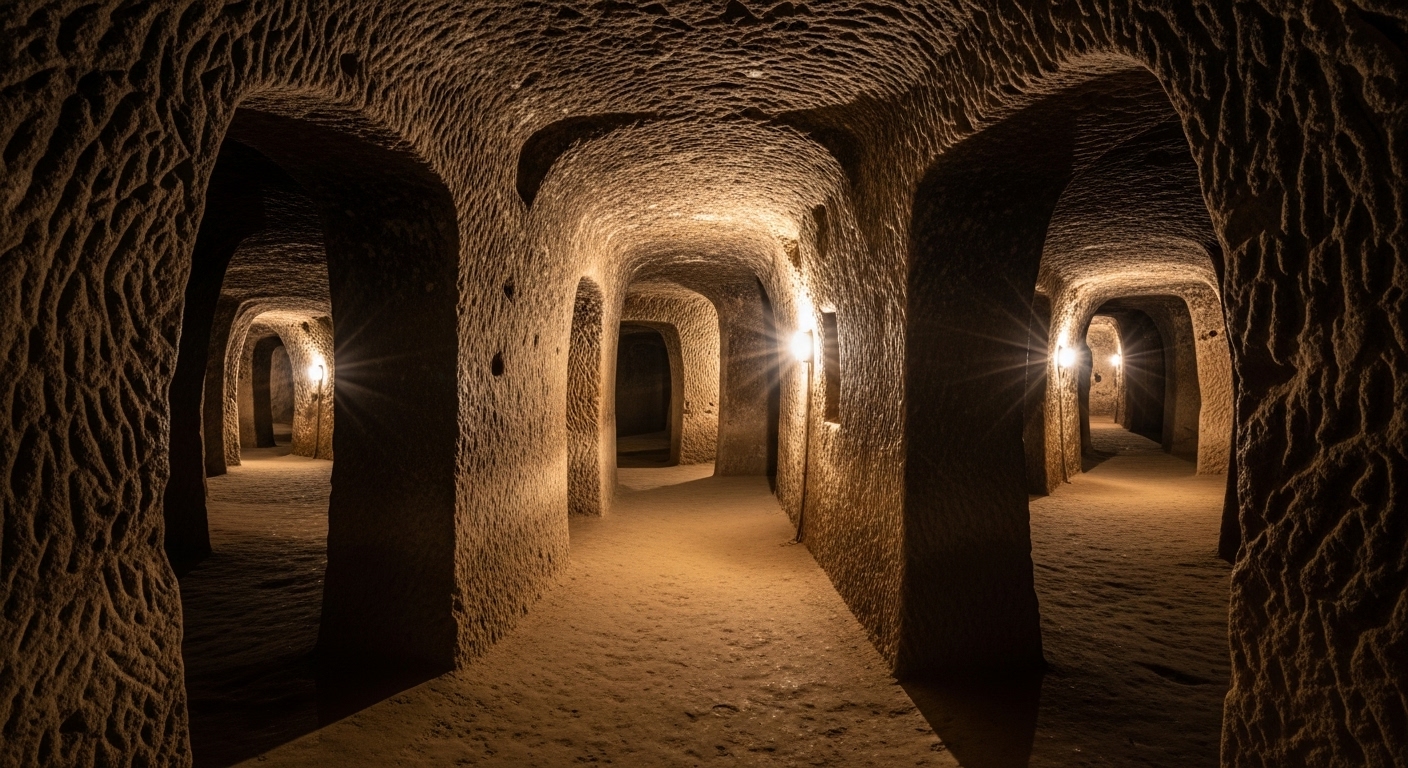
Perhaps the most famous underground city in the world is Derinkuyu in Cappadocia, Turkey. Stretching 200 feet deep with multiple levels, it could house thousands of people. The architecture here is remarkable—ventilation shafts ensure airflow, stone doors protect residents from invaders, and carefully carved stables, kitchens, and chapels show how complete life was underground. Can you picture yourself walking through those ancient, dimly lit corridors?

Montreal’s Underground City: Modern Comforts Below the Streets
Not all underground cities are ancient. Montreal, Canada, boasts an extensive underground network called RÉSO, linking shopping centers, restaurants, offices, and even hotels. Unlike traditional underground hideaways, this modern marvel focuses on convenience, allowing people to escape harsh winter weather while still enjoying city life. The hidden architecture of underground cities like Montreal’s shows us how modern design adapts to both climate and lifestyle. Have you ever wished your city had something like this?
Beijing’s Underground City: A Cold War Secret
During the Cold War, Beijing built a sprawling underground city intended as a shelter for millions in case of nuclear war. While much of it is closed today, its design included schools, restaurants, hospitals, and even a movie theater—all beneath the earth. This hidden world demonstrates the unique role underground spaces can play in moments of fear and preparation. What would it feel like knowing your whole community could disappear underground if needed?
Salt Mines and Subterranean Wonders
Not all underground cities were originally designed as homes. Some, like the Wieliczka Salt Mine in Poland, evolved into incredible underground spaces. Carved entirely out of salt, with chapels, sculptures, and corridors stretching for miles, it feels more like an art gallery than a mine. These places remind us that hidden architecture underground can be both functional and astonishingly beautiful. Can you imagine standing in a glowing chapel carved entirely out of salt?
The Ingenuity of Ancient Architects
What fascinates most people about the hidden architecture of underground cities is how advanced they were for their time. Without modern machines, ancient builders designed complex systems for airflow, water access, and even defense. Some underground cities were layered so efficiently that they could house tens of thousands of people comfortably. Doesn’t that challenge how we think about ancient societies?
Why Underground Cities Still Matter Today
In a world facing rapid urbanization and climate challenges, the lessons of underground cities are more relevant than ever. From creating cooler spaces in hot climates to using less surface land, the architecture beneath our feet could play a role in future cities. Urban planners today are revisiting these old concepts with modern twists. Would you be open to living part of your life underground if it meant more sustainable cities?
Experiencing Underground Cities as a Traveler
Visiting underground cities isn’t just about history—it’s about adventure. Walking through dim passageways, peering into hidden rooms, and touching walls that hold centuries of stories feels like stepping into another world. Cappadocia, Montreal, Beijing, and Poland are just a few destinations where you can see this hidden architecture firsthand. Have you ever explored an underground site on your travels, or is it still on your bucket list?
The hidden architecture of underground cities is proof that human creativity knows no bounds. Whether built for survival, comfort, or artistry, these subterranean spaces invite us to rethink what a city can be. The next time you’re walking through a bustling downtown, imagine the possibility that a whole other world might exist right beneath your shoes. What underground city would you most love to explore? Share your thoughts with us, and don’t forget to follow us on our social media platforms for more fascinating travel insights.
Catch up on the top stories and travel deals by subscribing to our newsletter!