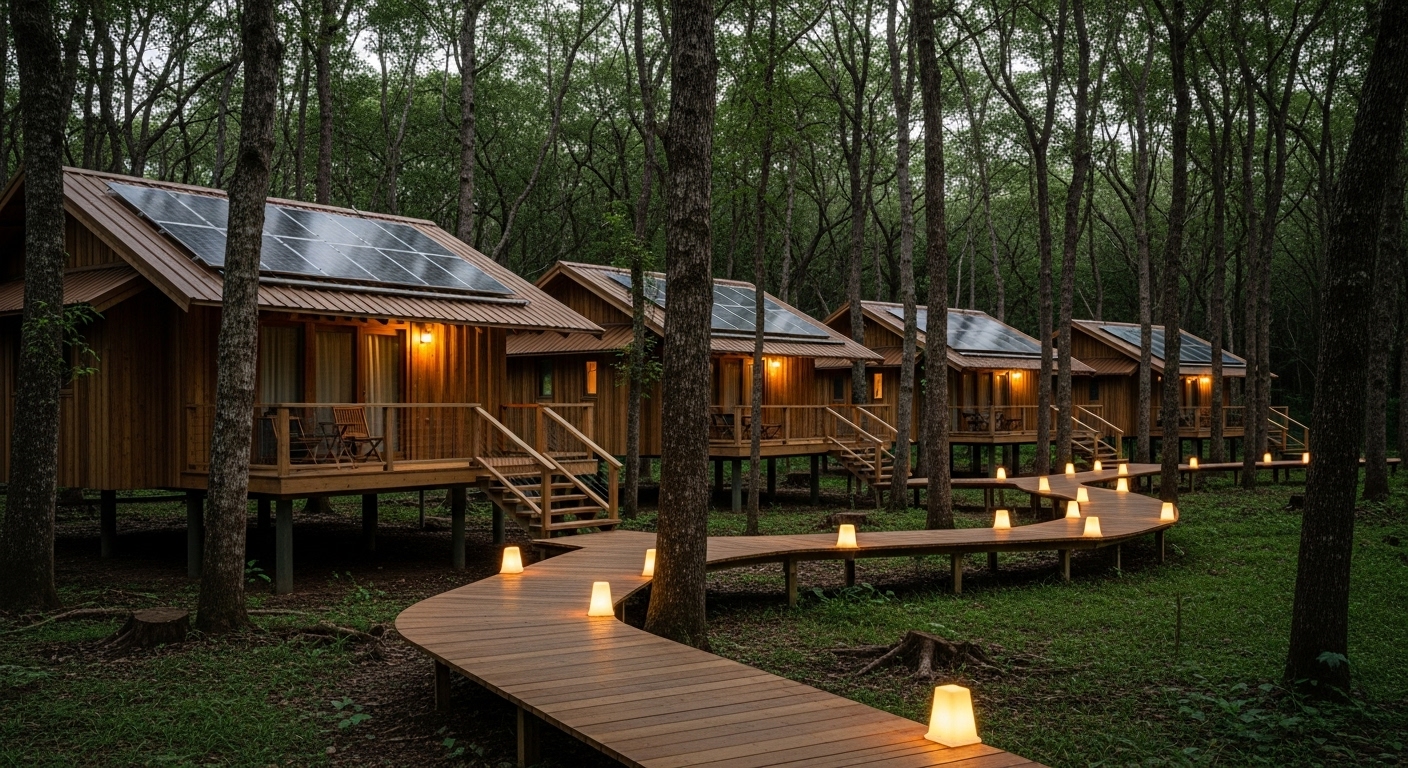
Choosing an eco lodge is a powerful decision when you set out to experience nature responsibly. The best ones balance comfort and sustainability, offering immersive, low-impact stays that connect you with the local environment and culture. In this guide, we’ll examine eight key features to look for in a great eco lodge—from site design to community relationships—so that your deeper wilderness getaway truly supports the planet and local people.
First, we discuss how location and design should work with nature. Next, we inspect energy, water, and waste strategies. We also examine sourcing of food, community engagement, guest education, and staff wellbeing. Along the way, you’ll discover questions to ask before booking and stories from eco‑lodge stays. By the end, you’ll know how to choose lodges that deliver authentic experiences while protecting ecosystems.
1. Site Harmony and Low‑Impact Design
Great eco lodges start with careful site selection. Ideally, they’re built away from fragile habitats like wetlands, steep slopes, or wildlife corridors. More importantly, the architecture should blend into the environment—think natural finishes, thatched roofs, raised platforms, and building clusters arranged to preserve mature trees. In some lodges, units are tucked under the forest canopy or perched on stilts above rivers, minimizing disruption. Ask how the lodge adapted its layout to existing landforms and vegetation rather than clearing everything first. That’s a signal of design working with, not against, nature.
Moreover, thoughtful orientation matters. Rooms should face sunrise or sunset for natural light and passive heating, not city views. Outdoor living spaces—verandas or decks—should offer wildlife viewing without encouraging noise or unnecessary lighting. Finally, check whether materials come from local renewable sources, such as bamboo, reclaimed wood, or stone, which reduces transport emissions and blends aesthetics with ecology.
2. Renewable Energy and Conservation Practices
A truly sustainable eco lodge goes beyond solar-powered lights. Start by asking how it meets its energy needs. Many lodges now use solar PV panels, solar thermal water heaters, or micro‑hydro systems. Ideally, they offset grid electricity or diesel generators and even store power in battery systems for cloudy seasons or night use. Moreover, energy‑efficient lighting (LED or CFL), smart sensors, and well‑insulated roofs help minimize consumption.
Additionally, inquire about backup systems: do they rely on wind turbines or biodiesel generators instead of petrol generators? Also, are there guest-facing conservation efforts—like energy‑saving switches, optional housekeeping, or visible meter displays reminding visitors of usage? When volunteers or guests can visibly engage in turning off lights or recharging only during solar hours, it builds awareness alongside good habits.
3. Water Management and Sanitation Systems
Water is often a precious resource at remote eco lodges, so ask how it’s sourced and conserved. Good sustainability practices include harvesting rainwater, filtering spring water, and reducing withdrawals from local wells. Look for low‑flow faucets, dual‑flush toilets, and composting toilets—especially where sewage treatment is insufficient.
Nonetheless, real-world systems matter. Are showers timed or controlled? Is greywater treated and reused in irrigation? Are toilets composting or septic with natural filtration? Check whether drinking water is filtered on-site to avoid plastic bottles. Many eco lodges install water‑reuse systems that channel filtered showers and sink water into landscaping. That reduces both usage and wastewater impact.
4. Waste and Recycling Protocols
Consider how the lodge handles trash. A top-notch **eco lodge** implements a strict “pack it in, pack it out” policy, separating recyclables and compost onsite. Composting kitchen scraps creates healthy soil for gardens. Ideally, there’s no plastic packaging; products are sold in refillable bulk containers. Plus, lodges often partner with local recycling centers or composting sites to close loops.
More than that, sustainable lodges aim for zero‑waste. They let guests bring reusable water bottles, provide bamboo or stainless‐steel tableware, and ban single‑use plastics—even straws and mini‑shampoo bottles. Some even invite guests to clean and refill their own glass dispensers. By minimizing waste at the source, they reduce transport, burning, and landfill load in the nearby area.
5. Farm‑to‑Table Sourcing and Eco‑Cuisine
Food is a powerful way eco lodges connect you with landscape and community. Look for lodges that grow organic produce on-site, use local fish or meat, and buy from nearby farms and cooperatives—supporting regional economies. Menus often change daily based on harvest, emphasizing seasonal flavors and waste reduction.
Ask if the kitchen follows sustainable fishing or regenerative‑agriculture principles. Do they compost food scraps and feed livestock? Can guests tour gardens or meet farmers? When an eco lodge invites you to dinner in the orchard or pick herbs yourself, food becomes a story—reinforcing your role as a mindful traveler and the lodge’s connection to local culture.
6. Community Engagement and Cultural Exchange
Even the best-meaning eco lodge falls short if it ignores local context. Instead, a great eco lodge involves nearby communities in design, staffing, income share, and cultural experience. Some give part of profits to local schools or women’s groups. Others hire guides from nearby villages or purchase handcrafts directly.

Furthermore, lodges that host community experiences—dance performances, storytelling nights, school visits—offer guests deeper insight. You can ask: how much of the staff is local? Do community leaders occupy seats on advisory panels? Does the lodge facilitate guest interaction with village life—like home stays, farm tours, or language lessons? These are signs of lasting benefit beyond the estancia or resort experience.
7. Guest Education and Sustainability Awareness
One key marker of a strong eco lodge is how well it educates guests. Look for guided nature walks, talks by conservation specialists, bird‑watching sessions, staunch wildlife‑friendly lighting protocols, and interpretive signage about flora, fauna, or culture. Eco lodges often offer optional experiences like trail maintenance, habitat restoration, or school capacity building.
Also, some provide sustainability guides in rooms—encouraging low‑impact living, energy tracking, and simple actions like towel reuse. Those that demonstrate their carbon footprint and invite guests to offset through local reforestation carry credibility and transparency.
8. Staff Well‑Being and Fair Employment
Eco lodges committed to sustainability also care about people. Ask about staff conditions: does the lodge pay a living wage? Provide stable contracts? Offer training and career pathing? Do staff live in nearby areas, reducing commute and supporting local housing? Staff satisfaction boosts service quality and community trust.
Moreover, an inclusive employment policy—for women, indigenous people, people with disabilities—makes the lodge a platform for equitable empowerment. Look for initiatives such as scholarship programs, apprenticeships, or leadership training. A healthy workplace culture fosters long-term sustainability of both people and place.
9. Monitoring, Certification, and Continuous Improvement
Great eco lodges commit to accountability. Many pursue recognized certifications—like Green Globe, GSTC, or local eco labels—to benchmark performance. Even without formal seal, lodges should monitor metrics annually—energy use, water consumption, waste diverted, carbon emissions—and publish results or share them with guests.
Furthermore, look for transparency: do they invite guest feedback via surveys? Are they adapting? For instance, a lodge might switch to solar after guest suggestion or improve composting systems. Continuous improvement is a hallmark of genuine commitment.
10. The Guest Experience: Comfort Meets Conscious Design
Finally, comfort matters. A great eco lodge provides well‑designed, naturally ventilated rooms or cabins with comfortable beds, privacy, and minimal noise impact. They offer thoughtful extras—reading lights, mosquito nets, outdoor showers, and outdoor lounges. Attention to detail shows respect for both guest and environment.
If day‑beds overlook a river or wildlife‑view platforms peek at bird nests, guest experience is woven into the ecological context. This integration—not minimalism for the sake of it—delivers the emotional resonance that keeps guests returning.
Choosing a great eco lodge means looking beyond green claims and understanding how these 10 aspects come together: site harmony, energy, water, waste, food sourcing, community engagement, education, staff care, accountability, and guest experience. Together, they shape places that heal ecosystems, empower local people, and delight visitors.
Before booking, ask questions: where does your water come from? Who benefits locally? What guest stories inspire environmental change? The best eco lodges welcome scrutiny and provide answers with pride. Have you stayed in an eco lodge that checked all these boxes—or missed some but still amazed you? Share your experience below. And follow us for more insights into conscious travel and planet-positive stays.
Catch up on the top stories and travel deals by subscribing to our newsletter!