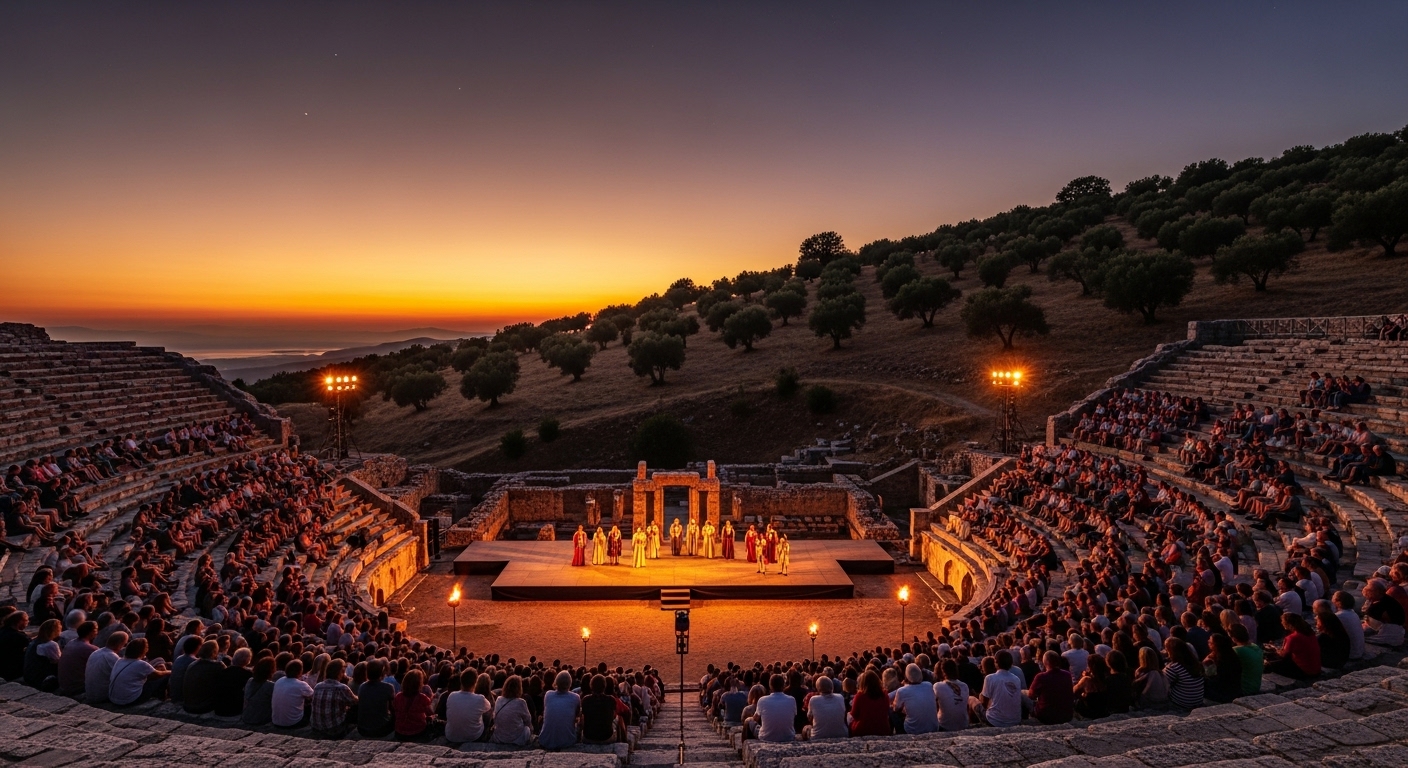
Hill-carved amphitheaters with summer plays offer one of the most timeless ways to experience culture outdoors. Instead of enclosed halls and artificial lighting, these theaters rely on natural slopes, open skies, and stone seating shaped directly into hillsides. When summer arrives, they transform into living stages where stories unfold against sunsets, breezes, and stars.
There is something deeply human about watching a performance outdoors, seated on stone that has held audiences for centuries. As daylight fades and the stage lights rise, the landscape itself becomes part of the play. Have you ever noticed how a simple scene feels more powerful when the horizon stretches behind it?
Why Amphitheaters Were Carved Into Hills
Long before modern engineering, builders understood the natural advantages of hillsides. Sloped terrain allowed audiences to see clearly without tall structures, while curved stone seating carried sound naturally across the space.
By carving amphitheaters into hills, ancient architects created venues that blended function with environment. These theaters stayed cooler in summer, resisted wind, and used gravity to enhance acoustics.
Today, hill-carved amphitheaters still follow these principles, proving that thoughtful design can endure for thousands of years.
How Summer Revives Outdoor Theater Traditions
Summer is the natural season for open-air performances. Longer evenings, warmer temperatures, and clear skies make it possible to host plays without walls or roofs.
Cities with hill-carved amphitheaters often schedule their cultural calendars around summer months. Classical dramas, modern interpretations, concerts, and community performances fill these venues when conditions are ideal.
As a result, summer plays feel less like formal events and more like shared gatherings between performers, audiences, and nature.
Iconic Hill-Carved Amphitheaters Around the World
In Greece, ancient amphitheaters such as Epidaurus continue to host summer performances. These venues are celebrated for near-perfect acoustics, where even a whisper on stage can reach the highest row.
Italy preserves numerous Roman amphitheaters carved into hillsides. Cities like Taormina and Verona host summer plays and operas with dramatic backdrops of sea, mountains, or historic skylines.
In Spain, restored hillside theaters host open-air festivals that combine classical texts with modern direction, attracting both locals and travelers.
Beyond Europe, hill-carved amphitheaters appear in parts of the Middle East, Asia, and the Americas, where geography and culture intersect to create outdoor performance spaces that feel timeless.
The Atmosphere of Watching a Play Outdoors
Hill-carved amphitheaters with summer plays offer an atmosphere no indoor theater can replicate. The setting sun becomes the opening curtain, while the first stars signal the second act.
Instead of silence enforced by walls, audiences hear wind, insects, and distant city sounds blending with dialogue and music. These natural elements rarely distract. Instead, they deepen immersion.
As darkness falls, lighting design highlights the stage while leaving the surrounding landscape softly visible, reminding viewers that the performance exists within a larger world.
How Nature Enhances Storytelling
Plays performed in hillside amphitheaters gain additional layers of meaning through their surroundings. A tragedy feels heavier as night settles in. A comedy feels lighter as warm air and laughter drift upward.
Directors often adapt staging to the environment, using elevation, shadows, and open space creatively. The hill itself may become part of the narrative.
This collaboration between nature and performance creates moments that cannot be repeated indoors.

Community and Cultural Connection
Many hill-carved amphitheaters serve as cultural anchors for their cities. Summer plays bring together residents, artists, and visitors in shared celebration.
Local food vendors, pre-show gatherings, and post-performance conversations turn theater nights into full social experiences.
These spaces remind communities that culture does not require isolation or exclusivity. It thrives best when shared openly.
Tips for Attending Summer Plays in Hill Amphitheaters
When visiting hill-carved amphitheaters with summer plays, preparation enhances enjoyment. Arriving early allows time to explore the venue and choose seating carefully.
Light layers help manage temperature changes after sunset, while cushions can make stone seating more comfortable during long performances.
Many venues encourage respectful silence and minimal phone use, preserving the immersive atmosphere for everyone.
Preserving Ancient Performance Spaces
Because many hill-carved amphitheaters are historic, preservation is essential. Cities carefully balance modern use with conservation.
Limited seating, controlled lighting, and sound restrictions help protect stone structures while keeping performances accessible.

By attending responsibly, audiences play a role in sustaining these venues for future generations.
The Growing Appeal of Outdoor Theater
As people seek experiences that feel authentic and connected to place, hill-carved amphitheaters are experiencing renewed interest.
Outdoor performances offer relief from digital overload and indoor routines. They invite presence, patience, and appreciation.
For many travelers, a summer play in a hillside theater becomes a defining memory of a city.
Hill-carved amphitheaters with summer plays show how landscapes can become stages without losing their natural beauty. These spaces prove that culture and environment do not compete. They support each other.
Would you rather watch a play beneath a ceiling or under the open sky? Have you ever experienced theater where the setting mattered as much as the story?
For more destinations where culture and nature meet in unforgettable ways, follow WentWorld and continue exploring places that bring stories to life beyond walls.
Catch up on the top stories and travel deals by subscribing to our newsletter!