Coastal salt farms with bike paths offer one of the most visually striking and unexpectedly peaceful travel experiences along the world’s shorelines. These flat, geometric landscapes stretch toward the horizon in clean lines of white, pink, and pale blue, shaped by centuries of salt harvesting. When bike paths are woven through these farms, they transform working landscapes into slow, immersive journeys where nature, tradition, and movement blend seamlessly.
Have you ever cycled through a place where the land sparkles under the sun and the air carries a faint mineral scent from the sea? That is the quiet magic of coastal salt farms. They are not loud attractions or high-energy adventures. Instead, they invite travelers to move gently, observe carefully, and appreciate how human ingenuity adapts to coastal environments.
What Are Coastal Salt Farms
Coastal salt farms, also known as salt pans or salinas, are shallow basins designed to evaporate seawater and harvest salt. This practice dates back thousands of years and remains essential in many coastal regions. Water flows slowly through a series of ponds, becoming saltier at each stage until crystals form and can be collected.
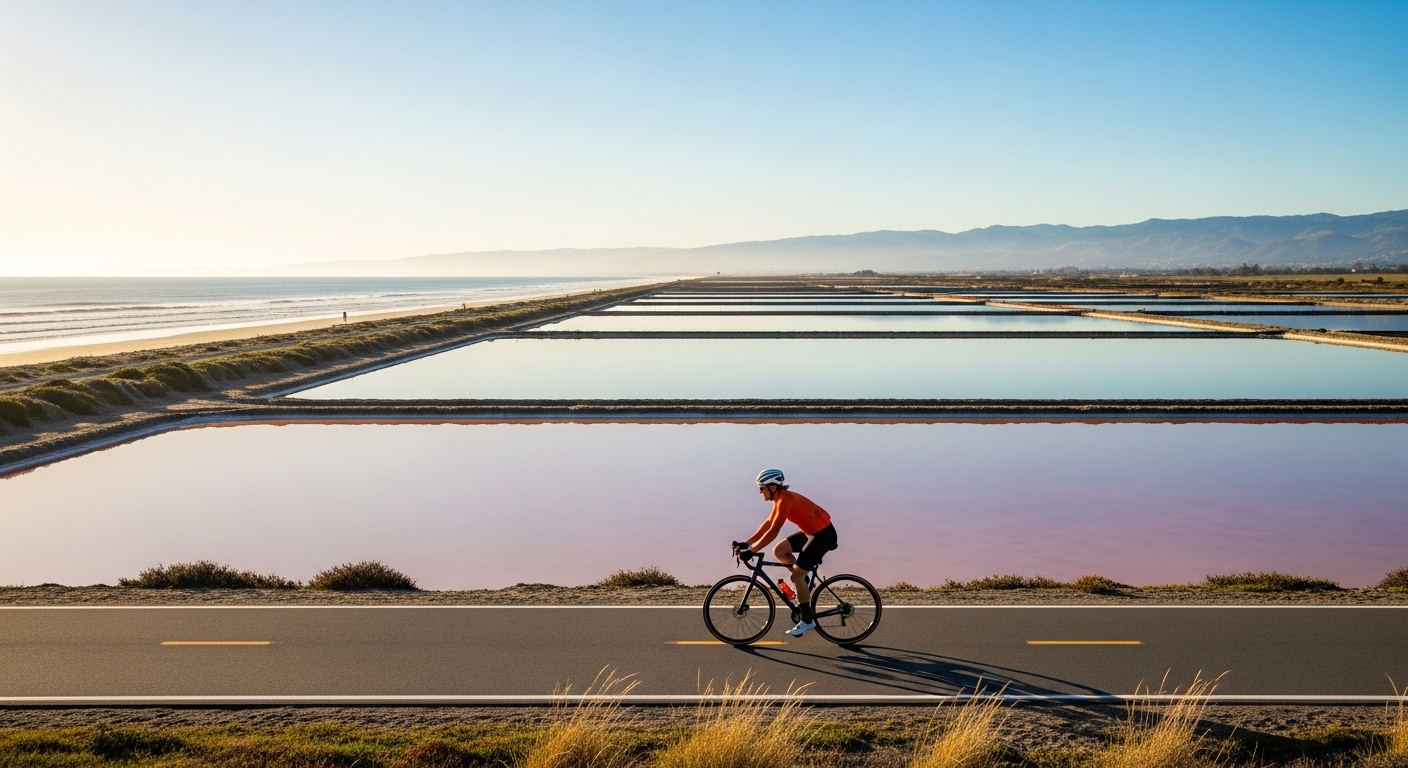
These farms often create striking visual patterns. Straight lines, rectangular pools, and reflective surfaces dominate the landscape. Depending on algae levels and sunlight, the water may appear pale blue, emerald green, or even pink. Over time, entire coastal regions have been shaped by this process.
Because salt farming requires flat land and consistent sunlight, these areas are ideal for cycling. This is why coastal salt farms with bike paths feel so natural and accessible.
Why Bike Paths Fit These Landscapes Perfectly
Bike paths through salt farms follow existing service roads and embankments. These routes are typically flat, wide, and unobstructed, making them suitable for riders of all skill levels. Unlike mountain trails or busy urban streets, salt farm paths encourage relaxed, steady cycling.
Riding through these landscapes offers uninterrupted views. There are no tall buildings or dense forests to block the horizon. Instead, cyclists move through open space where sky, water, and salt merge into a calm visual rhythm.
This combination of accessibility and scenery makes coastal salt farms with bike paths especially appealing to travelers who value experience over speed.
Famous Coastal Salt Farms With Bike Paths
One of the most well-known destinations for cycling through salt farms is the Camargue region in France. Here, extensive salt pans stretch along the Mediterranean coast, with bike routes weaving through wetlands, lagoons, and shimmering salt fields. Flamingos often gather nearby, adding life and color to the scene.
In Italy, the salt farms near Trapani, Sicily offer another iconic experience. Cyclists ride past historic windmills, shallow pools, and traditional salt mounds, all framed by distant mountains and sea breezes.
Spain’s Bahía de Cádiz Natural Park also features salt flats connected by cycling routes. These paths link small coastal towns, bird habitats, and working salt farms, creating a journey that feels both cultural and ecological.
The Sensory Experience of Cycling Through Salt Farms
Coastal salt farms with bike paths engage the senses in subtle but memorable ways. The light is often intense, reflecting off white salt and shallow water. Sunglasses become essential, not just for comfort but to fully appreciate the shimmering effect.
The air carries a clean, mineral scent mixed with sea breeze. Unlike busy coastal roads, these paths are usually quiet, with only wind, birds, and the soft sound of tires on gravel or packed earth.
There is also a distinct sense of openness. Without elevation changes or visual barriers, cyclists feel immersed in the landscape rather than passing through it.
Wildlife Along the Salt Farms
Despite their industrial appearance, salt farms support rich ecosystems. Shallow pools attract birds, fish, and small crustaceans. Flamingos, herons, and avocets are common sights in many regions.
Because salt concentration varies from pond to pond, different species thrive in different areas. This diversity creates a dynamic environment where wildlife and salt production coexist.
Cycling quietly through these areas allows travelers to observe wildlife without causing disruption. Many riders are surprised by how alive these landscapes feel.
Seasonal Changes in Salt Farm Landscapes
The appearance of coastal salt farms changes dramatically with the seasons. In warmer months, evaporation increases, intensifying colors and crystal formation. The contrast between white salt, blue sky, and reflective water becomes especially striking.
During cooler seasons, water levels rise and colors soften. Migratory birds arrive, and the pace of salt harvesting slows. Cycling at this time feels more contemplative and less intense.
Each season offers a different perspective, making repeat visits rewarding.
Cultural Heritage and Salt Traditions
Salt farming is deeply tied to local culture in many coastal regions. Generations of workers have shaped these landscapes using techniques passed down over centuries.
Historic windmills, stone warehouses, and traditional tools often line the bike paths. These structures tell stories of labor, trade, and survival in challenging environments.
By cycling through coastal salt farms with bike paths, travelers move through living history rather than static museums.
Why Travelers Are Drawn to These Routes
Many travelers seek experiences that feel both active and restorative. Cycling through salt farms offers gentle movement without physical strain. The flat terrain allows riders to focus on surroundings rather than endurance.
These routes appeal to solo travelers, couples, and families alike. They are easy to navigate, visually engaging, and rarely crowded.
Have you ever wanted to explore a coastal landscape without rushing from one attraction to another? Salt farm bike paths encourage exactly that kind of mindful travel.
Sustainable Tourism and Responsible Cycling
Coastal salt farms with bike paths represent a form of sustainable tourism. Cycling produces no emissions and aligns naturally with the slow pace of these environments.
Many regions manage access carefully to protect both salt production and wildlife habitats. Clearly marked paths keep visitors from disturbing sensitive areas.
By choosing these routes, travelers support local economies while respecting traditional industries and fragile ecosystems.
Coastal salt farms with bike paths reveal a different side of coastal travel. They are not about beaches or resorts, but about balance, tradition, and quiet beauty.
Would you enjoy cycling through landscapes shaped by sun, sea, and centuries of human effort? Or have you already explored a salt farm by bike somewhere in the world? We would love to hear your experiences.
For more rare routes, thoughtful travel ideas, and destinations that show how people and landscapes evolve together, follow WentWorld on social media and stay connected with journeys that go deeper.
Catch up on the top stories and travel deals by subscribing to our newsletter!