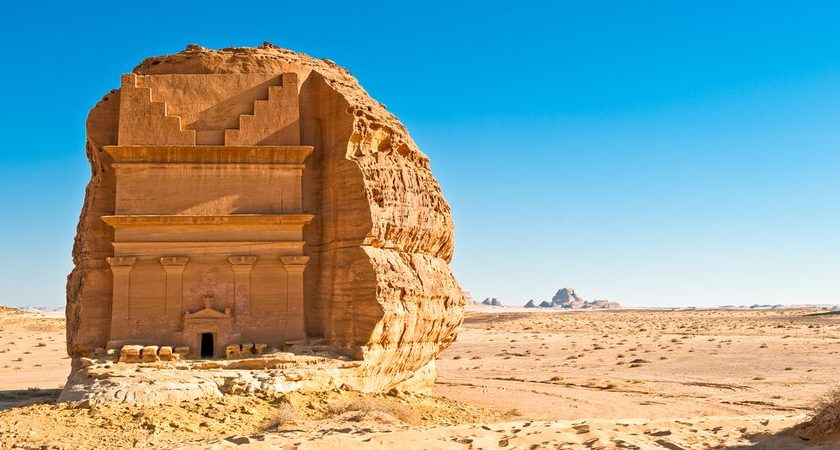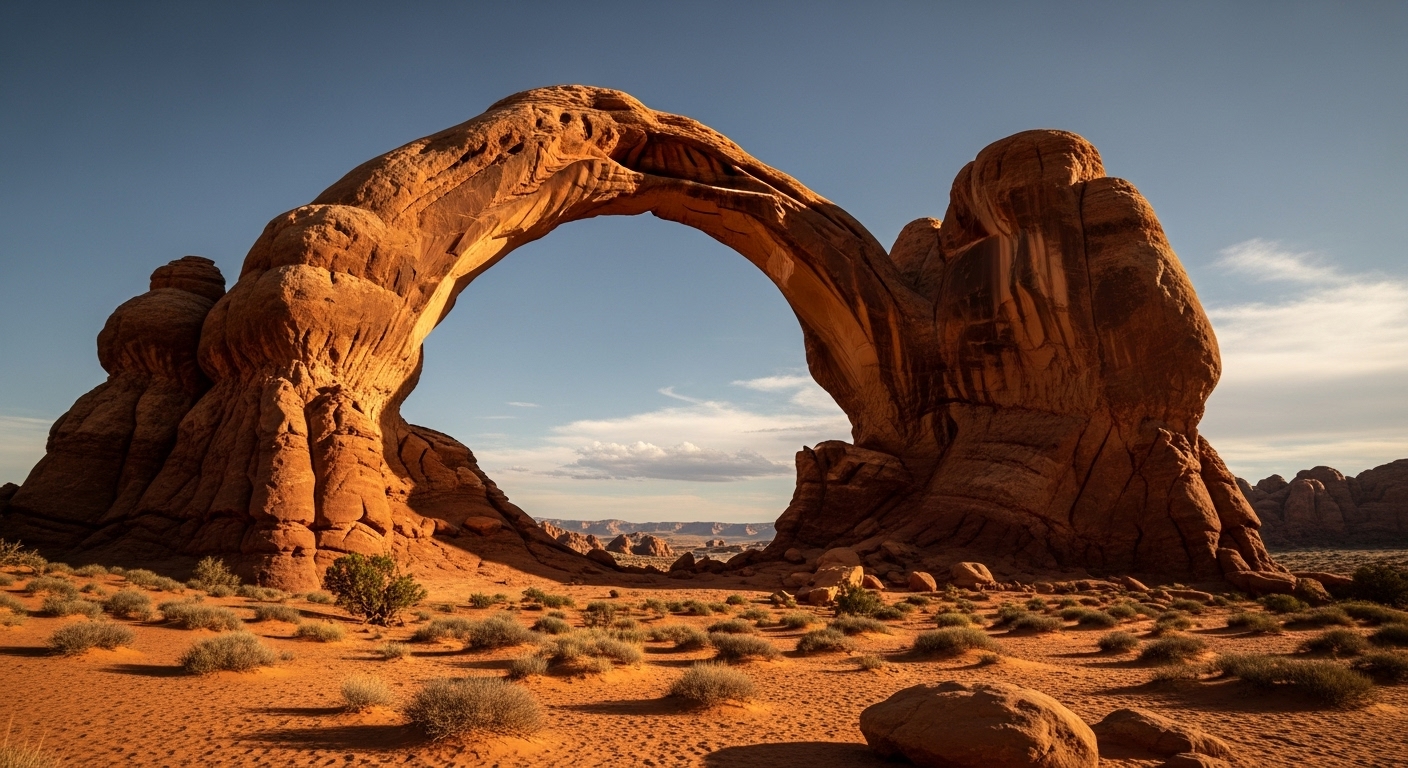
Wind carvings are some of nature’s most patient masterpieces. Formed not by sudden force but by centuries of wind, sand, and subtle erosion, sandstone arches appear almost sculpted by hand. These natural formations feel otherworldly, yet many are surprisingly easy to reach—no extreme hikes or technical climbs required.
Unlike remote geological wonders hidden deep in wilderness, several wind-carved arches sit close to roads, trails, and visitor paths. This makes them ideal for travelers who want dramatic landscapes without difficult access.
At WentWorld.com, we uncover places where nature’s slow artistry is visible, approachable, and unforgettable.
What Are Wind-Carved Sandstone Arches?
Wind-carved sandstone arches form through erosion rather than collapse. Over time, wind carries sand particles that grind against softer layers of rock. Rain, temperature changes, and gravity assist the process.
Eventually, weaker sections wear away, leaving behind curved openings and arch-like structures. The process can take thousands or even millions of years.
Why Sandstone Is Ideal for Wind Carving
Sandstone consists of compacted sand grains bound together by minerals. While durable, it often contains variations in hardness. Wind exploits these weaknesses, slowly hollowing out rock faces.
Arid and semi-arid regions are especially favorable. Sparse vegetation exposes rock surfaces directly to wind erosion, accelerating natural sculpting.
Easily Accessible Wind-Carved Arches Around the World
Arches National Park, Utah, USA
Perhaps the most famous collection of sandstone arches on Earth, Arches National Park contains over 2,000 documented formations. Many iconic arches, including Delicate Arch and North Window, are accessible via short, well-maintained trails.
According to the National Park Service, wind and water erosion continue to shape these arches even today.

Wadi Rum, Jordan
Wadi Rum’s vast desert landscape features towering sandstone bridges carved by wind over millennia. Several arches sit near vehicle tracks, making them accessible without long hikes.
The area’s red sandstone cliffs create dramatic contrasts during sunrise and sunset, enhancing the visual impact of the arches.
Al-Ula, Saudi Arabia
Al-Ula’s Elephant Rock is a striking example of wind carving. Standing alone in the desert, the formation resembles an elephant with a curved trunk formed entirely by erosion.
According to Visit Saudi, many of Al-Ula’s rock formations are reachable via short walks from designated viewing areas.
Tasman Arch, Australia
Located along Tasmania’s rugged coastline, Tasman Arch was carved by relentless ocean winds and waves. A short paved path leads directly to viewing platforms overlooking the formation.
The arch demonstrates how wind works in combination with salt spray and water erosion in coastal environments.
Durdle Door, England
Durdle Door is one of England’s most photographed natural landmarks. Formed in limestone and sandstone layers, its arch shape results from centuries of wind and wave erosion.
Despite its dramatic appearance, the arch is accessible via a managed footpath from nearby parking areas.
How Wind Shapes Rock Over Time
Wind erosion works through abrasion and deflation. Sand particles act like natural sandpaper, slowly smoothing and hollowing rock surfaces.
Temperature changes also contribute. Expansion during heat and contraction at night create tiny fractures that wind gradually widens.

Why These Arches Feel Almost Unreal
Wind-carved arches often appear fragile, balanced, and improbable. Their smooth curves contrast sharply with surrounding rugged terrain.
This visual tension makes them feel sculptural rather than geological, leading many visitors to describe them as “designed” rather than formed.
Best Time to Visit Wind-Carved Arches
Early morning and late afternoon provide the best lighting. Shadows emphasize curves and textures, while softer light enhances color variations.
Desert regions are more comfortable during cooler seasons, while coastal arches are best visited outside stormy weather.
Photography Tips for Sandstone Arches
- Use wide-angle lenses to capture scale.
- Visit during golden hour for dramatic contrast.
- Include people or vegetation for perspective.
- Look for natural frames within the arch.
- Avoid climbing fragile formations.
Why Easy Access Matters
Accessibility allows more people to appreciate geological wonders without damaging them. Well-marked paths and viewing platforms protect fragile rock while offering unforgettable views.
Easy access also encourages educational tourism, helping visitors understand erosion, time, and environmental preservation.
Conservation and Respect
Wind-carved arches are delicate. Even minor human impact can weaken structures shaped over millennia.
Staying on trails, avoiding climbing, and respecting barriers ensures these formations remain intact for future generations.
Would You Travel to See Wind at Work?
Would you plan a trip to witness landscapes shaped slowly by invisible forces? Or have you already visited a sandstone arch without realizing the role wind played?
Your experiences help us highlight places where nature’s quiet power leaves lasting impressions.
Wind carvings remind us that not all wonders arrive dramatically. Some are shaped grain by grain, year by year.
Follow WentWorld.com to explore destinations where patience, nature, and time create accessible wonders worth the journey.
Catch up on the top stories and travel deals by subscribing to our newsletter!