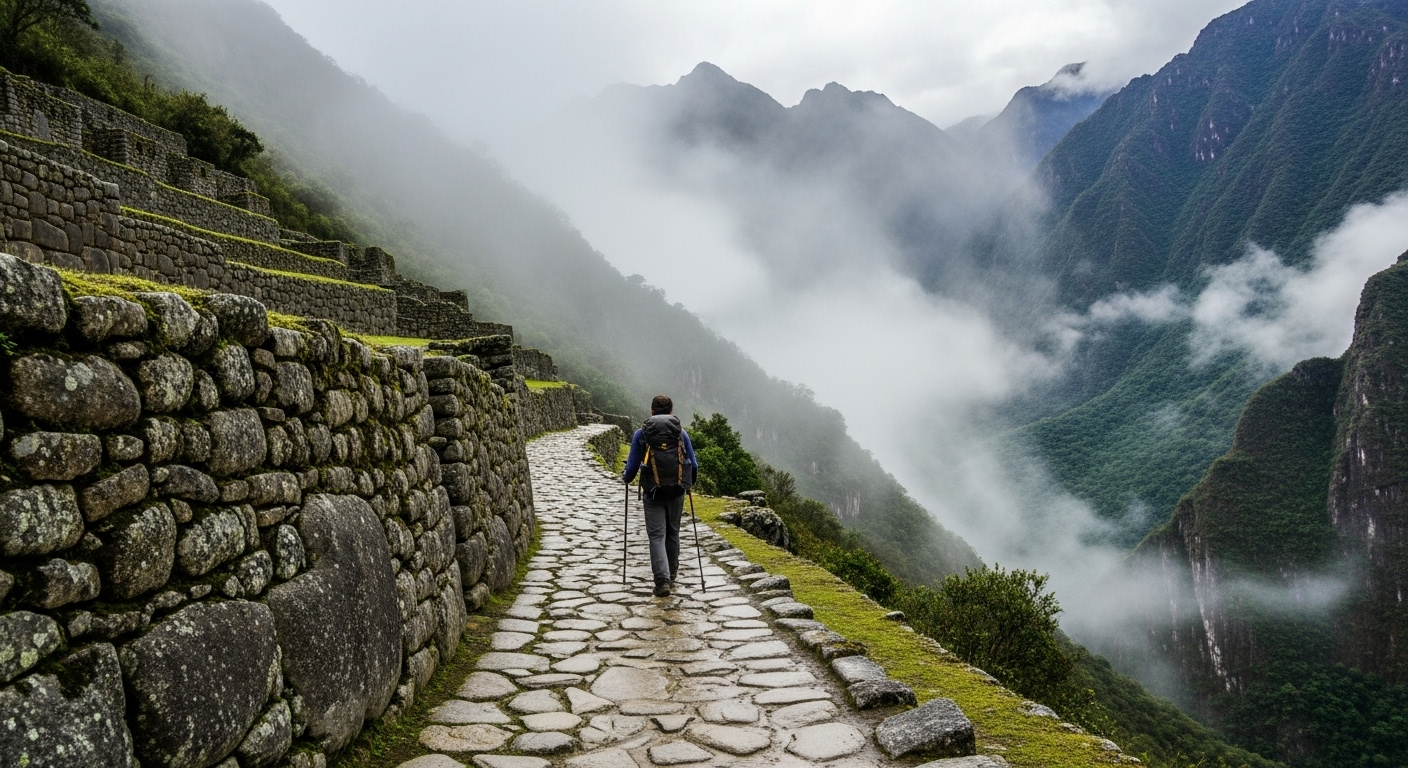
Have you ever dreamed of walking where ancient traders, pilgrims, and warriors once roamed? There’s something deeply humbling and thrilling about hiking a trail that has witnessed centuries — maybe even millennia — of human history. In today’s fast-paced world, walking along historic hiking trails that follow ancient routes allows us to slow down, reconnect, and literally trace the footsteps of those who shaped civilizations.
In this article, we’ll take you across continents — from Roman roads and Silk Road passages to Inca trails and medieval pilgrim paths. These aren’t just hikes; they’re time machines made of stone, dust, and memory. Whether you’re an adventure seeker, a history lover, or a traveler craving depth beyond the usual tourist spots, these ancient trails will inspire and humble you in equal measure.
Why Hike on Historic Trails?
Before we hit the trails, it’s worth asking: why do these historic hiking trails that follow ancient routes captivate so many people? It’s not merely the views. Every step tells a story — of migration, faith, trade, war, or peace. These trails embody history you can feel beneath your boots.
When you walk the Camino de Santiago, you retrace a medieval pilgrimage that united cultures long before modern tourism existed. Meanwhile, trekking the Inca Trail to Machu Picchu means following roads built by a civilization that conquered the Andes with pure ingenuity. Similarly, when you walk Hadrian’s Wall, you’re tracing the northern edge of the Roman Empire. Isn’t that magical?
Europe’s Timeless Trails: Echoes of Empires and Pilgrimages
Europe is practically stitched together with ancient paths, and many are beautifully preserved. You don’t just see the past here — you live it. Let’s explore some of the continent’s most remarkable ones.
The Camino de Santiago, Spain
The Camino de Santiago (Way of St. James) might be the world’s most famous historic hike. It has drawn pilgrims since the 9th century. Stretching over 800 km, it winds through charming villages, vineyards, and Romanesque cathedrals before ending at Santiago de Compostela, where the remains of Saint James are believed to rest.
Today, people from every corner of the globe walk this path. Some seek spirituality; others crave adventure. Many discover both. Moreover, along the journey, hikers forge deep friendships, share meals, and experience moments of reflection that linger for life. The Camino reminds us that sometimes, the journey truly matters more than the destination.
Hadrian’s Wall Path, England
This 135-km trail follows the remnants of a Roman wall built in 122 AD to guard the empire’s northern frontier. Imagine Roman soldiers stationed at watchtowers, gazing into misty Scottish hills, wondering what lay beyond. Today, hikers traverse green meadows, stone ruins, and cozy English pubs — a delightful blend of history and countryside charm.
Interestingly, several sections of the wall remain intact, and you can even stay in centuries-old inns that once hosted Roman patrols. As a result, walking here feels like stepping through a portal to the past.
Via Francigena, Italy to the UK
This ancient pilgrimage route stretches from Canterbury, England, all the way to Rome — over 2,000 km through France, Switzerland, and Italy. During the Middle Ages, it served as a vital path for pilgrims heading to the Vatican. Nowadays, hikers can follow medieval paths through vineyards, mountain passes, and cobblestone towns, often stumbling upon frescoed chapels and Roman ruins along the way.
Ultimately, walking even a small section of the Via Francigena connects you to centuries of travelers who sought hope, forgiveness, or adventure on the same route.
Asia’s Ancient Arteries: Walking the Roads of Empires
Asia, home to some of the world’s oldest civilizations, offers trails that were once the lifelines of trade, culture, and religion. Many of these historic hiking trails that follow ancient routes are now open to curious travelers eager to explore their secrets on foot.
The Nakasendo Trail, Japan
During Japan’s Edo period (1603–1868), samurai, merchants, and nobles used the Nakasendo Trail to travel between Kyoto and Tokyo. Today, hikers can walk the same route, passing through immaculately preserved post towns like Magome and Tsumago, where time seems to stand still.

As you stroll, expect stone-paved streets, wooden inns, and tea houses offering warm hospitality. Furthermore, every turn immerses you in Japanese culture and history, making it one of the most rewarding hikes in Asia.
The Silk Road, Central Asia
Few routes have shaped humanity as profoundly as the Silk Road. Stretching from China to the Mediterranean, it connected East and West through centuries of trade and cultural exchange. Today, adventurous hikers can explore parts of this legendary network in Uzbekistan, Kyrgyzstan, and China.
Along the way, you’ll traverse deserts, meet nomadic herders, and visit caravanserais that once sheltered traders and travelers. Therefore, hiking the Silk Road is not just a physical journey but a living lesson in global connection.
India’s Char Dham Yatra
India’s sacred Char Dham route — encompassing Yamunotri, Gangotri, Kedarnath, and Badrinath — combines spiritual devotion with natural beauty. For centuries, pilgrims have undertaken this Himalayan journey seeking divine blessings. Trekking here means surrendering to both faith and the raw power of the mountains.
Additionally, walking this route connects you to a living tradition — one that harmonizes belief with breathtaking landscapes and ancient culture.
The Americas: From Ancient Kingdoms to Sacred Peaks
The Americas are rich with trails that echo myths, rituals, and the endurance of lost civilizations. Let’s step onto a few that truly capture the imagination.
The Inca Trail, Peru
The Inca Trail leading to Machu Picchu is perhaps the most iconic of all. Once reserved for Incan nobility and priests, this 42-km trek winds through cloud forests, ancient ruins, and high-altitude passes — culminating at the Sun Gate, where Machu Picchu reveals itself in mist and sunlight.
Though challenging, the sense of wonder at the end is indescribable. Moreover, you’re literally walking in the footsteps of an empire that blended architecture and nature like no other.
The Appalachian Trail, USA
While not ancient by Old World standards, the Appalachian Trail follows routes once used by Native American tribes. Stretching over 3,500 km from Georgia to Maine, it’s one of the most legendary long-distance hikes on the planet. In fact, the modern trail overlays paths that have witnessed centuries of trade and settlement.
For history-loving hikers, this is more than wilderness — it’s a living museum of America’s cultural and natural heritage.
The Teotihuacán Route, Mexico
Just outside Mexico City lies Teotihuacán, an ancient metropolis that predates the Aztecs. Hiking through the “Avenue of the Dead,” you’ll encounter towering pyramids, murals, and remnants of a civilization that remains one of the Americas’ greatest mysteries. Each step here whispers of rituals, art, and cosmic understanding.
Africa’s Timeless Trails
From trade routes across the Sahara to sacred mountains in Ethiopia, Africa’s historic hiking trails that follow ancient routes tell stories often overlooked by mainstream travelers. These are paths of resilience, faith, and deep connection to the land.
The Sphinx Trail, Egypt
Picture yourself walking a 3,000-year-old path lined with ancient statues — that’s the Sphinx Trail in Luxor. It links the Karnak Temple to the Luxor Temple, both from Egypt’s New Kingdom period. Recently restored, it allows visitors to walk the same ground once graced by pharaohs and priests.
Furthermore, the surrounding temples, carvings, and hieroglyphs make this a journey through both time and belief. It’s short but unforgettable.
Simien Mountains, Ethiopia
The rugged highlands of Ethiopia are as spiritual as they are scenic. Trails here lead to rock-hewn churches, monasteries, and ancient villages. As you ascend through dramatic peaks, you’ll not only encounter stunning views but also traditions that have endured for over a thousand years.
Therefore, hiking in the Simiens is both a test of endurance and an immersion in history — an adventure that rewards body and soul alike.
Practical Tips for Hiking Ancient Trails
Before you lace up your boots for these historic hiking trails that follow ancient routes, here are a few useful tips to ensure your journey is safe and meaningful:
- Research the trail’s history: Understanding who walked there before you adds emotional depth to your experience.
- Respect local traditions: Many ancient paths remain sacred; show reverence and sensitivity.
- Travel sustainably: Stick to marked trails, minimize waste, and hire local guides when possible.
- Pack smartly: Mountain or desert weather can shift fast — always be prepared.
- Slow down: These aren’t races. Take your time, enjoy the details, and feel the centuries underfoot.
There’s no better way to understand humanity than by walking its oldest roads. Every trail is a story carved into the earth — a reminder that travel isn’t only about discovering new places but also about reconnecting with old ones. When you explore historic hiking trails that follow ancient routes, you don’t just witness history — you become a part of it.
So, which ancient trail would you love to walk first? Would it be Europe’s pilgrim paths, Asia’s imperial roads, or the Americas’ sacred peaks? Share your thoughts in the comments — we’d love to hear from you! And before you go, remember to follow WentWorld on our social media platforms for more inspiring travel stories, helpful guides, and global adventures. Let’s keep exploring — one historic step at a time.
Catch up on the top stories and travel deals by subscribing to our newsletter!