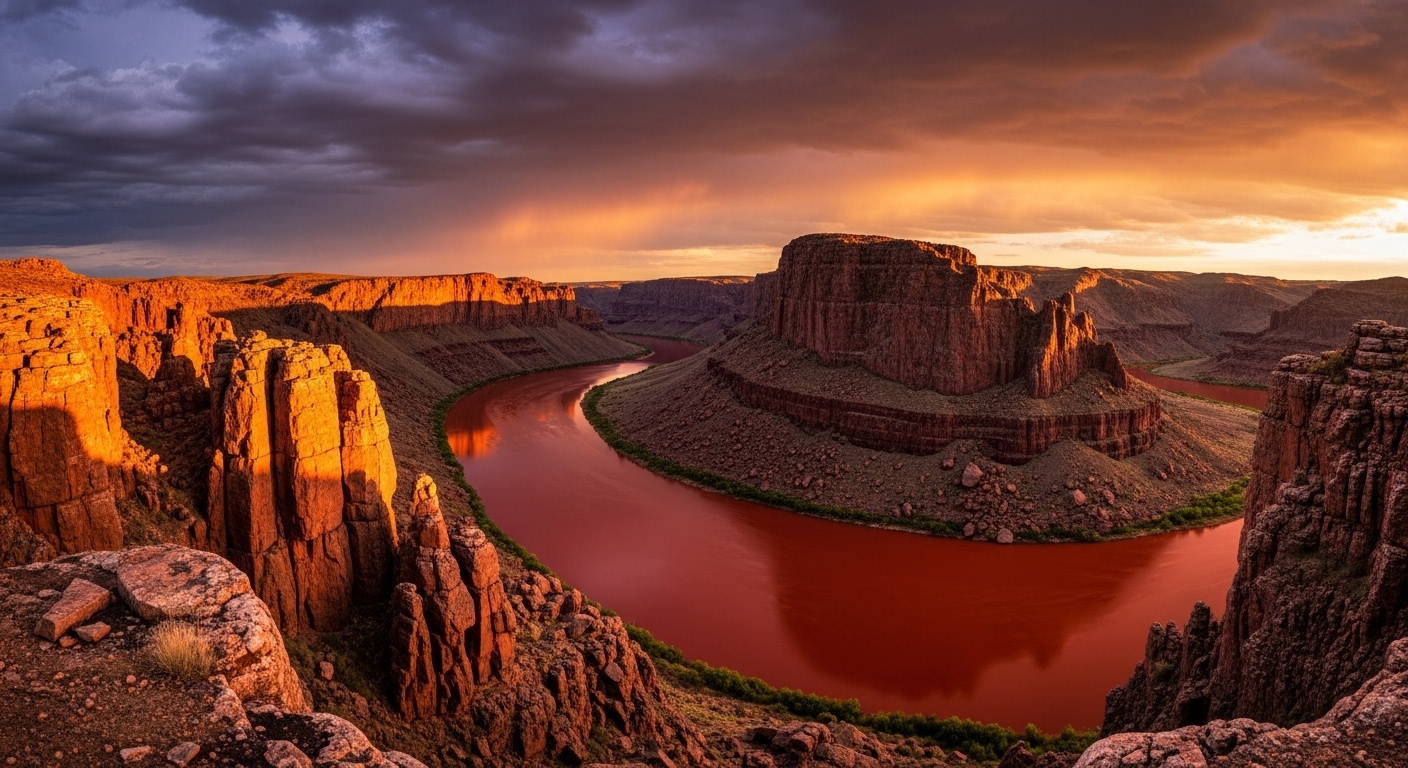
Rivers are usually associated with familiar shades of blue, green, or brown. But in some parts of the world, rivers defy expectations completely. Flowing through remote landscapes and protected ecosystems, there are remarkable Countries Where Rivers Turn Pink, Red, or Blue Naturally, creating scenes so surreal they appear almost unreal.
These vividly colored rivers are not the result of pollution or artificial dyes. Instead, they are shaped by minerals, algae, microorganisms, and unique geological conditions that transform ordinary waterways into natural wonders. Standing beside one of these rivers feels like stepping into a painting created by nature itself.
Have you ever seen a river that looked more like liquid art than flowing water?
Why Some Rivers Change Color Naturally
The unusual colors seen in certain rivers are the result of complex natural processes. Minerals dissolved in water, microscopic algae, plant pigments, and even seasonal changes can dramatically alter a river’s appearance.
In many Countries Where Rivers Turn Pink, Red, or Blue Naturally, these color shifts are temporary, appearing only during specific seasons or under particular environmental conditions. In others, the color remains consistent throughout the year.
Importantly, these rivers are often indicators of healthy ecosystems rather than environmental damage.
Colombia – Caño Cristales, the River of Five Colors
Colombia is home to one of the most famous colorful rivers on Earth: Caño Cristales. Often called the “River of Five Colors,” this river transforms into vivid shades of red, pink, yellow, green, and blue during certain months of the year.
The striking colors come from an aquatic plant called Macarenia clavigera, which turns bright red when exposed to sunlight during the rainy season. Clear water allows the colors to shine through, creating an otherworldly effect.
Caño Cristales flows through Serranía de la Macarena National Park, a protected area that limits visitor numbers to preserve the ecosystem. Information about visiting responsibly is available through Colombia Travel.
Australia – Pink Lakes and Rivers of the Outback
Australia is known for its unusual landscapes, and its naturally pink waterways are no exception. While many people are familiar with Lake Hillier, several rivers and streams in Western Australia also display pink hues under certain conditions.
The color comes from algae and salt-loving microorganisms that produce red pigments when exposed to high salinity and sunlight. Seasonal evaporation intensifies the color, making rivers appear pink or rose-colored from above.
These waterways are often located in remote regions, emphasizing the importance of conservation and responsible tourism.
China – The Blue Rivers of Jiuzhaigou
China’s Jiuzhaigou Valley is famous for its strikingly blue rivers and lakes. The water appears impossibly turquoise due to high concentrations of calcium carbonate and light-reflecting minerals.
The clarity of the water allows light to scatter in a way that enhances blue tones, creating a glowing effect. Fallen trees and mineral deposits beneath the surface add texture without disrupting the color.
Jiuzhaigou is a UNESCO World Heritage Site, protected for both its geological and ecological significance. Learn more through China National Tourism Administration.

Spain – The Red Waters of Río Tinto
Spain’s Río Tinto is one of the most dramatic examples of naturally red rivers. Flowing through the Iberian Pyrite Belt, this river owes its deep red color to high concentrations of iron and other metals.
The river’s acidity supports specialized microorganisms that thrive in extreme conditions. Despite its harsh chemistry, Río Tinto has become a valuable site for scientific research, including studies related to Mars exploration.
Its landscape resembles something from another planet, making it one of Europe’s most unique natural sights.
Bolivia – Red and Green Rivers of the Altiplano
Bolivia’s high-altitude Altiplano region contains rivers and lagoons that shift between red, green, and blue tones depending on mineral content and algae growth.
In places like the Eduardo Avaroa Andean Fauna National Reserve, rivers reflect the surrounding volcanic terrain, mineral-rich soils, and intense sunlight.
These waterways often appear most vivid during dry seasons when mineral concentration increases.
Iceland – Glacial Rivers of Milky Blue
Iceland’s rivers often appear milky blue or pale gray due to glacial meltwater carrying fine sediment known as rock flour.
This sediment scatters sunlight, giving rivers a luminous, cloudy blue appearance. The effect is especially striking when rivers contrast against black volcanic sand.
Iceland’s commitment to preserving natural landscapes is supported by organizations like Visit Iceland.

What It Feels Like to Stand Beside a Colored River
Seeing a vividly colored river in person can feel disorienting. Your brain expects water to look a certain way, and when it doesn’t, the experience becomes deeply memorable.
Many travelers describe a sense of awe mixed with curiosity, wondering how such colors could exist naturally.
Have you ever questioned what you were seeing simply because it challenged everything you thought you knew about nature?
Are These Rivers Safe and Natural?
While these rivers look unusual, most are entirely natural. Some, like Río Tinto, are too acidic for swimming, while others are safe to observe but protected from direct contact.
It’s important to follow local guidelines and respect conservation rules. Countries Where Rivers Turn Pink, Red, or Blue Naturally often restrict access to preserve fragile ecosystems.
Education plays a key role in preventing misunderstandings about these environments.
The Role of Climate and Seasons
Many colored rivers appear most vibrant during specific seasons. Rainfall, temperature, and sunlight all influence algae growth and mineral concentration.
In some locations, visiting at the wrong time of year may mean missing the color transformation entirely.
Understanding seasonal patterns enhances both appreciation and responsible travel planning.
Why These Rivers Matter Scientifically
Scientists study naturally colored rivers to better understand extremophile organisms, climate history, and geological processes.
In some cases, research conducted in these rivers informs studies on early Earth conditions and even extraterrestrial environments.
These rivers are not just beautiful — they are valuable natural laboratories.
Tourism and Conservation Balance
As interest grows, managing tourism becomes increasingly important. Foot traffic, pollution, and unauthorized access can damage delicate ecosystems.
Responsible tourism ensures that Countries Where Rivers Turn Pink, Red, or Blue Naturally can protect these rare environments while still allowing people to experience them.
Airlines such as Avianca and Iberia connect travelers to regions where these rivers exist.
Why Nature Creates Such Unexpected Beauty
These rivers remind us that nature does not conform to our expectations. Color, form, and function vary endlessly depending on local conditions.
They challenge the idea that beauty must be uniform or predictable. Instead, they show that the most unforgettable sights often arise from rare combinations of factors.
These destinations appeal to photographers, scientists, slow travelers, and anyone fascinated by natural anomalies. They are especially rewarding for travelers who enjoy learning as much as observing. Countries Where Rivers Turn Pink, Red, or Blue Naturally reveal a side of the planet that feels almost magical. These waterways remind us that Earth still holds surprises beyond imagination.
If unusual natural phenomena inspire your travels, follow us on our social media platforms for more extraordinary destinations. And tell us — which colored river would you want to see with your own eyes?
Catch up on the top stories and travel deals by subscribing to our newsletter!