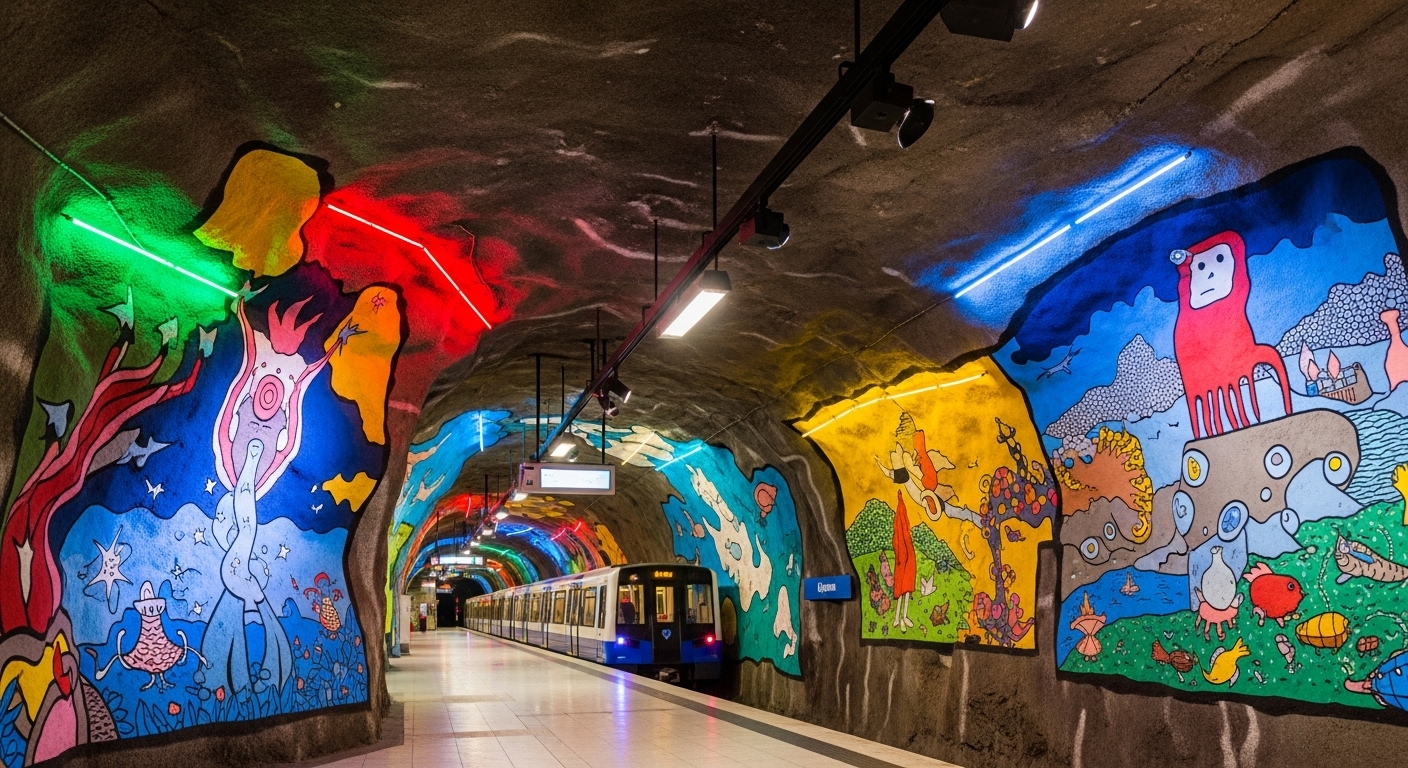
World capitals with hidden metro art galleries prove that some of the most powerful cultural experiences happen far below street level. In many global capitals, metro stations are not just places to catch a train. Instead, they act as underground art galleries filled with murals, sculptures, mosaics, and architectural storytelling. From historic political messages to modern creative expressions, these spaces transform daily commutes into unforgettable art walks.
At WentWorld.com, we love uncovering places that travelers often overlook. World capitals with hidden metro art galleries challenge the idea that museums must be above ground. Have you ever rushed through a subway station without realizing you were standing inside a massive art installation?
These underground galleries exist quietly beneath busy cities. Locals pass them daily, while visitors often miss them entirely. Yet once you start noticing them, metro systems begin to feel like cultural vaults rather than transport networks.
Why Metro Stations Became Art Galleries
Many world capitals invested in artistic metro stations to reflect national identity, pride, and history. During periods of political change or cultural revival, governments and artists used underground spaces to communicate ideas to millions of commuters every day.
Metro stations also offered something unique: guaranteed foot traffic. Unlike traditional galleries, subway art reaches people who may never visit a museum. As a result, art became part of everyday life rather than a special occasion.
Stockholm, Sweden: The World’s Longest Art Gallery
Stockholm is often described as home to the world’s longest art gallery, thanks to its metro system. Over 90 stations feature artwork, including sculptures, paintings, and rock-carved installations. Stations like T-Centralen and Solna Centrum feel more like modern art museums than transit hubs.
The Stockholm Metro integrates raw stone walls with bold colors and abstract forms, creating immersive experiences. According to Visit Stockholm, more than 150 artists contributed to the system, making it a living exhibition that evolves over time.
Would you slow down your commute if every station felt like a gallery?
Moscow, Russia: Underground Palaces of Art
Moscow’s metro stations are legendary. Built during the Soviet era, many stations resemble grand palaces rather than transit stops. Chandeliers, marble columns, stained glass, and heroic mosaics celebrate Russian history and ideology.
Stations like Komsomolskaya and Mayakovskaya showcase detailed ceiling mosaics and dramatic lighting. These spaces were designed to inspire pride and unity among citizens. Today, they serve as some of the most photographed metro stations in the world, as highlighted by Moscow Metro.

Paris, France: Art Hidden in Plain Sight
Paris is famous for museums like the Louvre, yet its metro hides artistic surprises of its own. Stations such as Arts et Métiers feature steampunk-style copper walls inspired by Jules Verne, while others display rotating exhibitions by contemporary artists.
The Paris Metro integrates typography, lighting, and installations in subtle ways. These designs blend seamlessly with the city’s artistic identity. More details about Paris transport culture can be found via RATP.
Tokyo, Japan: Minimalism Meets Precision Art
Tokyo’s metro stations focus on clean design, modern installations, and conceptual artwork. Stations like Omotesando and Shinjuku incorporate light-based installations, sculptural forms, and architectural symmetry.
Unlike Moscow’s grandeur, Tokyo embraces subtlety. The art enhances calmness and flow in one of the world’s busiest transit systems. Visitors often realize later that they walked through art without noticing it at first.
Washington, D.C., USA: Brutalism as an Art Form
Washington, D.C.’s metro system may appear simple, but its architecture is considered an art gallery of brutalist design. Vaulted concrete ceilings, repeating geometric patterns, and dramatic lighting create a powerful visual experience.
Architect Harry Weese designed the stations to feel monumental yet functional. The system is so iconic that it has been featured in films, exhibitions, and architectural studies. Information about the system can be found on WMATA.
Montreal, Canada: Storytelling Beneath the City
Montreal’s metro stations reflect the city’s bilingual culture and artistic diversity. Murals, stained glass, and sculptures tell stories of Quebec’s history, immigration, and social movements.
Each station has a distinct identity, often designed by different artists. According to Tourisme Montréal, the metro functions as both a transit system and a cultural archive.
Why Travelers Miss These Underground Galleries
Most travelers focus on destinations above ground. When using public transport, they rush from platform to platform without pausing. As a result, some of the most meaningful artistic experiences remain unnoticed.
Once you start looking, however, metro systems change completely. Walls become canvases, ceilings become galleries, and daily movement turns into cultural exploration.
How to Explore Metro Art Like a Local
Exploring world capitals with hidden metro art galleries requires curiosity and time. Start by researching iconic stations, then allow yourself to wander. Ride lines end to end, step off randomly, and observe your surroundings.
Would you plan a city tour entirely underground if it revealed stories most tourists never hear?
The Cultural Impact of Underground Art
Metro art democratizes creativity. It removes barriers between art and people, making beauty accessible to everyone. These galleries also preserve history, showcase national identity, and support local artists.
World capitals with hidden metro art galleries remind us that culture does not always demand tickets or velvet ropes. Sometimes, it waits quietly beneath our feet.
Have you ever discovered unexpected art in a metro station? Which capital’s underground gallery surprised you the most? Share your experiences and thoughts with us.
For more stories about hidden destinations, cultural wonders, and unusual travel experiences, follow WentWorld.com on our social media platforms and stay inspired.
Catch up on the top stories and travel deals by subscribing to our newsletter!